
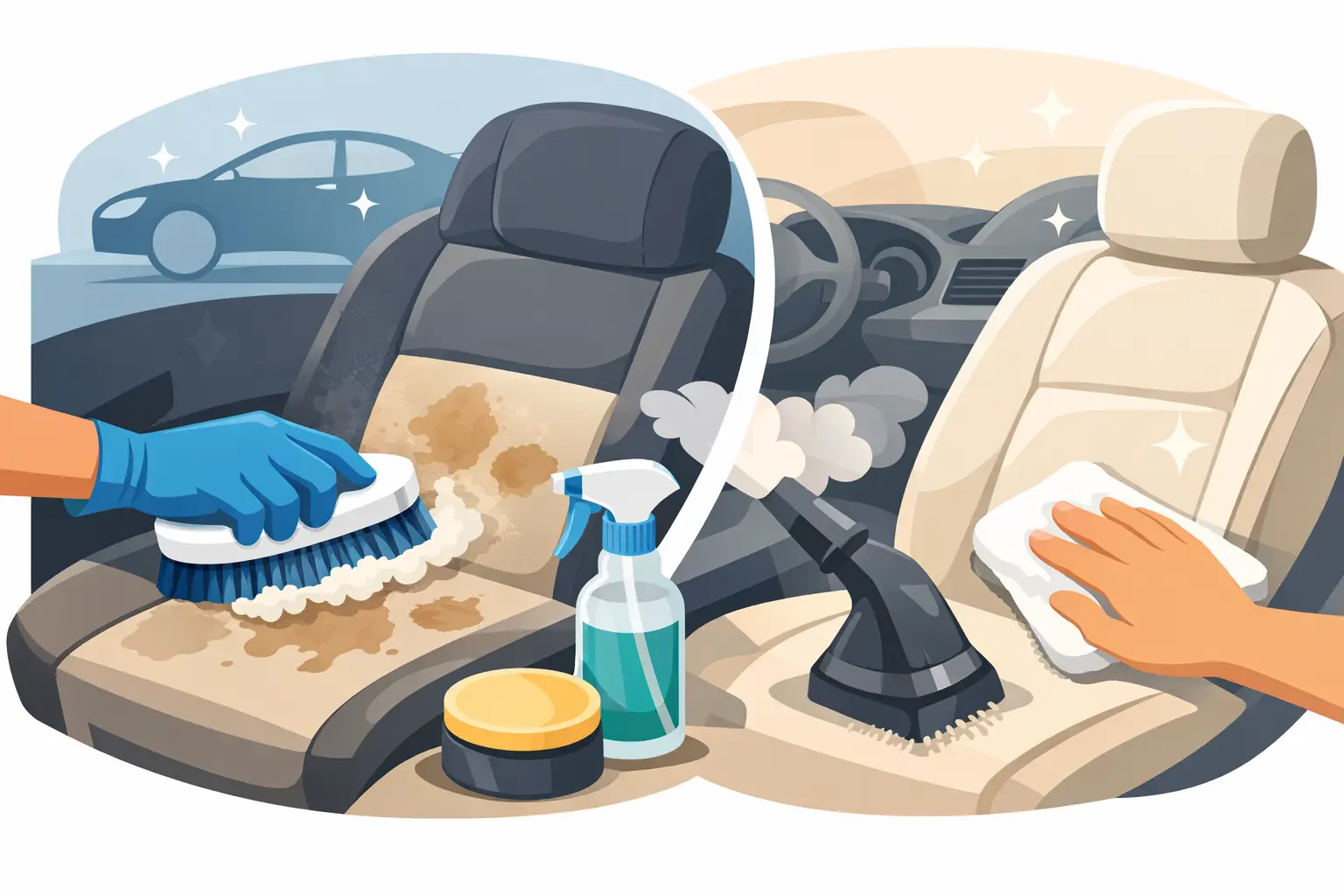
Coffee in the cupholder. Juice in the back seat. A mystery spot on the carpet that keeps catching your eye every time you get in. Interior car detailing for stains is not just about making a vehicle look cleaner for a day. It is about removing the kind of buildup that makes a car feel older, smell worse, and wear out faster than it should.
Most stains are not all the same, and that is where many DIY attempts go sideways. A cleaner that works on a rubber floor mat can damage leather. Extra scrubbing on cloth can spread a stain deeper into the fibers. Too much water in a seat cushion can leave behind odor, mildew, or a watermark that looks worse than the original spill. If the goal is a genuinely clean interior, stain removal has to match the material.
Why interior car detailing for stains takes more than spray and wipe
A stained interior usually has two problems, not one. There is the visible mark, and then there is the residue left behind inside the material. That residue is what keeps attracting dirt, holding odor, and making a seat or carpet feel stiff or grimy even after it looks better.
Professional stain removal works because the process is controlled. The surface gets inspected first, the cleaner is chosen based on the stain and material, agitation is kept gentle where needed, and extraction removes loosened debris instead of pushing it around. That difference matters on daily drivers, family SUVs, rideshare vehicles, and newer cars where interior condition affects resale value.
In Los Angeles, where people spend a lot of time in their cars, interior stains build up fast. Commutes, takeout, beach days, gym gear, pets, and kids all leave their mark. A quick vacuum helps with loose dirt, but it will not fix dried spills, body oil on seats, or old spots that have baked into fabric during hot weather.
The most common interior stains and what they need
Food and drink stains
Coffee, soda, milk, sauce, and sports drinks are some of the most common interior stains. They are also some of the trickiest because sugar, dairy, and dye all behave differently. Soda can leave a sticky residue that keeps pulling in dust. Milk may look minor at first, then create odor once it settles into padding. Coffee often leaves a tan ring if it is not properly extracted.
These stains usually need more than surface cleaning. The residue has to be broken down and lifted out. Otherwise, the spot may fade and then reappear after the fabric dries.
Pet stains and odors
Pet accidents are a separate category because they affect both appearance and smell. Standard interior cleaners may reduce the look of the stain without fully treating the source of the odor. On fabric seats and carpet, that can turn into a repeat problem every time the cabin heats up.
This is where technique matters. You want stain treatment that reaches the affected area without soaking the interior. Too much moisture can create a bigger issue than the original stain.
Mud, grease, and tracked-in grime
Not every stain starts as a liquid. Dirt from shoes, grease from work clothes, sunscreen, makeup, and body oils can darken seats, floor mats, armrests, and door panels over time. These are often called stains when they are really a mix of contamination and wear.
The right detail can improve them significantly, but results depend on how long they have been there and what surface they are on. A cloth seat with years of buildup may come back nicely. A light-colored leather seat with dye transfer and cracking may improve, but not return to new.
Ink and dye transfer
Ink marks and color transfer from jeans are among the toughest interior issues. They bond quickly, especially on leather and vinyl. Aggressive cleaning can remove the stain, but it can also remove color or weaken the finish if handled incorrectly.
For these, there is a real trade-off. The goal is to improve the mark while protecting the surface. Sometimes that means accepting partial improvement instead of risking permanent damage.
Fabric, leather, and carpet all need a different approach
Cloth seats
Cloth is forgiving in some ways, but it also absorbs everything. A proper detailing process usually includes vacuuming, stain pre-treatment, controlled agitation, and extraction. The extraction step is what helps pull residue out instead of leaving it suspended in the fabric.
With older cloth interiors, patience matters. Rushing with strong chemicals can bleach fibers or leave the seat rough to the touch. Good results come from repeating the right process, not forcing it.
Carpet and floor mats
Carpet traps grit deep in the pile, and once moisture mixes with that dirt, stains settle fast. Floor mats can usually handle stronger cleaning than carpeted flooring, but the carpet underneath needs more care. If stains have soaked below the visible surface, odor treatment may be needed too.
This is one area where mobile detailing can make a real difference for busy owners. A thorough interior service done at home or work saves the trip to a shop and gets the car back to a cleaner, more usable condition without adding another errand.
Leather and vinyl
Leather needs a measured hand. Many stains on leather are not really sitting on top of the material. They have transferred into the finish, especially on high-contact areas like driver seats, bolsters, steering wheels, and center consoles. Strong scrubbing may remove some discoloration, but it can also wear down the protective coating.
The better approach is targeted cleaning with leather-safe products, followed by conditioning or protection when appropriate. Vinyl is more durable, but it still benefits from the same principle – clean thoroughly without overdoing it.
When DIY stain cleaning makes things worse
A lot of interior damage comes from good intentions. Household cleaners, stiff brushes, and over-the-counter spot removers are often too harsh or too general for automotive materials. They may smell strong, create foaming residue, or leave a bright clean patch surrounded by a ring.
Water is another common problem. If a seat or carpet gets oversaturated, drying takes longer than most people expect. That can lead to lingering odor, moisture in the padding, or mildew growth in hidden areas. It is one reason professional interior car detailing for stains focuses so much on controlled product use and proper extraction.
There is also the issue of stain age. Fresh spills are usually easier to remove. Older stains have had time to oxidize, set into fibers, or react to heat. If someone has already tried multiple cleaners on the same area, the final result can be less predictable.
What to expect from professional stain removal
The best expectation is improvement based on material, stain type, and condition, not unrealistic promises. Some stains come out almost completely. Others lighten significantly and stop drawing attention. A few may be permanent if the surface has been etched, dyed, or worn.
A quality detail should leave the interior looking cleaner overall, not just one treated spot. That means surrounding areas get cleaned too, so the finish is even. It should also leave surfaces feeling fresh rather than sticky or overly perfumed.
For families, commuters, and anyone driving clients or passengers around, that matters. A clean interior changes the whole experience of the vehicle. It feels better maintained, more comfortable, and more in line with the value of the car.
How to keep stains from setting in again
The easiest stain to remove is the one that never has time to settle. That does not mean your car has to be perfect. It means acting quickly and using basic habits that protect the interior between details.
Blot spills early instead of scrubbing them. Keep simple microfiber towels in the car. Vacuum regularly so dirt does not grind into carpet and cloth. If you have kids, pets, or a daily coffee habit, schedule interior cleaning before stains become a restoration project.
Protective maintenance also helps. Leather conditioners and fabric-safe protectants can reduce how quickly material absorbs spills, although they are not magic shields. They buy you time, which is often enough to prevent a permanent mark.
For heavily used vehicles, periodic professional care is usually the smarter move than waiting until the interior looks far gone. That is especially true for drivers who want convenience and consistent results. A mobile service like Drip N Shine can handle stain removal where your car already is, which makes it easier to stay ahead of the mess instead of living with it.
A stained seat or carpet does not always mean the damage is permanent. In many cases, the right process can restore far more than most owners expect, and the sooner it is treated, the better the outcome tends to be.