
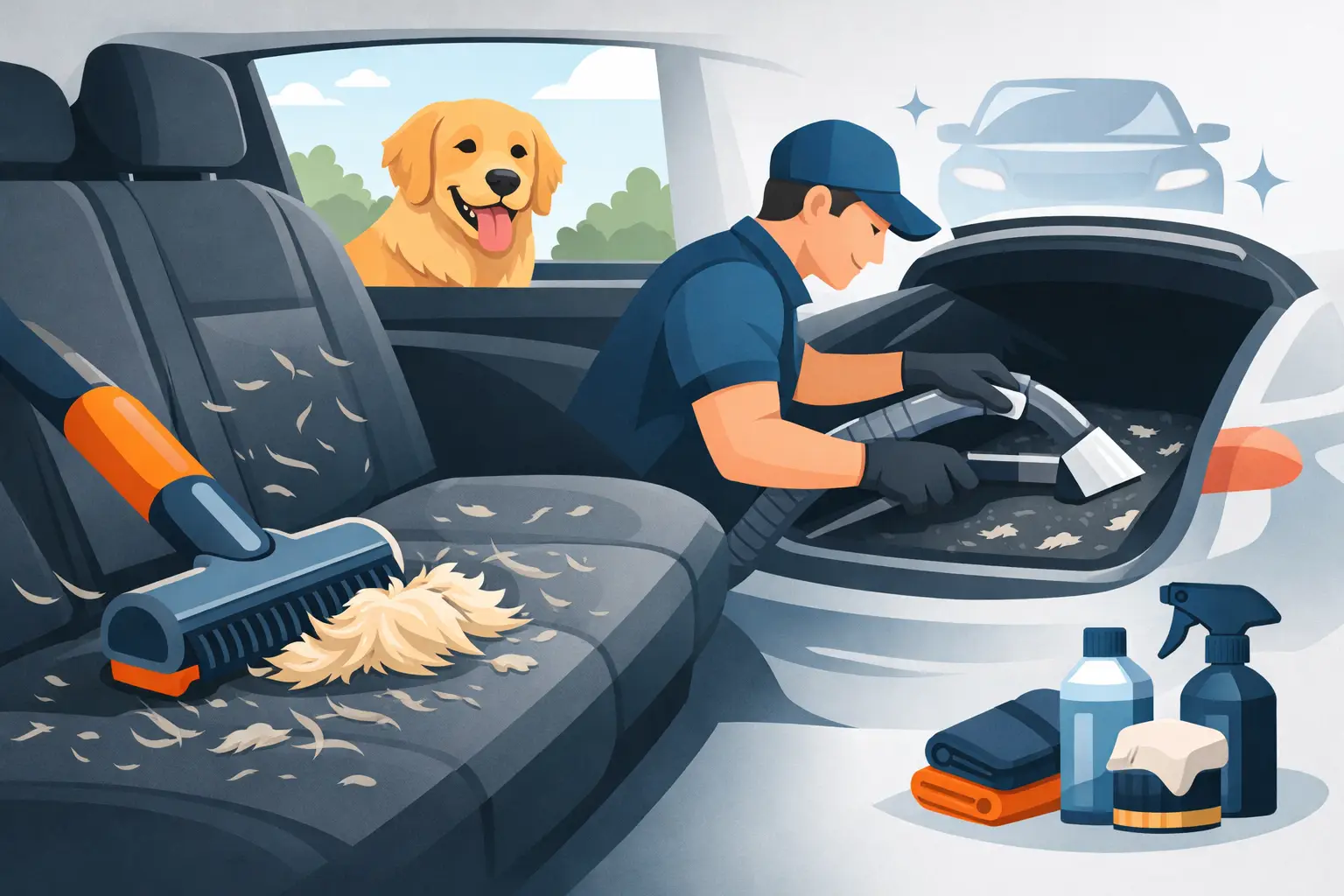
If you have a dog that rides shotgun or a cat carrier that leaves a trail behind, you already know pet hair removal car detailing is not the same as a quick vacuum. Hair works its way into carpet loops, seat seams, trunk liners, and under mats, then keeps resurfacing no matter how many times you clean. That is why getting real results takes the right process, not just more effort.
Why pet hair is so hard to remove
Pet hair clings because it is light, static-prone, and designed to shed into fabric. In a vehicle, that creates a tougher problem than most owners expect. Cloth seats trap hair deep in the weave. Carpet grabs it and holds it near the base. Even leather or vinyl interiors are not immune, because hair collects in stitching, seat rails, and tight corners where standard vacuum attachments struggle.
The bigger issue is that pet hair rarely travels alone. It usually comes with dander, dirt, body oils, and odor. So when people say they want the hair gone, they usually also want the interior to feel cleaner, smell fresher, and look like the car is cared for again. That is where professional detailing makes a real difference.
What good pet hair removal car detailing includes
A proper service goes beyond running a vacuum over the seats for a few minutes. The goal is to lift embedded hair, remove residue, and restore the surfaces without damaging them.
Deep vacuuming with the right attachments
Strong suction matters, but technique matters more. Detailers work slowly and from multiple angles, especially on carpets, under seats, and around seat brackets. Crevice tools, narrow heads, and brush attachments help pull hair from places where it gets packed down over time.
Agitation tools that loosen embedded hair
This is usually where DIY cleaning starts to fall short. Professional pet hair removal often uses rubber brushes, specialty gloves, pumice-style tools made for automotive carpet, or detailing brushes matched to the surface. These tools create friction that lifts hair so it can be vacuumed away.
Used correctly, they are highly effective. Used incorrectly, they can scuff delicate trim or fuzz up certain fabrics. That is one reason interior detailing should never be treated like a one-tool job.
Cleaning the surfaces after the hair is gone
Once the hair is removed, the interior still needs attention. Seats, carpets, floor mats, and hard surfaces may hold dander, dust, and odor-causing residue. A full interior detail often includes wipe-downs, light shampooing where appropriate, and careful cleaning of high-contact areas like door panels, center consoles, and cargo spaces.
For families, rideshare drivers, and anyone who transports pets regularly, this step matters just as much as the hair removal itself. A car can look better after the hair is gone, but it does not feel fully refreshed until the surfaces are actually cleaned.
DIY vs professional results
There is nothing wrong with handling light cleanup yourself. If the hair is recent and mostly sitting on top of rubber mats or smooth upholstery, a home vacuum and a pet hair brush may be enough. Quick maintenance between deeper cleanings can prevent buildup and make the next service easier.
But embedded hair is a different story. If your dog rides in the back seat several times a week, if the trunk liner is covered after park trips, or if old hair keeps appearing after every vacuum, professional detailing is usually the faster and more cost-effective route. What takes a car owner two hours of frustration may take a trained detailer a fraction of the time with much better results.
There is also the issue of surface safety. Some online tips recommend harsh scraping tools or aggressive brushing. Those methods can leave marks, damage carpet fibers, or wear down interior materials. Saving money on the first pass is not worth it if the fix creates a bigger problem.
The tools that actually work
Not every pet hair removal method performs the same across every interior. What works on one SUV may be a poor choice for a luxury sedan or newer truck with mixed materials.
Rubber brushes are a strong option for cloth seats and carpet because they create grip without relying on sharp edges. Detailing vacuums with narrow nozzles help after the hair is loosened. On some interiors, compressed air can push hidden hair out of seams and tracks so it can be collected properly. For tight spaces, soft detailing brushes help move hair out of corners without scratching surrounding trim.
The trade-off is that more aggressive tools may speed up removal on durable carpet, but they need a careful hand. Softer tools protect materials, though they may take longer. Good detailing is about choosing the right method for the material, not forcing one method everywhere.
Where pet hair hides most
Most owners focus on the visible areas first, usually the seats and floor. Those matter, but the worst buildup often happens in places that are easy to miss.
Rear seat seams collect hair that gets pressed in by passengers and pet movement. Seat rails trap loose strands that shift around with every adjustment. Trunk liners and cargo mats hold a surprising amount of hair, especially for larger dogs. Floor mat edges, door pockets, and the gap between the seat and center console also tend to catch buildup. In some cases, hair can even gather around vents and under folded seat hardware.
This is why the car can still look messy even after a basic interior cleaning. If the hidden areas are ignored, the hair keeps migrating back into view.
How often should you schedule pet hair removal car detailing?
It depends on how often your pet rides, what breed you have, and what kind of interior your vehicle has. A short-haired dog that rides once a month is very different from a heavy-shedding breed that is in the car every day.
For frequent pet transport, quarterly detailing is a smart baseline. It keeps buildup manageable, protects interior materials, and makes each visit more efficient. If your vehicle sees daily use, especially with kids, sports gear, or beach trips in the mix, you may want service more often.
For occasional riders, maintenance at home between appointments can stretch the timeline. Seat covers, cargo liners, and quick vacuuming after trips can all help. Still, once hair becomes embedded, routine upkeep usually needs a professional reset.
Why convenience matters with interior detailing
Pet hair removal is one of those jobs people put off because they know it will take time. That is especially true if you live in a busy area, work long hours, or do not have easy access to space and equipment. Mobile detailing solves that problem by bringing the service to your home, office, or apartment, so the car gets handled without disrupting your day.
For Los Angeles drivers, convenience is not a small benefit. It is often the difference between finally getting the interior cleaned and continuing to live with hair-covered seats for another month. When the service comes to you, the barrier to getting it done drops fast.
What to expect from a quality result
A realistic expectation matters. In most vehicles, professional detailing can remove the vast majority of visible and embedded pet hair. The interior should look significantly cleaner, feel more comfortable, and be easier to maintain going forward.
That said, extreme buildup in heavily worn carpet can take extra time, and some deeply embedded strands may require repeat passes. A trustworthy detailer will be upfront about that. Quality work is not about promising magic. It is about using the right methods to deliver a clear, visible improvement without harming the interior.
When done right, pet hair removal changes more than appearance. It makes the cabin feel fresher, more inviting, and easier to enjoy whether you are commuting, picking up clients, loading up the family, or heading out with your pet again.
If your interior still looks furry five minutes after you vacuum it, that is usually the sign that surface cleaning is no longer enough. A professional detail can reset the space, protect the materials, and give you back a car that feels good to sit in.