
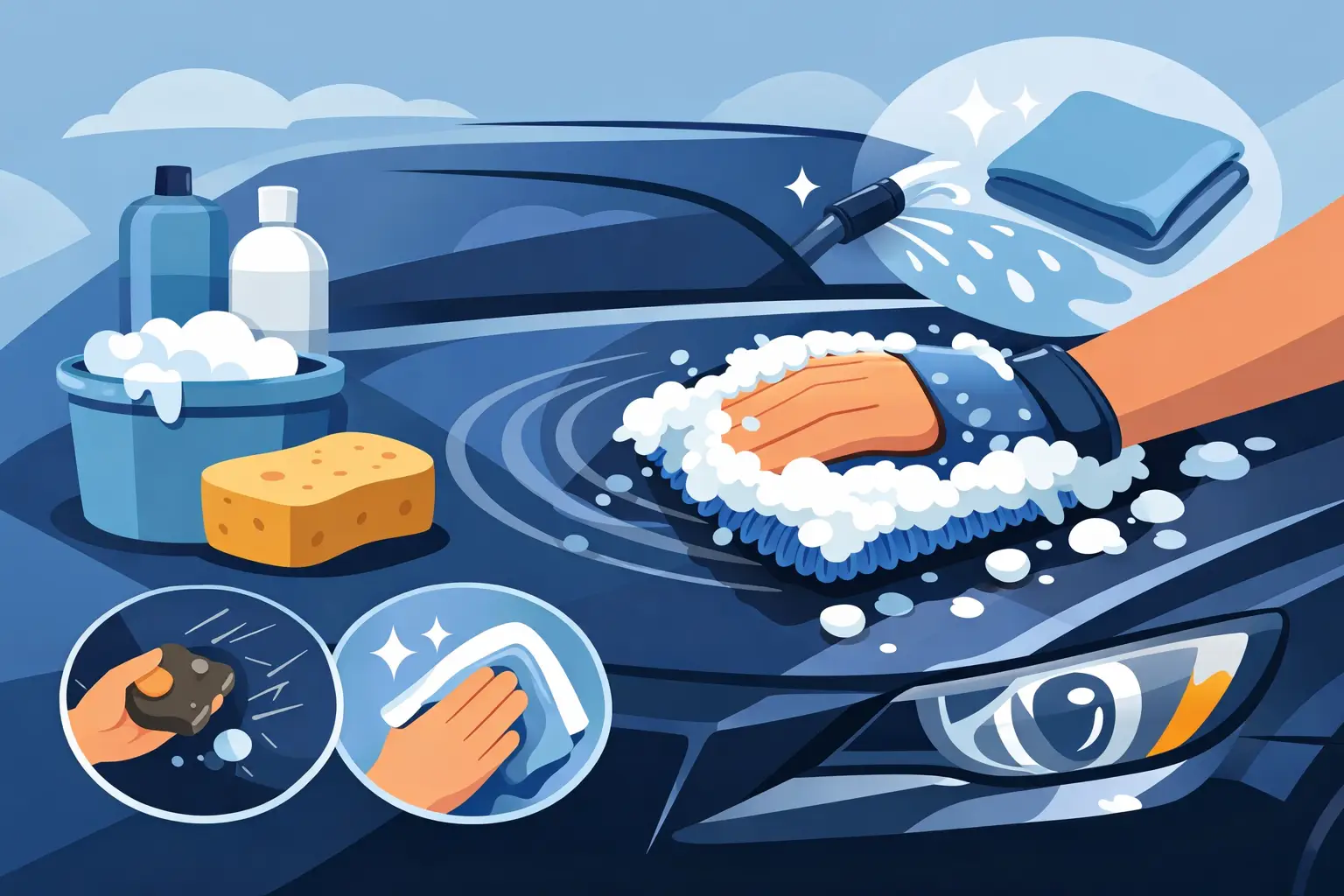
That spiderweb effect you notice under sunlight or parking lot LEDs usually does not come from one big mistake. It comes from small, repeatable ones – a dirty mitt, a dry panel, a quick pass with the wrong towel, or a rushed wash on a hot afternoon. If you want to hand wash to avoid swirl marks, the goal is not just getting the car clean. It is removing dirt without dragging it across the paint.
That sounds simple, but it is where most washes go wrong. A car can look clean from ten feet away and still pick up fine scratches during the process. Dark paint makes them easier to see, but every color is vulnerable. The good news is that swirl marks are largely preventable when the wash method is built around paint safety instead of speed.
Why swirl marks happen during a hand wash
Swirl marks are usually tiny scratches caused by friction. The paint is not being damaged by soap itself. The problem is contamination sitting on the surface while something moves over it. That could be a wash mitt, drying towel, sponge, or even dust left behind from a poor rinse.
A lot of drivers assume hand washing is automatically safer than an automatic wash. It can be, but only if the tools and technique are right. A hand wash done with one bucket, a bargain sponge, and an old bath towel can create just as many problems as a tunnel wash. Sometimes more.
Heat also matters. In places like Los Angeles, washing in direct sun can cause soap and water to dry too quickly. That leaves less lubrication on the panel and increases the chance of dragging minerals or dirt across the finish. Convenience matters, but conditions matter too.
The right setup for a hand wash to avoid swirl marks
The safest wash starts before water touches the paint. You want a quality pH-balanced car shampoo, two buckets, grit guards if possible, a clean microfiber or lambswool-style wash mitt, and dedicated drying towels made for automotive paint. Wheels should have their own separate tools because brake dust and road grime should never be brought back onto painted panels.
The two-bucket method still matters because it helps isolate dirt. One bucket holds your soap solution. The other is your rinse bucket. After each pass on the paint, rinse the mitt before loading it with fresh soap again. It is a simple habit, but it cuts down the amount of grit being rubbed back onto the surface.
Water quality can make a difference too. Hard water does not cause swirl marks directly, but it can leave spots that tempt people to scrub harder during drying. If your area has mineral-heavy water, you need to dry promptly and gently. That is often where paint gets marred.
Start with a thorough rinse, not contact
One of the biggest mistakes is touching the paint too soon. The first step should be a strong rinse to knock off loose dirt, dust, and debris. If the vehicle is heavily soiled, especially around the lower doors, rear bumper, and rocker panels, a pre-rinse is not enough by itself. You may need a foam pre-soak or a dedicated pre-wash treatment to soften grime before contact washing.
This is where patience pays off. If dirt can be removed with water and chemistry, there is no reason to push it around with your mitt. The less physical contact you need, the lower the risk of swirl marks.
For vehicles with mud, sand, or caked-on road film, you should be even more careful. A fast hand wash is not always the right answer. When contamination is heavy, forcing your way through the wash just increases friction. In those cases, a more deliberate pre-cleaning step is the safer move.
Wash from the top down, one section at a time
Once the surface is rinsed and prepped, wash the cleanest areas first. Start with the roof, glass, hood, and upper panels. Leave the dirtiest lower sections for last. This keeps the mitt cleaner longer and reduces the chance of carrying abrasive grime into more visible areas.
Use straight-line motions rather than aggressive circular scrubbing. Circular motion does not create swirl marks by itself, but when scratches happen, that motion makes them look more obvious under light. Gentle, controlled passes are safer and easier to monitor.
You also want plenty of lubrication. If the panel starts to feel grabby, stop and add more soap solution. Pressing harder is never the answer. A quality wash mitt should glide. If it does not, something is wrong – usually not enough rinse water, not enough soap, or too much contamination still on the paint.
Why your drying method matters just as much
A safe wash can still end with bad drying. In fact, drying is one of the most common places swirl marks are added because people assume the hard part is over. If the towel is low quality, dirty, or used with too much pressure, the paint can be marred in seconds.
Use clean microfiber drying towels designed for paint, not household towels or chamois that have seen better days. Blotting and light dragging are safer than pressing down and wiping aggressively. If any residue remains after washing, use a drying aid or quick detail spray for added lubrication rather than forcing the towel across the panel.
This is especially important on dark-colored vehicles and softer paint systems. Some finishes show every mistake. That does not mean they are impossible to maintain. It just means the margin for error is smaller.
Common mistakes that create swirl marks fast
The usual problems are not complicated. Reusing a dirty mitt, dropping a towel and using it anyway, washing in direct sun, using dish soap, cleaning wheels with the same tools as paint, and waiting too long to rinse or dry all raise the risk.
Another issue is trying to stretch tools too far. Wash mitts and microfiber towels are not lifetime items. Once they are worn, contaminated, or stiff, they stop being paint-safe. Washing them properly helps, but there is a point where replacement is the better choice.
And then there is the quick wash mindset. If you are trying to clean a neglected vehicle in twenty minutes before heading out, you are more likely to skip the steps that protect the finish. Speed and paint preservation usually work against each other.
Does ceramic coating or wax help?
Protection helps, but it is not a free pass. Wax, sealant, and ceramic coating can add slickness, which may reduce friction during washing and drying. They can also make dirt release more easily, which helps. But if the wash technique is poor, protected paint can still pick up swirl marks.
The real value of a protected surface is that it makes safe maintenance easier. Water sheets off better. Dirt does not cling as stubbornly. Drying takes less effort. For owners who care about keeping a vehicle looking sharp long term, protection and proper washing work best together.
If your paint already has visible swirling, a careful hand wash will prevent more damage, but it will not remove existing defects. That is where polishing or paint correction comes in. Once the finish is corrected, maintenance becomes even more important because you want to preserve that improved look.
When a professional hand wash makes more sense
Not every vehicle needs full paint correction, but many cars need better maintenance than a basic driveway wash can provide. If you live in an apartment, deal with limited shade, or simply do not have the time or tools to wash safely, professional hand detailing is often the smarter option.
That is especially true for newer vehicles, black paint, premium finishes, and cars that already show wash-induced marring. A professional process is built around contamination control, safe contact methods, proper drying, and the kind of attention that basic washes usually skip. For busy drivers in Los Angeles, mobile detailing also removes the hassle of driving across town just to hope someone treats the paint carefully.
At Drip N Shine, that focus is simple: better results without cutting corners on the surfaces that matter most.
The best habit is consistency
If you only remember one thing, make it this: clean tools and gentle technique matter more than chasing perfection. A safe wash routine done consistently will protect your paint far better than occasional deep cleaning followed by rushed maintenance.
Swirl marks tend to come from habits, not accidents. Change the habits and the finish changes with them. Give the paint enough lubrication, keep your tools genuinely clean, slow down on the dirty areas, and treat drying like part of the wash instead of an afterthought.
A clean car should look better after every wash, not a little worse under the next patch of sunlight.