
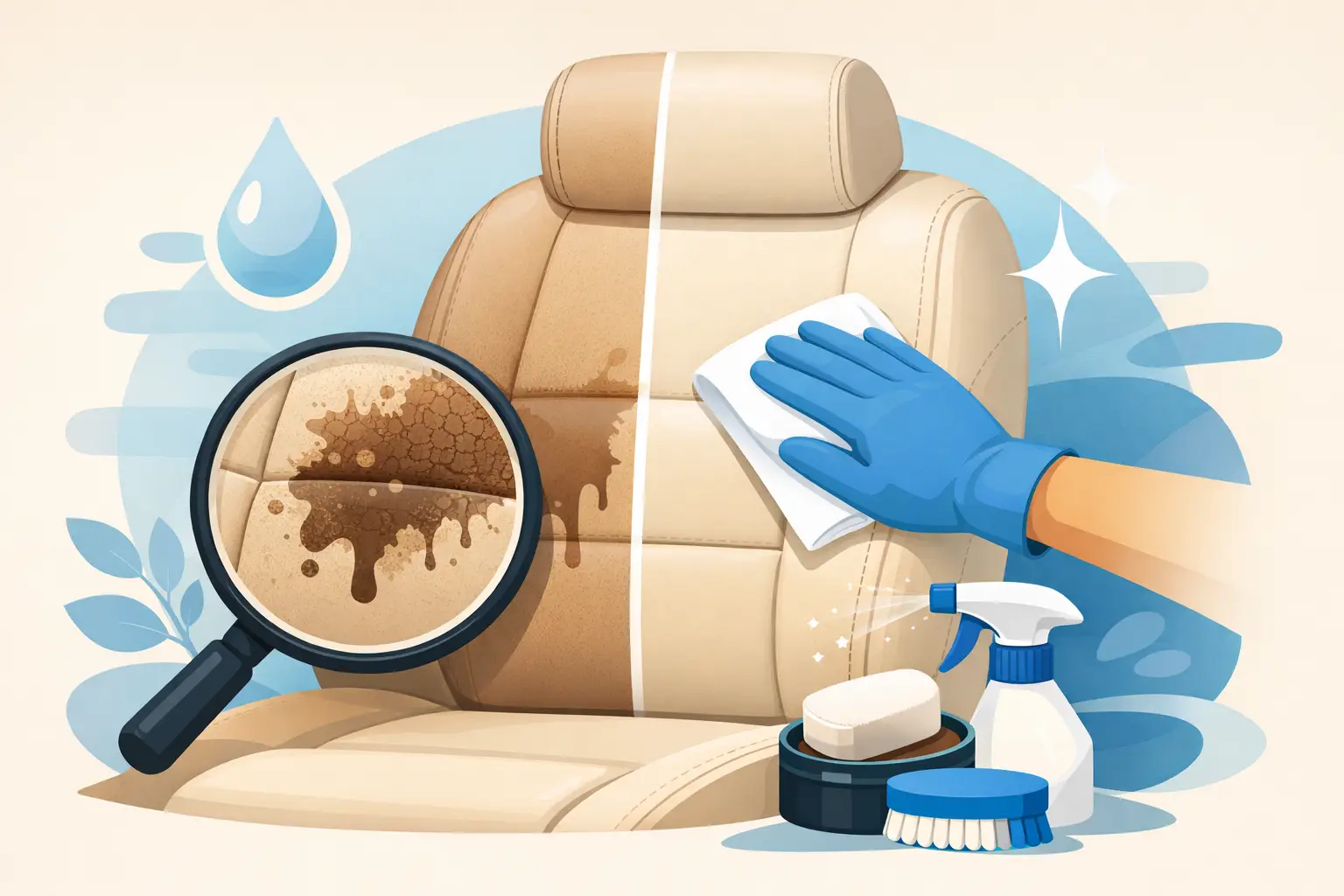
A coffee spill at the drive-thru, sunscreen after a beach day, a child’s snack in the back seat – leather seat stain removal usually starts with a moment that feels small until it dries. The temptation is to grab the nearest wipe or household cleaner and scrub. That is also how a removable stain can turn into faded color, a shiny patch, or a permanently rough section of leather.
Most modern vehicle seats are finished leather, meaning the surface has a protective coating over the hide. That coating needs a different approach than a leather couch, handbag, or pair of boots. The goal is not to soak the seat or attack the stain. It is to lift the contamination while preserving the color, finish, and natural feel of the material.
Why Leather Seat Stains Need a Careful Approach
Leather is durable, but its finish is not invincible. Heat, sunlight, body oils, dye transfer, and repeated friction already put stress on a vehicle interior. In Los Angeles, seats can get especially hot after sitting in direct sun, which makes old spills and oils harder to remove safely.
A stain may also look like one thing while actually being another. Dark marks near the driver’s seat are often body oils. Blue or black transfer along the seat bolsters may come from denim. White haze can be dried sunscreen or cleaning product residue. Food, coffee, makeup, ink, pet accidents, and grease all respond differently.
That is why aggressive cleaning is a poor shortcut. Strong degreasers, alcohol-heavy products, bleach, dish soap, and abrasive pads can strip protective coatings or leave the leather looking blotchy. Even a product labeled for leather can cause problems if it is used too heavily, left to dwell too long, or worked into a damaged area.
Start With the Safest Leather Seat Stain Removal Method
If the spill is fresh, act quickly and keep the process simple. Blot the area with a clean, soft microfiber towel. Do not rub back and forth, since rubbing pushes liquid into seams and spreads the stain across a larger section.
For a light surface stain, use a pH-balanced automotive leather cleaner on a microfiber towel or a soft interior detailing brush. Apply the product to the towel or brush instead of spraying directly onto the seat. Work in small sections with gentle, controlled motions, then wipe away loosened residue with a separate dry microfiber towel.
The key is to clean the entire affected panel evenly when needed. If a stain sits in the center of a seat cushion, spot-cleaning only that exact circle can leave a visibly cleaner patch around it. Light, even cleaning helps the finish remain consistent.
Always test first in a hidden area, such as beneath the seat or low on the side bolster. If color transfers to the towel, the leather may be worn, previously repaired, or more delicate than expected. Stop before making the damage worse.
Dry the Seat Completely
Leather should never be saturated. Excess moisture can work into stitching, foam, perforations, and seat seams, where it takes longer to dry and may create odor issues. After cleaning, gently towel-dry the surface and allow the vehicle to air out.
Avoid using high heat to speed up drying. A hot hair dryer or heat gun can dry the surface too quickly and put additional stress on the finish. If the leather feels stiff after it is fully dry, a quality automotive leather conditioner may help restore a more natural feel. Use conditioner sparingly. It is not a stain remover, and applying too much can leave a slippery or greasy finish.
Match the Method to the Type of Stain
Some stains can be handled with a gentle leather cleaner. Others need professional judgment because the risk of spreading, discoloring, or setting the stain is higher.
Food, Coffee, and Soft Drinks
Blot fresh spills immediately. Once dry, start with a dedicated leather cleaner and light agitation. Sugary drinks often leave a sticky residue that attracts more dirt, so follow with a clean, damp microfiber towel and dry the area thoroughly.
Coffee stains can be more difficult on light-colored interiors, especially if milk or cream was involved. If discoloration remains after a careful first pass, avoid escalating to household stain removers. They are often too harsh for automotive leather finishes.
Body Oil, Lotion, and Sunscreen
These stains commonly appear on armrests, headrests, steering wheels, and driver seat bolsters. They can make leather look darker or unusually glossy. A leather-safe cleaner used with a soft brush usually works better than conditioner, which can add more oils to an already saturated surface.
Sunscreen deserves extra caution. It can leave a pale, waxy film that does not always disappear with one cleaning. Repeated light passes are safer than one aggressive pass.
Denim Dye Transfer
Blue or black dye transfer is common on beige, white, gray, and red leather. The earlier it is addressed, the better. Once the dye bonds with the top coating, removal becomes more difficult and may require specialized products or color repair.
Do not use magic erasers, rough sponges, or heavy pressure. Those methods may remove some dye transfer, but they can also abrade the leather finish and create a dull spot that is more noticeable than the original mark.
Ink, Makeup, and Unknown Stains
Ink is one of the easiest stains to spread and one of the riskiest to treat with DIY products. Makeup can contain oils, pigments, waxes, and setting agents, making it equally unpredictable. If a stain is dark, set in, or located on light leather, professional interior detailing is usually the safer choice.
What Not to Use on Leather Seats
The products below can cause more harm than good, especially on coated automotive leather:
- Bleach, hydrogen peroxide, or strong all-purpose cleaners
- Rubbing alcohol, nail polish remover, or solvent-based stain removers
- Dish soap, laundry detergent, or household upholstery cleaner
- Magic erasers, stiff brushes, and abrasive scrub pads
- Oily DIY treatments such as olive oil or petroleum jelly
These products may appear effective at first because they cut through surface grime quickly. The trade-off is potential fading, drying, loss of sheen consistency, or damage to the protective topcoat. Once that finish is compromised, dirt and dye transfer can settle in more easily.
When a Stain Is More Than a Cleaning Problem
Not every mark is removable through cleaning. Cracking, peeling, color loss, deep scratches, and worn seat bolsters often need leather repair or refinishing rather than additional cleaner. The same is true for stains that have soaked into perforations, stitching, or damaged areas of the coating.
A professional detailer can assess whether the issue is contamination on the surface, dye transfer, embedded residue, or actual damage to the leather finish. That distinction matters. Cleaning damage as if it were dirt can make repair more extensive and more expensive.
For heavily used family vehicles, luxury interiors, and newer cars you want to protect long-term, professional interior detailing also provides a safer reset than random product experimentation. At Drip N Shine, the approach is based on the seat material, the stain type, and the condition of the finish – not a one-size-fits-all cleaner.
Keep New Stains From Becoming Permanent
A clean leather interior stays cleaner with simple maintenance. Wipe up spills quickly, avoid leaving wet towels or drink cups on seats, and clean high-contact areas before body oils build into dark patches. If you wear dark denim often, inspect light leather bolsters regularly so dye transfer does not have time to set.
Parking in shade when possible and using a windshield sunshade can also reduce heat stress on the interior. That will not prevent every stain, but it helps preserve the finish that makes stains easier to remove in the first place.
When a mark will not lift after a gentle attempt, stopping is often the smartest move. Protecting the leather is worth more than winning one round against a stubborn stain.