
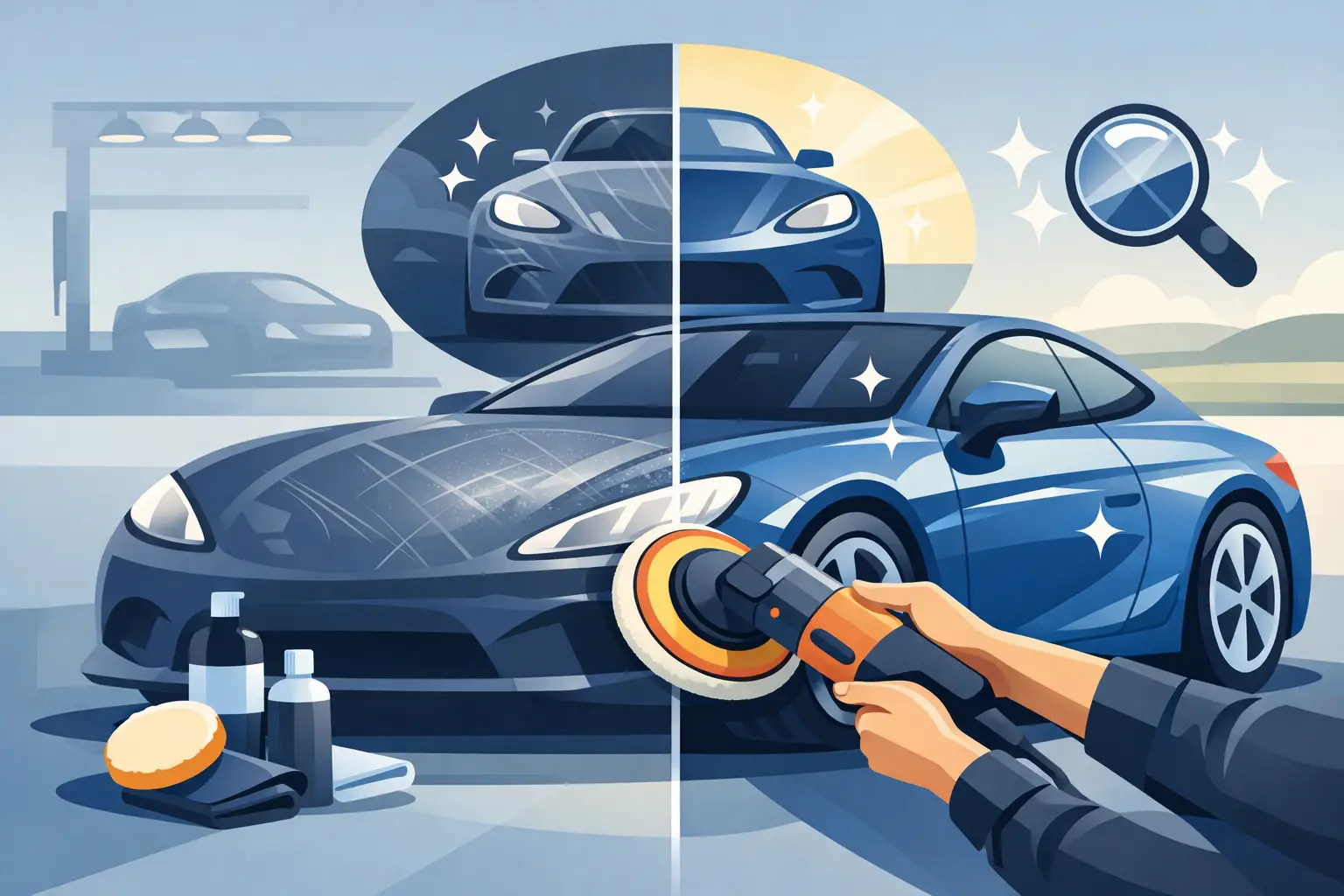
A freshly washed vehicle can look clean from a distance and still show its age the moment sunlight hits the paint. Swirl marks, hazy clear coat, light scratches, water spots, and dullness are especially noticeable under the bright Los Angeles sun. Professional paint correction results address those defects at the source by refining the paint surface, not by covering the problem with temporary shine products.
The change can be dramatic. A properly corrected vehicle often looks deeper in color, glossier in direct light, and far more reflective from every angle. But paint correction is not magic, and honest expectations matter. The final outcome depends on the type of damage, the condition and thickness of the paint, and the level of correction that makes sense for your vehicle.
Paint Correction Results: What Actually Changes
Paint correction is a machine-polishing process designed to reduce or remove defects in a vehicle’s clear coat. Most modern vehicles have a colored base coat covered by a transparent protective layer called clear coat. Over time, improper washing, automatic car washes, dirty towels, road grime, and everyday use create tiny scratches in that top layer. Those scratches scatter light, which is why paint can look dull or covered in cobweb-like swirls.
A detailer uses the right polish, pad, machine, and technique to level those imperfections carefully. The goal is to refine the surface so light reflects more evenly. That is where the crisp, glossy look comes from.
On a vehicle with typical wash-induced swirls and light scratches, the difference is usually easy to see. Dark colors such as black, deep blue, charcoal, and burgundy show some of the most striking transformations because they reveal defects so clearly before correction. White and silver vehicles can improve just as much, though the improvement is often more noticeable in gloss, smoothness, and clean reflection than in a dramatic before-and-after contrast.
Paint correction can commonly improve light oxidation, random isolated deep scratches, towel marks, haze from poor polishing, light water spotting, and fine sanding marks. It can also bring clarity back to paint that appears flat even after a wash and wax.
What Paint Correction Cannot Fix
The best results come from matching the service to the problem. Polishing corrects defects in healthy paint, but it cannot rebuild missing material or safely remove every deep mark.
If a scratch catches your fingernail, it may extend beyond the clear coat. Correction can often soften its edges and make it less visible, but complete removal may not be possible without taking away more clear coat than is safe. The same is true for rock chips, peeling clear coat, deep key scratches, cracked paint, and areas where the paint has been worn through.
Etching is another common issue. Bird droppings, tree sap, and hard-water minerals can chemically damage the paint if left in place too long. Mild etching may polish out well. Severe etching can leave permanent marks that require more involved repair or repainting.
A professional should never promise 100 percent defect removal before inspecting the vehicle. Pursuing a perfect finish on thin, older, or previously corrected paint can create more risk than value. A thoughtful correction plan prioritizes a major visual improvement while preserving the paint for the future.
One-Step, Two-Step, or More: Why the Level Matters
Not every vehicle needs the same approach. Paint correction is typically tailored to how much improvement you want and what the paint can safely handle.
A one-step polish is often the right choice for a newer vehicle with light swirls, mild haze, or reduced gloss. It combines correction and finishing in a single polishing stage. The result can be a noticeable improvement in clarity and shine without the added time of a more intensive service.
A two-step correction starts with a stronger cutting stage to tackle heavier defects, then follows with a refining polish to restore a clear, high-gloss finish. This is a better fit for paint with visible swirl marks, moderate scratches, or years of wear from quick washes. It generally delivers a more dramatic transformation, but it requires more labor and carries a higher price because the work is more detailed.
Heavily neglected paint may need additional spot work or multiple correction stages. That does not always mean it is the best investment. On an older daily driver, a strong improvement with a sensible amount of clear coat removal may be more valuable than chasing the last few visible defects. On a cherished weekend car or newer luxury vehicle, a more complete correction may make sense before applying long-term protection.
The Inspection Makes the Difference
Paint can look very different in shade than it does under inspection lighting. Before polishing begins, a proper assessment should identify the paint condition, the severity of defects, previous bodywork, and any areas that need special care.
Paint thickness readings can help a professional understand how much material is available. Repainted panels, sharp body lines, plastic bumpers, and areas near badges all need a controlled approach. This is why paint correction is more than running a machine over the vehicle. The quality of the result depends on preparation, product selection, technique, and restraint.
Thorough prep also matters. The vehicle should be washed safely, decontaminated to remove bonded fallout and embedded particles, and dried with clean materials before polishing. If contaminants remain on the paint, they can interfere with the correction process or create fresh marring.
How Long Do Paint Correction Results Last?
The corrected finish itself does not simply disappear. Once swirl marks and light defects have been removed, they stay removed. What changes over time is the condition of the newly refined surface. Poor washing habits can reintroduce swirls surprisingly fast, while careful maintenance can keep the paint looking sharp for years.
Protection is the next step after correction. A quality sealant, wax, or ceramic coating adds a sacrificial layer between the paint and the elements. Ceramic coating is especially popular for owners who want easier washing, stronger chemical resistance, and long-term gloss. It will not make a vehicle scratch-proof, but it helps preserve the finish and makes it easier to remove dirt before it bonds to the surface.
For Southern California drivers, protection is useful beyond appearance. Intense UV exposure, dust, coastal air, road film, sprinkler water, and bird droppings all take a toll on unprotected paint. A corrected and protected vehicle is easier to maintain, but it still needs regular washing with clean tools and proper technique.
Avoid automatic brush washes whenever possible. Use pH-balanced car shampoo, clean microfiber towels, and separate wash tools for the wheels and paint. Dry the vehicle promptly rather than allowing mineral-heavy water to sit on the surface. Small maintenance choices have a direct effect on how long that polished finish stays looking fresh.
Is Paint Correction Worth It?
For many owners, paint correction is worth it because it changes how the entire vehicle presents. Clean wheels and a shiny tire dressing help, but clear paint is what gives a car that true showroom-level finish. It can make a daily driver feel renewed, help a newer vehicle look properly cared for, and prepare a premium vehicle for ceramic coating.
It is also a practical choice before selling a vehicle. Buyers notice paint condition quickly, even if they cannot identify every swirl mark. A glossy, well-maintained exterior signals care and can improve first impressions in photos and in person.
The right service depends on your goals. If you want a noticeable refresh before a special event or sale, a one-step polish may be enough. If you are protecting a vehicle you plan to keep, more thorough correction followed by ceramic coating can deliver better long-term value. Drip N Shine can assess the paint at your home, office, or apartment and recommend the level of work that fits the vehicle rather than pushing a one-size-fits-all package.
The most satisfying result is not a finish that only looks good on the day of service. It is a vehicle you enjoy walking up to weeks later because the color still looks rich, the reflections still look clean, and you have a clear plan for keeping it that way.