
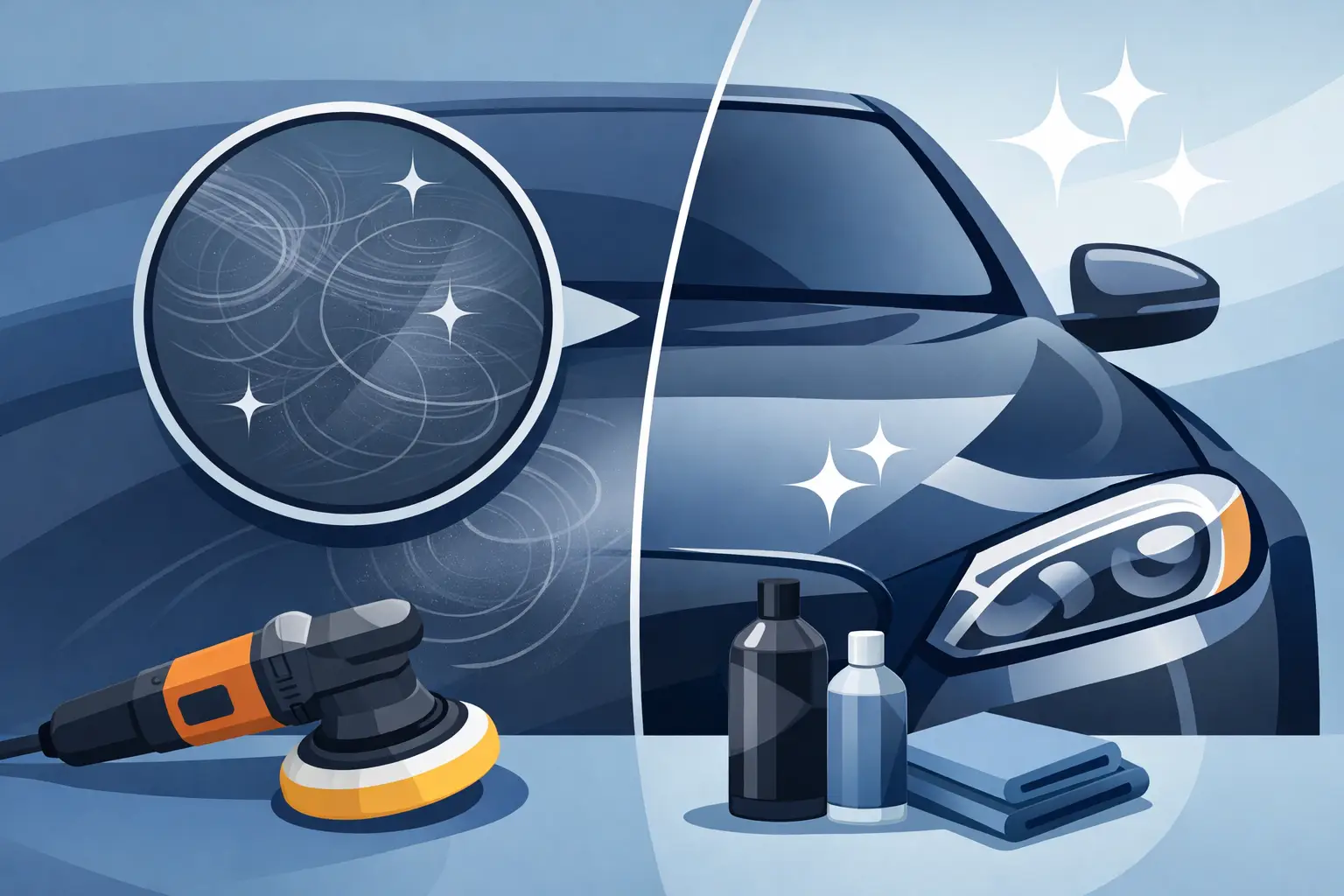
Swirl marks usually show up at the worst time – right when the sun hits your paint and turns what looked clean in the shade into a web of fine scratches. For many owners, that is the moment they start looking into paint correction for swirl marks. The good news is that swirl marks can often be corrected. The better news is that when the process is done properly, the finish can look dramatically glossier, clearer, and deeper than a basic wash ever could.
What swirl marks actually are
Swirl marks are very light scratches in the clear coat, the transparent layer that sits over your vehicle’s paint. They are usually not circular in the way people imagine. Under direct light, they create a circular or spiderweb effect because of how the scratches catch and reflect light.
Most of the time, swirl marks come from improper washing and drying. Automatic car washes with brushes are a common cause, but they are not the only one. Dirty towels, cheap wash mitts, wiping dust off a dry panel, and even rushed hand washes can all leave behind fine marring.
That matters because once the clear coat is scratched, wax will not truly remove the damage. It may temporarily hide it. A glaze may make it look better for a short time. But real correction means leveling the surface enough to reduce or remove the marks so light reflects evenly again.
How paint correction for swirl marks works
Paint correction for swirl marks is a machine-polishing process that removes a small amount of clear coat to reduce visible defects. In simple terms, the surface is refined until the scratches are minimized and the paint looks clearer.
A professional detailer usually starts with a proper wash and decontamination. That step removes dirt, bonded contaminants, and anything else that could interfere with polishing. If this prep is skipped or rushed, polishing can drag contamination across the paint and create more damage.
After the surface is cleaned, the paint is inspected under proper lighting. This is where experience matters. Not every swirl mark needs an aggressive approach. On softer paint, a finishing polish may make a huge difference. On harder paint, a stronger compound and pad combination might be needed first, followed by a finer polish to restore clarity.
The goal is not to chase perfection at any cost. The goal is to improve the finish safely. Some vehicles can achieve near-complete correction. Others may have deeper scratches that should be reduced rather than fully removed, especially if preserving clear coat thickness is the smarter long-term choice.
Why technique matters more than product hype
There is no magic bottle that fixes swirl marks on its own. The result depends on the right combination of pad, polish, machine, pressure, speed, and paint type. That is why two vehicles with similar-looking defects can need very different correction plans.
This is also why DIY attempts sometimes disappoint owners. A consumer-grade polish might add gloss, but if the pad choice is wrong or the paint is not prepped correctly, the swirls can remain. In some cases, the finish ends up hazy, especially on darker vehicles where every mistake is easier to see.
When swirl marks need professional correction
Some swirl marks are mild enough that a single polishing step can noticeably improve the finish. Others are part of a bigger problem that includes oxidation, water spots, random deeper scratches, and wash-induced haze. A professional inspection helps separate what is realistically correctable from what is simply too deep to remove safely.
Dark-colored vehicles usually benefit the most from correction because defects are far more visible on black, blue, charcoal, and deep red paint. If your car looks dull in sunlight even after a fresh wash, swirl marks are often a major reason.
Owners in Los Angeles also deal with conditions that make the issue worse. Dust, strong sun, and frequent quick-clean habits can all take a toll on paint. If a vehicle is parked outdoors often, minor defects tend to become more noticeable over time because the light constantly exposes them.
Signs your paint needs more than a wash
If the finish looks gray instead of glossy, if direct sunlight reveals circular scratching, or if your paint feels clean but still looks tired, a wash is no longer enough. Those are classic signs that the surface needs correction rather than just cleaning.
Another clue is when wax or spray sealant improves the look for a few days, then the defects come right back. That usually means the product filled the marks temporarily instead of removing them.
What to expect from the process
A proper correction is not fast, and that is part of its value. The vehicle needs to be washed carefully, decontaminated, taped where needed, polished in sections, and checked under good lighting. Rushing this process often leads to missed defects or uneven results.
For some vehicles, a one-step polish is the right answer. It improves gloss, removes lighter swirling, and offers strong visual improvement at a more approachable price point. For more neglected paint, a two-step correction may be better. That usually involves a stronger first step to cut defects and a finishing step to refine the paint to a higher gloss level.
Neither option is automatically better. It depends on the condition of the paint, the owner’s expectations, and the vehicle’s role. A daily driver may not need the same level of correction as a weekend car or a newer luxury vehicle where appearance matters more closely.
Paint correction for swirl marks vs temporary fillers
A lot of products promise instant shine, and many do deliver it. The question is how long the result lasts. Fillers and glazes can mask swirl marks by sitting in the scratches and changing how light reflects off them. That can be useful before a sale or for a quick cosmetic boost, but it is not true correction.
Real paint correction for swirl marks changes the surface itself. That is why the improvement lasts after future washes, assuming the paint is maintained properly. It is a more honest solution and, for many owners, a better value because the results are based on actual defect removal rather than concealment.
How to keep swirl marks from coming back
Correction can restore the finish, but maintenance determines how long it stays that way. The biggest mistake owners make after polishing is going right back to the same wash habits that caused the damage in the first place.
Safe washing starts with clean tools and a method that reduces friction. That means using quality wash media, proper lubrication, and drying towels that are actually designed for paint care. It also means avoiding brush tunnels if preserving the finish matters to you.
Protection helps too. A sealant or ceramic coating adds a sacrificial layer and makes the vehicle easier to clean, which can reduce future marring when the car is maintained properly. Still, protection is not invincible. Even coated vehicles can develop swirl marks if they are washed carelessly.
Is ceramic coating necessary after correction?
Not always, but it often makes sense. If you are investing in polishing, protecting that corrected finish is the logical next step. Coating can improve water behavior, help with cleaning, and support better long-term gloss retention.
That said, some owners prefer a simpler maintenance plan with regular sealant applications. The right choice depends on how long you plan to keep the vehicle, where it is parked, and how consistent you are with upkeep.
Is paint correction worth it?
If swirl marks bother you every time you walk up to your vehicle, yes, it can be absolutely worth it. The difference is not subtle when the paint has been properly corrected. Reflections sharpen. Color looks richer. The vehicle appears cleaner even when it is not freshly washed because the finish is no longer scattering light through thousands of fine scratches.
It is also worth looking at it from a value standpoint. A quality correction can help preserve the visual appeal of a newer or premium vehicle and make an older one feel refreshed again. For owners who care about resale, pride of ownership, or simply getting more enjoyment out of what they drive every day, the service has a practical payoff.
The key is choosing a detailer who focuses on safe improvement, not exaggerated promises. Not every defect should be removed at maximum aggression. Good correction balances appearance with paint preservation.
When done right, swirl mark removal is not about making a car look fake or overly glossy. It is about bringing the finish back to what it should have looked like all along. And once you have seen clean, corrected paint in direct sunlight, it is very hard to settle for less.