
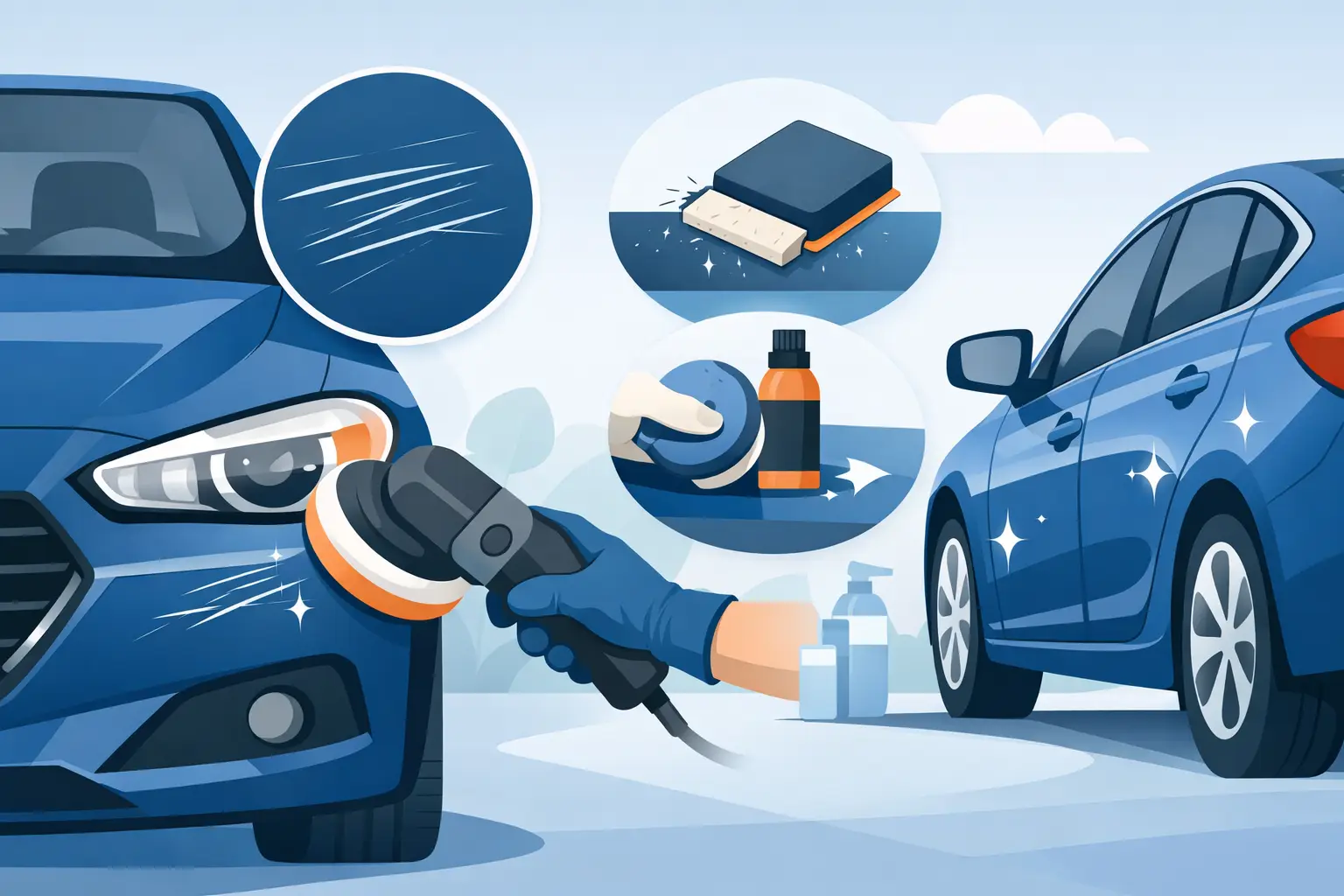
That thin white line on your door might look minor in the driveway and painfully obvious in full sun. Scratch removal car paint is one of the most common reasons people start looking into detailing, and it usually comes down to one question: can this be fixed, or are you about to waste time and money on the wrong approach?
The honest answer is that some scratches are easy to improve, some can be corrected almost completely, and some need touch-up paint or body shop work. The difference is not marketing – it is how deep the scratch goes and how the paint was damaged in the first place.
Understanding scratch removal car paint results
Modern automotive paint is layered. You generally have primer at the bottom, color in the middle, and clear coat on top. Most of the gloss you notice comes from that clear coat, and most light scratches sit in that upper layer. That is good news, because clear coat defects can often be polished out.
If the scratch looks dull, light, or hazy and does not seem to have a strong edge, there is a decent chance it is in the clear coat. If you can catch it with your fingernail, the scratch is usually deeper and harder to fully remove. If you see a darker line on a light-colored car, or a light line on a dark-colored car, that can mean the scratch has gone through the clear and into lower layers.
This is where expectations matter. Scratch removal is not always the same as scratch elimination. A professional can often make a defect dramatically less visible even when full removal is not safe. That still improves the finish and keeps the paint looking clean and refined.
The scratches that usually can be fixed
Light wash marring, towel marks, and shallow swirls are often the easiest problems to correct. These usually come from automatic car washes, dirty wash mitts, cheap drying towels, or quick wipe-downs on dusty paint. They are widespread rather than deep, and polishing is designed for exactly that.
Scuffs from bags, fingernails around door handles, and mild transfer marks can also respond well. Sometimes what looks like a scratch is actually paint transfer or residue sitting on top of the surface. In those cases, the improvement can be faster than people expect.
A professional detailer will clean the surface first, decontaminate it if needed, and then test a polish and pad combination to see how the paint responds. That test spot matters. Some paint systems correct quickly. Others, especially on certain darker vehicles, need a more careful process to avoid haze or fresh micro-marring.
When scratch removal car paint becomes limited
Deep scratches are a different conversation. If the damage cuts through the clear coat, polishing alone will not truly remove it. Polishing works by leveling the surface around the scratch. That is safe only up to a point. Go too aggressive, and you trade one defect for premature clear coat failure later.
That is why responsible correction is not about chasing perfection at any cost. It is about improving the finish while preserving the paint. On a daily driver, the right choice is often to reduce visibility significantly rather than over-cut the panel for a result that may not hold up well over time.
Touch-up paint can help when the scratch exposes lower layers. It fills the damaged area and improves appearance, but it usually does not recreate a factory-level finish on its own. Wet sanding and polishing after touch-up can refine the result, though that takes skill and should not be treated like a quick weekend experiment.
Why DIY scratch repair often disappoints
Most store-bought scratch kits promise a lot because they are sold to frustration. The problem is that they are built for broad appeal, not for your exact paint condition. Some are little more than fillers that temporarily hide damage. Some compounds are too weak to make a real difference. Others are aggressive enough to create a new problem in inexperienced hands.
The biggest DIY mistake is guessing. People use a heavy compound on paint that needed only a light polish, or they rub the same small area by hand until the finish becomes uneven. Another common issue is skipping proper cleaning. If dirt is still on the panel, you are grinding contamination into the paint while trying to fix it.
There is also the lighting problem. A scratch can look gone in shade and reappear instantly in direct sunlight. Real correction has to hold up outside, not just in a garage or under soft indoor bulbs.
What professional paint correction does differently
Professional scratch removal starts with assessment, not product. The surface is washed correctly, chemically and mechanically decontaminated if needed, and inspected under proper lighting. Only then does the correction process begin.
Machine polishing gives far more control and consistency than hand application. Pad choice, polish type, machine speed, arm movement, pressure, and paint temperature all affect the result. That is why two cars with similar-looking scratches can require very different approaches.
A quality detailer also works with the finish you actually have. Softer paint can correct quickly but mar easily. Harder paint may resist correction and require more time. On black or dark-colored vehicles, clarity is everything. Removing the obvious scratch while leaving behind haze or buffer trails is not a win.
For customers who care about both appearance and long-term value, this is where the service earns its price. Good paint correction is careful, measured work. It is not just making defects disappear for a day. It is restoring gloss in a way that looks clean, even, and intentional.
How to tell whether you need polishing, touch-up, or repainting
If the mark is light and mostly visible at certain angles, polishing is usually the first option to consider. If the scratch catches your nail but still looks narrow, polishing may still improve it, though full removal is less likely. If you can clearly see primer or exposed material beneath the paint, touch-up or refinishing is typically needed.
Location matters too. A scratch on a flat door panel is often easier to correct cleanly than damage near a sharp body line or panel edge. Those areas have less margin for aggressive polishing. Older paint, repainted panels, and neglected finishes also need a more cautious approach.
For many vehicle owners, the right decision is based on what will make the car look noticeably better without overcomplicating the repair. Not every scratch needs a body shop. Not every scratch should be attacked with compound either.
Protecting the paint after scratch removal
Once scratches are corrected, the next step is keeping them from coming back. This is where a lot of people undo the value of the service. They fix the finish, then run the car through an automatic wash with brushes the next week.
If you want correction results to last, wash method matters. Hand washing with clean tools, proper drying towels, and good technique goes a long way. Protective options matter too. A paint sealant or ceramic coating adds slickness and helps reduce how strongly dirt bonds to the surface. It will not make the paint scratch-proof, but it does make maintenance easier and safer.
For drivers in Los Angeles, where sun exposure, dust, and frequent commuting all work against your finish, maintenance is not a luxury. It is how you protect the money you already spent on correction. Even a well-kept car will slowly pick up defects over time, but the rate and severity can be reduced a lot with the right care.
When it makes sense to call a pro
If the scratch is isolated and very light, you may be able to improve it yourself with the right product and realistic expectations. But if the vehicle has multiple scratches, swirl marks across the whole car, dark paint, or damage you can feel easily with a fingernail, professional help usually saves time and avoids disappointment.
That is especially true if you care about resale value, own a newer vehicle, or want the paint corrected and protected in one visit. A professional service can evaluate the defect, explain what level of improvement is realistic, and recommend whether polishing alone, a fuller paint correction, or added protection makes the most sense.
At its best, scratch removal is not about chasing a perfect car. It is about getting your paint back to a condition that looks sharp, cared for, and worth keeping that way. The right fix should leave you with more confidence every time the sun hits the panel, not another product sitting in the garage that almost worked.