
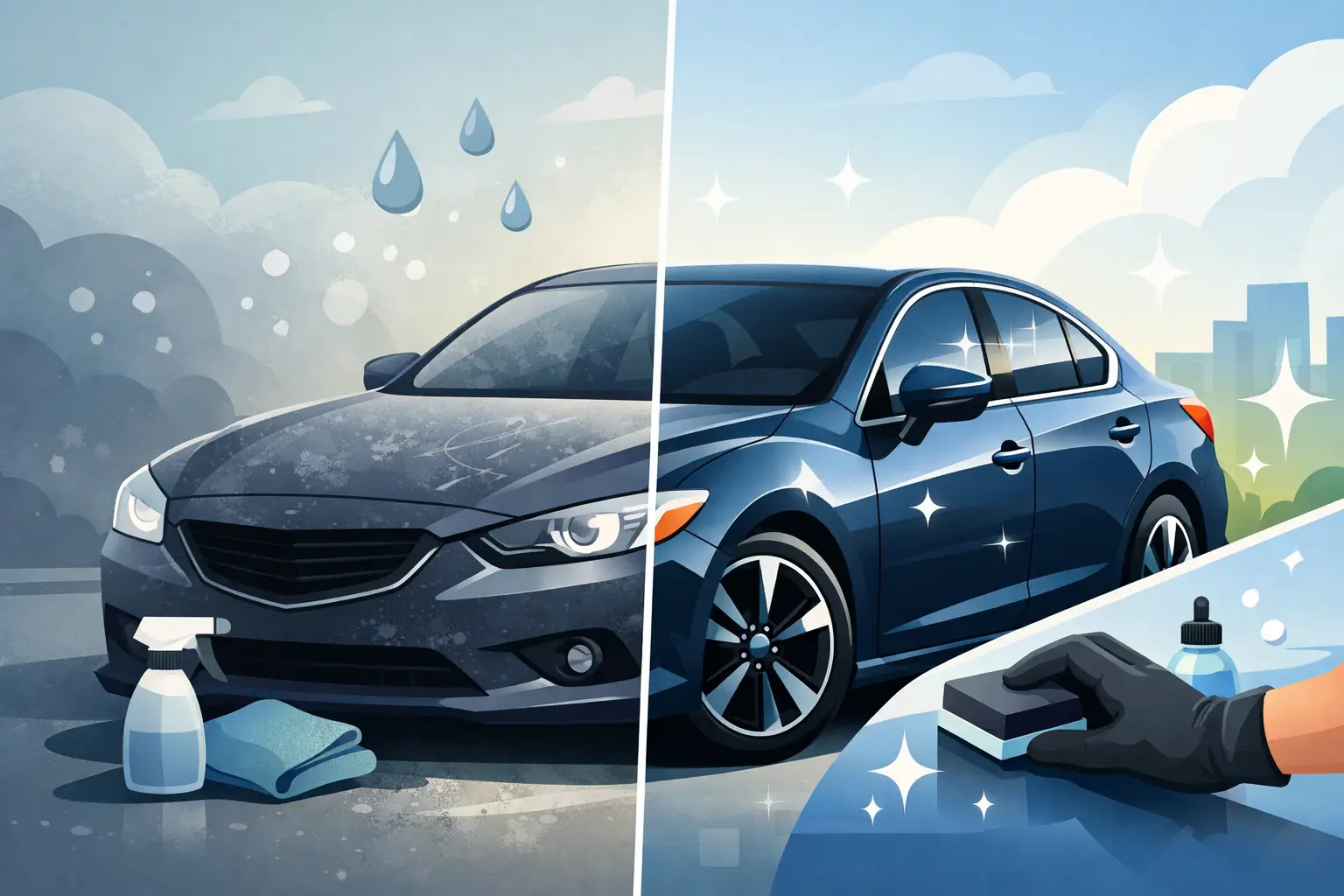
A true ceramic coating before after example can be striking, but the coating itself is only part of what you are seeing. The deep gloss, sharp reflections, and richer paint color in a professional after photo usually come from a carefully prepared surface first. Washing removes dirt. Paint correction removes many of the defects that keep clear coat from reflecting light evenly. The ceramic coating then protects that refined finish and makes regular maintenance easier.
For Los Angeles drivers, that distinction matters. Sun exposure, dust, road film, bird droppings, apartment parking, and frequent hand washes can all leave a vehicle looking dull long before the paint has actually failed. A quality ceramic coating service is not a shortcut around damage. It is a long-term protection step that works best when the paint is properly restored before it is applied.
What a Ceramic Coating Before-and-After Example Really Shows
A strong before-and-after result often begins with paint that looks flat, hazy, or lightly scratched in direct sunlight. You may notice circular swirl marks around the door handles, dullness on the hood, water spots near the roofline, and reflections that look blurry instead of crisp. Dark-colored vehicles show these issues most clearly, but white, silver, and lighter finishes are affected too.
After professional preparation and coating, the paint typically looks clearer and more saturated. Body lines appear sharper because the surface reflects light more evenly. Metallic flake can stand out, and the vehicle looks freshly polished rather than simply washed. On a well-maintained newer car, the difference may be subtle but refined. On an older vehicle with oxidation, swirls, and contamination, it can be dramatic.
The key is understanding what created the change. A ceramic coating adds gloss, but it does not level deep scratches, remove etched water spots, or repair peeling clear coat. Those improvements require washing, decontamination, polishing, and sometimes multi-step paint correction before the coating is installed.
Before Coating: What We Look for on the Paint
Every vehicle needs a different level of preparation. Before recommending ceramic coating, a detailer should inspect the paint in proper lighting, not just glance at it in a shaded driveway. Sunlight and inspection lights reveal defects that can be hidden when the car is wet or parked indoors.
Common issues include bonded contamination that makes paint feel rough, light wash-induced swirls, fine scratches, oxidation, tree sap residue, water spotting, and embedded brake dust on lower panels. These problems affect both appearance and how well a protective coating can bond.
The prep process generally starts with a thorough hand wash and chemical decontamination to remove road grime, iron particles, and other contaminants. A clay treatment may be used when needed to create a smooth surface. From there, polishing is selected based on the condition of the vehicle and the customer’s goals.
A newer vehicle may need only a light polish to enhance clarity before coating. A vehicle that has been through years of automatic car washes may benefit from more extensive correction. More correction can produce a bigger visual transformation, but it also takes more time and labor. The right approach is not always the most aggressive one. Clear coat is finite, so professional work should balance correction with long-term paint preservation.
After Coating: The Changes You Can Expect
Once the paint has been corrected and the ceramic coating has cured, the finish should look smoother, glossier, and more reflective. The coating creates a protective layer that helps reduce the impact of UV exposure, road film, grime, and environmental contamination. It also gives the surface stronger water-beading and water-sheeting behavior, which means rinsing and washing the vehicle is usually easier.
That does not mean dirt magically disappears. A coated vehicle still gets dusty, still collects pollen, and still needs routine washing. The difference is that contaminants are less likely to cling as aggressively to a properly coated and maintained surface. When it is time to clean the vehicle, the process can be safer and more efficient because grime releases more easily.
The before-and-after benefit is especially noticeable after rain or a maintenance wash. Instead of a finish that stays streaky and dull, the paint can return to a clean, glossy look with less effort. For busy owners, that is one of the most practical reasons to invest in ceramic coating: your vehicle stays easier to maintain between professional details.
What Ceramic Coating Will Not Fix
Ceramic coating is high-value protection, not a repair product. Setting the right expectations protects both your vehicle and your investment.
It will not remove deep scratches that catch a fingernail, repair rock chips, fix cracked paint, hide dents, or stop all future damage. It is also not a force field against improper washing. Using abrasive brushes, dirty towels, harsh chemicals, or an automated car wash can still create swirl marks and reduce the coating’s appearance over time.
It also will not make every panel look identical if the paint has previous bodywork, fading, or clear coat failure. In those cases, paint repair or repainting may be necessary before any coating service makes sense. A reputable detailer should be direct about these limitations rather than promising an unrealistic transformation.
How Long Will the After Results Last?
The visual improvement from paint correction can last a long time when the vehicle is washed correctly. The lifespan of the ceramic coating depends on the specific coating, the preparation, parking conditions, driving habits, and maintenance routine. A car kept in a garage and washed with safe methods will generally preserve its finish better than one parked outdoors every day near the coast or under trees.
To keep the after result looking its best, wash regularly with pH-balanced products, use clean microfiber towels, and remove bird droppings or tree sap promptly. Avoid taking a coated car through brush tunnels, even if they advertise a gentle wash. Those brushes can drag debris across the paint and gradually bring back the swirls that correction removed.
Professional maintenance details also help. They remove accumulated contamination, clean areas that are easy to miss at home, and give the paint a chance to be inspected before small problems become larger ones.
Is Ceramic Coating Worth It for Your Vehicle?
Ceramic coating makes the most sense for owners who care about a consistently clean appearance and want a simpler maintenance routine. It is a smart option for newer vehicles, premium finishes, freshly corrected paint, and drivers who want to preserve their vehicle’s value and presentation. It can also be worthwhile for a daily driver that spends long hours outside, as long as the owner understands that maintenance is still part of the plan.
If your main goal is a quick shine before selling a car, a detail and polish may be the better fit. If the paint is heavily damaged, the budget may be better spent on correction or paint repair first. The best service is based on the actual condition of your vehicle, not a one-size-fits-all package.
At Drip N Shine, the goal is to show you an honest transformation: cleaner paint, clearer reflections, and protection that supports the way you use your car. A careful inspection before service makes it easier to choose the level of correction and coating that delivers results you can see and maintain.
A great after photo should not just look good on appointment day. With the right preparation and safe upkeep, it should make you want to look back at your vehicle every time you park it.