
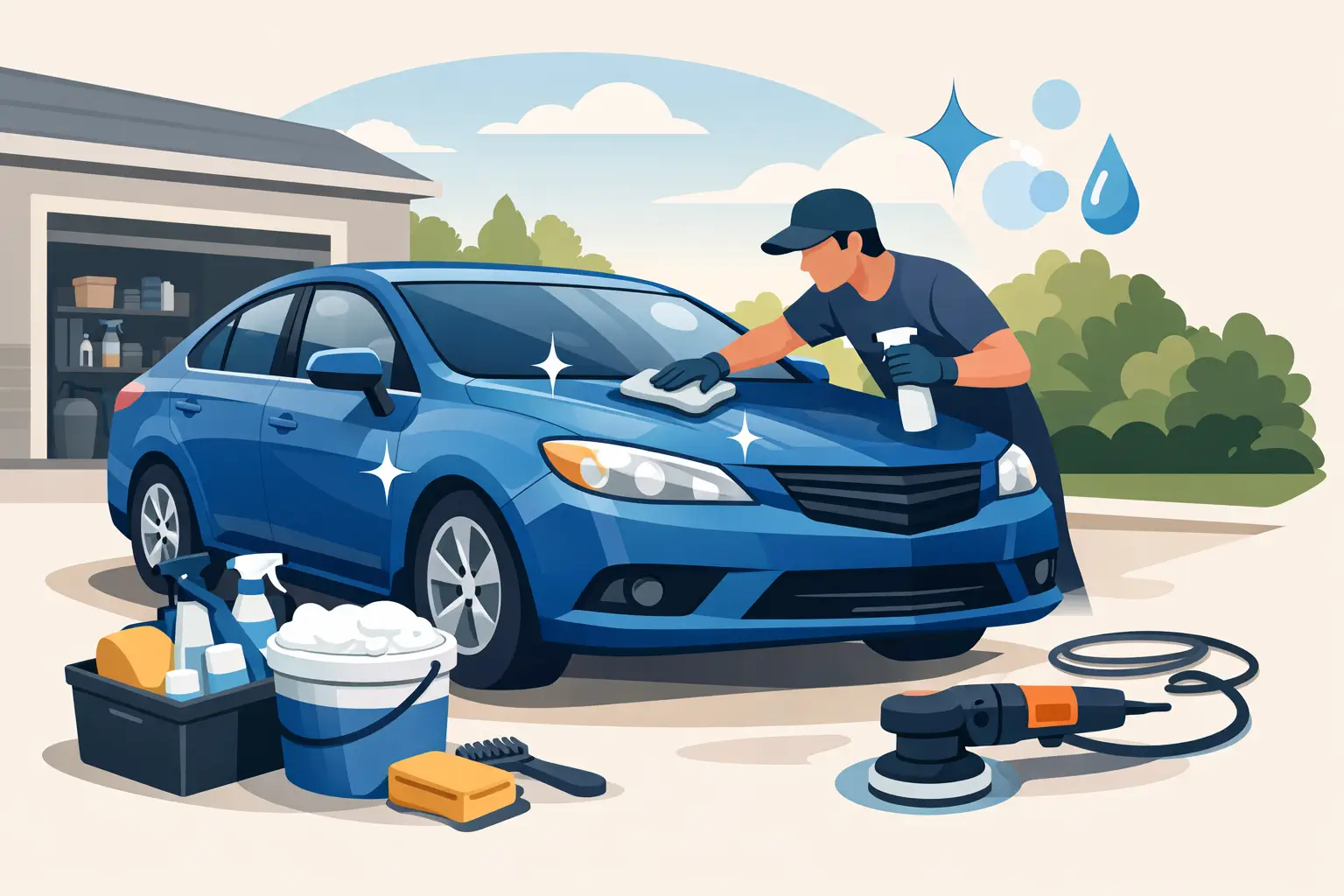
Saturday morning, a hose in the driveway, a sponge from the garage, and good intentions – that is how a lot of paint damage starts.
Car detailing at home can absolutely improve how your vehicle looks and feels. It can also leave behind swirl marks, streaky glass, soaked carpets, and missed grime if you use the wrong process. The difference is not effort alone. It is using the right products in the right order, with enough care to clean and protect the surfaces instead of wearing them down.
If you want your car to look better between professional appointments, or you are deciding whether DIY detailing is worth it at all, here is the practical truth: some parts of detailing at home are smart and cost-effective, and some are better left to trained hands.
What car detailing at home should really mean
A real detail is not the same as a quick wash. It is a more complete process that cleans the exterior, treats the interior, and pays attention to the small areas that make a vehicle feel fresh again. That includes the paint, wheels, tires, trim, glass, seats, carpets, dashboard, door panels, and tight spaces where dust and debris collect.
At home, the goal should not be to imitate every professional service. It should be to maintain your vehicle properly, avoid common damage, and keep your car in better condition for longer. If you frame it that way, you make better decisions right away.
For example, washing and vacuuming at home makes sense for most owners. Light interior wipe-downs, tire dressing, and basic spray protection can also be manageable. Paint correction, heavy stain extraction, and long-term protection like ceramic coating are different. Those jobs require more than motivation. They require equipment, product knowledge, and a controlled process.
The right setup for car detailing at home
You do not need a van full of tools, but you do need better supplies than the average gas station wash kit.
Start with a quality pH-balanced car shampoo, microfiber wash mitts, several microfiber towels, two buckets with grit guards if possible, a dedicated wheel cleaner, separate brushes for wheels and tires, an interior cleaner safe for multiple surfaces, a glass cleaner, a vacuum, and a spray sealant or wax. If your vehicle has leather, use a cleaner and conditioner made for automotive leather, not household products.
This matters because the wrong tools create problems fast. A single dirty sponge can drag grit across the paint. One towel used on wheels and paint can transfer brake dust and scratch the finish. Harsh all-purpose cleaners can dry out trim, stain delicate surfaces, or leave interiors looking blotchy instead of clean.
Good detailing is less about using the most expensive products and more about keeping each surface separate and treated correctly.
Start outside, but do not rush the wash
The exterior wash is where most DIY mistakes happen. People focus on speed, not safety.
Always start with the wheels and tires first. They are usually the dirtiest part of the vehicle, and cleaning them first keeps brake dust and grime from splashing onto freshly washed paint. Use dedicated brushes and tools for this area only.
Then move to the body. Rinse thoroughly before touching the paint. That initial rinse removes loose debris that would otherwise grind into the surface. Use one bucket for clean soapy water and one for rinsing your mitt. Wash from the top down because lower panels carry the heaviest dirt.
Avoid washing in direct sun when possible. In warm areas like Los Angeles, soap and water can dry quickly on the surface, which leads to spots and streaking. Shade gives you more working time and better results.
Drying matters just as much as washing. Letting a vehicle air dry often leaves mineral spots, especially if your water is hard. Use clean microfiber drying towels and blot or glide gently rather than scrubbing.
Interior detailing at home: focus on clean, not drenched
A lot of interiors look worse after DIY work because too much product gets used. Seats get soaked. Carpets stay damp. Dashboards end up greasy.
A better approach is controlled cleaning. Remove trash first, then floor mats, then vacuum thoroughly before applying any cleaner. Once dry debris is gone, treat stains and high-touch surfaces with the right product and a microfiber towel or soft brush.
For plastics, vinyl, and door panels, use enough cleaner to lift grime without flooding seams and buttons. For cloth seats and carpets, lightly agitate stained areas and avoid over-wetting. Moisture trapped underneath fabric can create odor issues later. For leather, clean gently and apply conditioner only if the material actually needs it.
Glass should be cleaned last inside the cabin. That way you remove fingerprints, cleaner haze, and any residue left behind from the rest of the interior process.
If you have pet hair, sand, kids’ snacks, or coffee spills, home detailing can still help, but it takes patience. Some buildup responds well to basic tools. Some does not. Deep extraction and odor removal are where professional equipment makes a visible difference.
Where DIY works well and where it falls short
This is where honesty saves time and money.
Car detailing at home works well for maintenance. If your vehicle is already in decent shape, regular hand washing, interior vacuuming, surface wipe-downs, and periodic protection can keep it looking sharp. This is especially useful if you want to stretch the life of a previous full detail.
It becomes less effective when the vehicle has real correction needs. Swirl marks, water spot etching, oxidation, embedded pet hair, heavy staining, and neglected interiors usually need more than consumer-grade products. The same goes for anyone trying to restore gloss on black paint, remove years of buildup, or protect a newer vehicle properly.
There is also the time factor. A careful at-home detail can take several hours, and that is without polishing or extraction. For busy professionals, families, or apartment residents with limited water access and space, the DIY route may sound cheaper but end up being less practical.
The biggest mistakes people make at home
Most detailing damage comes from a few repeat habits.
Using dish soap is one of them. It can strip protection and dry out surfaces. Washing with old bath towels is another. They are not made to handle automotive paint safely. So is using one bucket, cleaning in circles with pressure, or skipping the pre-rinse.
Inside the cabin, the biggest mistakes are using shiny dressings that leave surfaces greasy, spraying cleaners directly onto electronics, and over-saturating fabric. On the exterior, trying machine polishing without experience can leave haze, burn through edges, or create uneven results.
These are not small issues. Fixing them often costs more than preventing them.
When a professional detail is the better move
If your vehicle needs more than maintenance, professional service usually gives you the better value.
That is especially true if you care about paint condition, resale value, or long-term protection. Paint correction requires measuring defects, choosing the right pad and polish combination, and refining the finish without causing more damage. Ceramic coating requires thorough prep, proper decontamination, and careful application. Neither job is ideal for trial and error.
The same goes for interiors that need stain removal, odor treatment, or serious reset work. Professional detailing is not just about making a car look nicer for a day. Done correctly, it restores surfaces and helps preserve them.
For customers who want premium results without losing half a weekend, mobile service makes that even easier. A company like Drip N Shine brings the process to your home or workplace, which means you get proper detailing without rearranging your day.
A smart way to combine DIY and professional care
The best plan for most owners is not choosing one or the other forever. It is combining both.
Handle the simple maintenance at home. Wash carefully. Keep the interior under control. Clean spills early. Use safe products. Then schedule professional detailing when the vehicle needs deeper correction, stronger protection, or a full reset that home methods cannot match.
That approach works well because it protects your investment from both neglect and avoidable DIY damage. Your vehicle stays cleaner, the paint stays in better shape, and professional services become more effective because the car has been maintained properly in between.
If you enjoy caring for your vehicle, detailing at home can be satisfying. If you want the best finish possible, there is also value in knowing where your time stops and craftsmanship starts.
A clean car is nice. A well-maintained car holds up better, looks better longer, and feels better every time you get behind the wheel.