
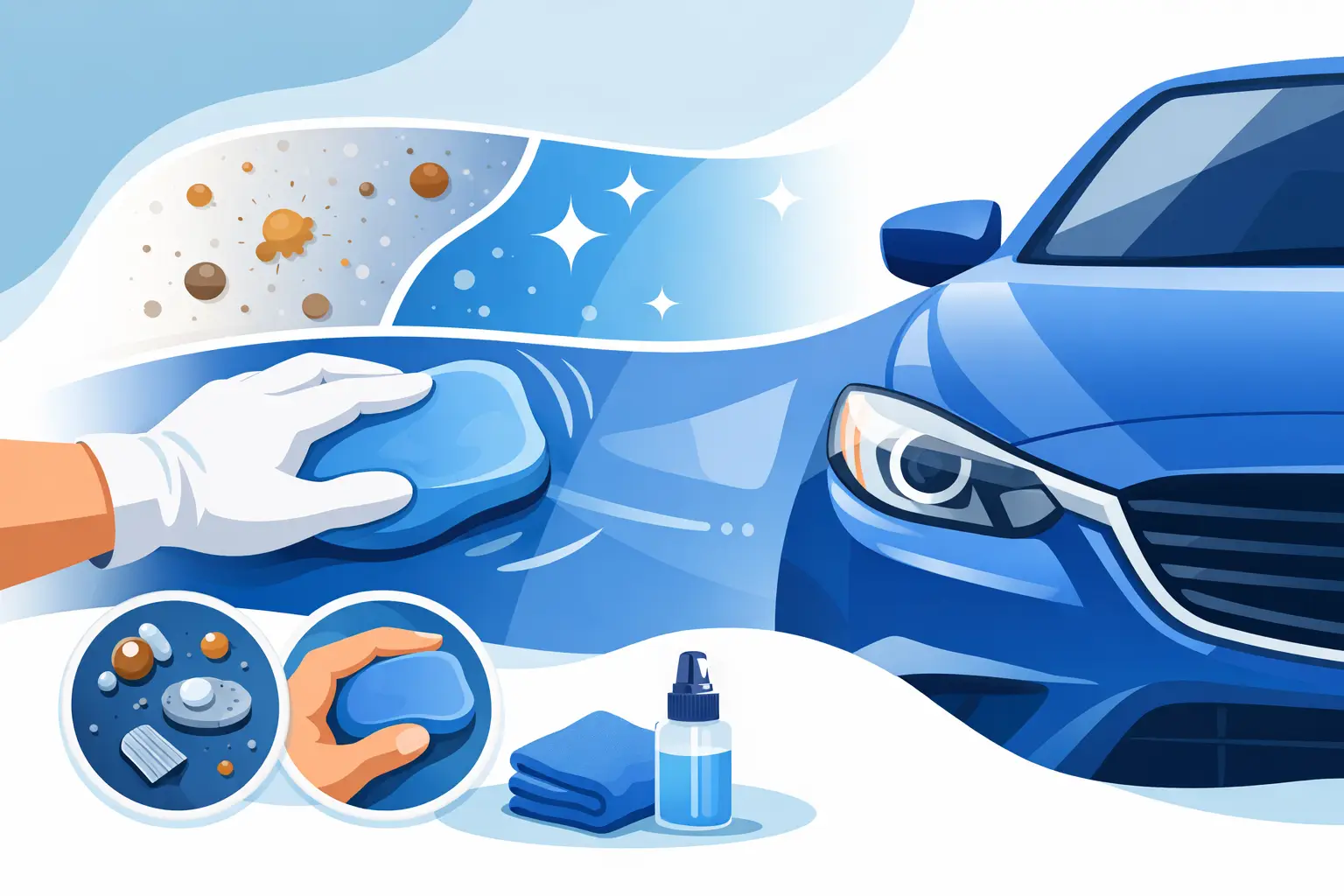
Your vehicle can look clean after a wash and still feel rough when you glide your hand across the paint. That gritty texture is exactly what a paint decontamination clay bar is designed to address. It removes stubborn bonded contaminants that normal washing cannot lift, leaving the surface smooth, cleaner-looking, and properly prepared for protection.
For Los Angeles drivers, this matters more than many people realize. Brake dust, construction fallout, freeway grime, tree sap residue, industrial pollution, and overspray can settle into paint over time. You may not always see these contaminants, but they affect shine, make wax or sealant bond poorly, and can contribute to a dull finish.
What a Paint Decontamination Clay Bar Actually Does
A clay bar is a specialized detailing material that gently pulls embedded contamination from the clear coat, glass, and painted trim. It is not meant to remove scratches or fix oxidation. Its job is to remove what is sitting on or bonded to the paint surface after a thorough wash.
Think of it this way: washing removes loose dirt. Clay removes the rough, stuck-on debris that survives the wash.
Common contaminants include rail dust, which is tiny metal fallout that can oxidize on paint; brake dust; tree sap mist; bug residue; water-spot minerals; paint overspray; and airborne pollution. These particles can make a freshly washed vehicle feel like fine sandpaper, especially on lower doors, behind wheel arches, and horizontal panels such as the hood and roof.
When performed correctly, clay decontamination creates a noticeably slick finish. That smoother surface improves the look of the paint on its own, but the larger benefit is what comes next: polish, wax, sealant, or ceramic coating can adhere more evenly to clean paint.
When Your Vehicle Needs Clay Decontamination
The easiest test is the baggie test. After washing and drying the vehicle, place your hand inside a thin plastic sandwich bag and lightly glide it over the paint. The plastic amplifies texture. If you feel small bumps or roughness, the surface likely has bonded contamination.
You may also notice that the paint does not reflect light cleanly, even though it has been washed. Water may cling unevenly, and a protective product may seem to wear off faster than expected. These are not automatic signs that clay is needed, but they are good reasons to inspect the finish.
Clay decontamination is especially worthwhile before paint correction or ceramic coating. Applying a ceramic coating over contaminated paint is not professional preparation. The coating may still add gloss and hydrophobic behavior, but it will be bonding to a surface that was not fully cleaned. Proper prep protects the value of the coating service and helps deliver a cleaner final result.
For well-maintained vehicles, clay treatment is usually not needed at every detail. Frequency depends on where the car is parked, how often it is driven, whether it is garaged, and the level of protection already on the paint. A vehicle that spends every day outdoors near busy roads or construction may need it more often than a garage-kept weekend vehicle.
Clay Bar vs. Paint Correction: They Solve Different Problems
Clay bar treatment and paint correction are often grouped together, but they do very different work. Clay removes bonded particles. Paint correction uses machine polishing to reduce or remove defects in the clear coat, such as swirl marks, light scratches, haze, and oxidation.
A clay bar will not remove a scratch because the scratch is below the paint surface. In fact, clay should normally come before polishing. If contaminants remain on the panel, polishing around them can compromise results and increase the risk of dragging debris across the finish.
The best service depends on the condition of the vehicle. If the paint feels rough but looks healthy, decontamination followed by quality protection may be enough. If the paint is rough, dull, and full of wash-induced swirls, a full detail plus polish or paint correction may be the better path. A professional inspection helps avoid paying for more correction than the paint truly needs.
Why Technique Matters More Than the Clay Bar Itself
Clay can deliver excellent results, but it is not a careless DIY step. Any material moved across paint can create marring if the surface is dirty, lubrication is inadequate, or too much pressure is used. Marring looks like faint hazing or light marks in the clear coat, and it is more visible on dark paint.
Professional decontamination starts with a safe hand wash to remove loose dirt. The technician then works panel by panel with generous lubrication and light, controlled passes. The clay is checked and folded frequently so collected debris is not reintroduced to the paint. If a clay bar is dropped on the ground, it should be discarded rather than reused.
There are also different grades of clay and synthetic clay alternatives. Fine-grade clay is typically the safer choice for regularly maintained paint. Medium or aggressive clay can remove heavier contamination more quickly, but it has a greater chance of marring and may require polishing afterward. Stronger is not always better.
That trade-off is why decontamination should match the vehicle. A newer luxury vehicle with soft, dark paint deserves a different approach than an older work truck with heavy industrial fallout. The goal is always to remove contamination while preserving as much of the clear coat as possible.
What to Expect After Clay Treatment
Immediately after proper clay decontamination, the paint should feel smooth and look clearer. Your microfiber towel will glide more easily across the surface, and the finish will be ready for the next service step.
Still, clay alone is not paint protection. Once contaminants are removed, the exposed surface needs a protectant. Depending on your goals, that might be a wax, synthetic sealant, or ceramic coating. A wax can add warmth and gloss but generally requires more frequent reapplication. A sealant provides durable protection with a clean, reflective look. Ceramic coating is the longer-term option for drivers who want stronger chemical resistance, easier maintenance, and a consistent gloss when properly maintained.
If the clay process reveals swirl marks or light haze, polishing can refine the paint before protection is applied. This is common because contamination can hide the true condition of the finish. Removing the grime often makes existing paint defects easier to see, not worse.
Is a Clay Bar Safe for Every Surface?
Clay is commonly used on painted surfaces and exterior glass. It can also be used carefully on certain smooth painted trim pieces. However, it should not be treated as a one-product solution for every material on the vehicle.
Matte or satin finishes require special care because polishing cannot restore their appearance if they are marred. Textured plastic trim can trap clay residue. Damaged clear coat, fresh paint that has not fully cured, and delicate aftermarket films may need a different decontamination method. Professional detailers assess the surface before choosing products and tools rather than applying the same process to every vehicle.
For ceramic-coated vehicles, clay may still be appropriate when contamination is severe, but it can diminish the coating’s hydrophobic performance. In some cases, a chemical decontamination treatment is the smarter first step. This is one reason maintenance details should be tailored to the vehicle instead of following a fixed checklist.
A Better Foundation for Lasting Shine
A paint decontamination clay bar is one of the details that separates a quick wash from real exterior care. It addresses the invisible buildup that keeps paint from looking and performing its best. When paired with safe washing, appropriate polishing, and quality protection, it helps preserve the smooth, glossy finish owners expect from professional detailing.
If your paint looks clean but no longer feels smooth, do not cover the problem with another layer of wax. Give the surface the preparation it needs first, then protect it with a service that fits how you drive, park, and care for your vehicle.