
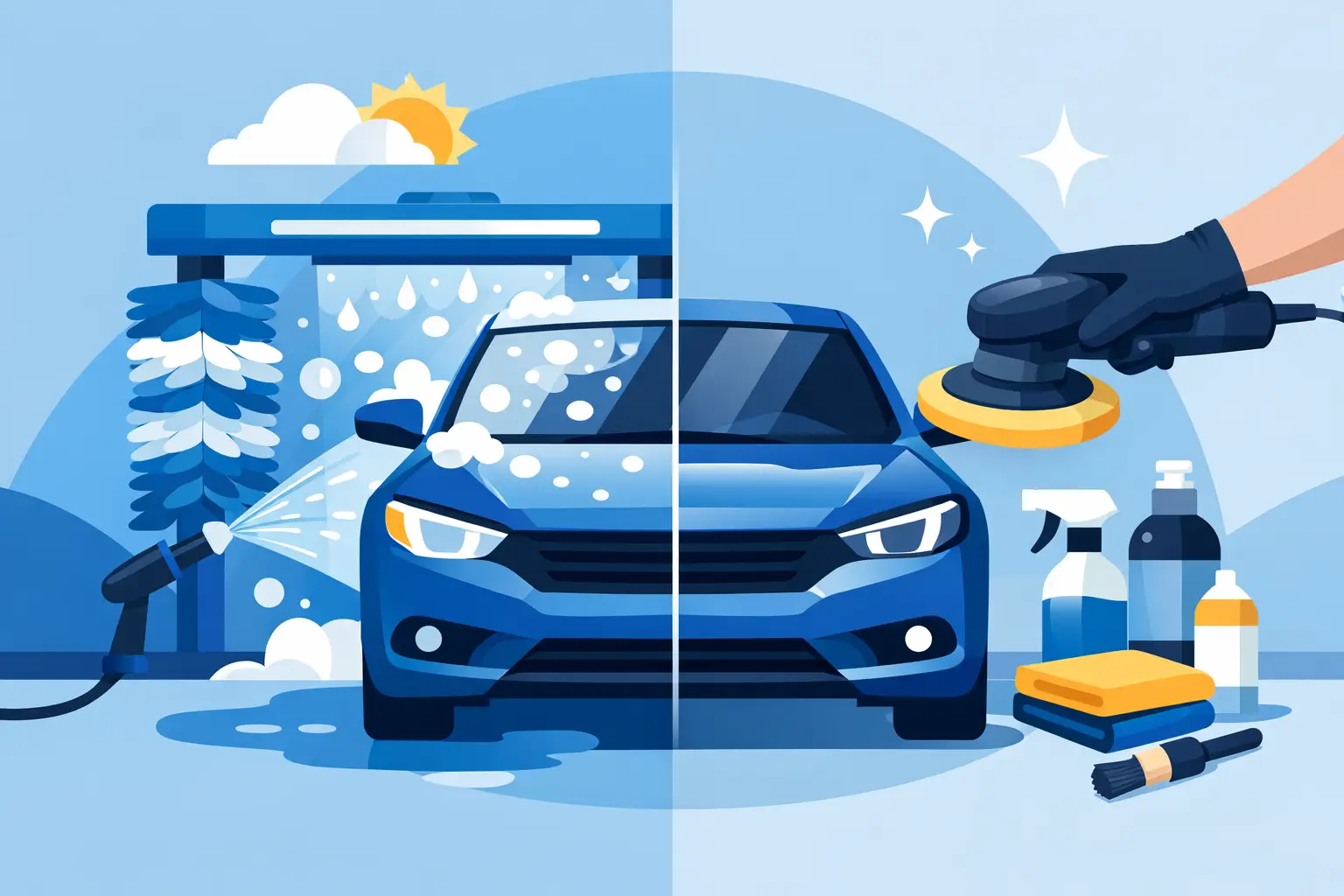
A drive-through wash can make a dusty car look better in minutes. But if your paint has swirl marks, your seats have stains, or your interior still smells like the kids, gym bags, or a recent beach day, a basic wash will not solve the real problem. The difference in car wash vs detailing comes down to purpose: one provides a quick surface clean, while the other restores, protects, and maintains the parts of your vehicle that everyday driving wears down.
For Los Angeles drivers, that difference matters. Sun exposure, parking under trees, coastal air, traffic grime, pet hair, food spills, and limited time all add up. Choosing the right service helps you spend money where it produces a result you can actually see and enjoy.
Car Wash vs Detailing: The Core Difference
A car wash is designed for speed and routine maintenance. It typically removes loose dirt, dust, road film, and surface debris from the exterior. Depending on the wash package, it may include a quick vacuum, tire dressing, window cleaning, or spray wax. For a vehicle that is already in decent shape and simply needs to look presentable, that can be enough.
Detailing is a deeper, more deliberate service. A professional detailer works panel by panel and material by material, using processes and products chosen for your vehicle’s paint, wheels, trim, glass, upholstery, leather, and interior surfaces. The goal is not just to make the car look clean from a distance. It is to address embedded grime, stains, odors, neglected areas, dull finishes, and surface contamination while helping preserve the materials beneath.
Think of a wash as regular housekeeping and detailing as a careful reset. Both have a place. The right choice depends on your car’s condition, how you use it, and how long you want its appearance to hold up.
What You Get With a Standard Car Wash
Most car washes focus on the visible exterior. Soap, water, brushes or touchless equipment, and air drying remove the dirt that builds up during daily driving. It is convenient when pollen is covering the hood, your car has picked up road dust, or you need a cleaner vehicle before an event.
The trade-off is that speed limits how much attention each surface receives. Automated brushes may miss tight areas around badges, wheel barrels, door jambs, and lower panels. They also cannot safely diagnose what is sitting on your paint. Tree sap, bird droppings, brake dust, water spots, and industrial fallout often need more than a standard wash cycle.
Interior work is usually limited as well. A quick vacuum can improve the appearance of carpets and mats, but it will not remove deep pet hair, treat fabric stains, clean residue from cup holders, or condition dry leather. If the issue is embedded, a wash is rarely the lasting answer.
A basic wash can be a practical maintenance choice between professional services. It is simply not built to correct neglect, restore gloss, or provide meaningful long-term protection.
What Professional Detailing Does Differently
Detailing starts with inspection. Before cleaning aggressively, a trained detailer looks at the vehicle’s condition and chooses a safe approach for the paint and interior. That matters because harsh chemicals, stiff brushes, and rushed wiping can create problems such as marring, faded trim, weakened coatings, or damaged delicate surfaces.
Exterior detailing: clean paint without cutting corners
A proper exterior detail goes beyond washing the body panels. It can include careful wheel and tire cleaning, bug and tar removal, treatment for bonded contamination, detailed work around emblems and crevices, hand drying, glass cleaning, and conditioning of exterior trim. The process is designed to leave the finish cleaner, smoother, and more uniform.
If paint looks hazy or is covered in light scratches and swirls, cleaning alone cannot bring back full clarity. Paint correction uses controlled machine polishing to reduce visible defects and improve gloss. It is a separate level of service because it requires skill, time, and a careful evaluation of the paint’s condition.
For owners who want protection after a detail or correction, ceramic coating can add a durable protective layer that helps the vehicle resist contaminants, makes routine washing easier, and enhances the paint’s visual depth. It does not make a car invincible, and it still needs proper maintenance, but it can be a smart investment for newer vehicles and owners committed to long-term care.
Interior detailing: where daily life shows up
The cabin tells the real story of how a car is used. Sand collects in carpets after beach trips. Coffee finds its way into seams. Sunscreen leaves residue on leather and touchpoints. Families deal with crumbs, spills, and mystery stains. Apartment residents may not have the space or equipment to handle a deep interior clean themselves.
An interior detail targets those areas with more precision. It may include thorough vacuuming, pet-hair removal, cleaning and treating plastics and vinyl, upholstery shampooing or extraction, leather cleaning and conditioning, stain treatment, interior glass cleaning, and odor-focused care. The exact process should match the materials and the level of buildup, rather than applying one aggressive method to every surface.
The result should feel as good as it looks. A well-detailed interior is cleaner to touch, easier to maintain, and more pleasant for daily commutes, client meetings, carpools, and weekend drives.
When a Car Wash Is Enough
A car wash makes sense when your vehicle is regularly maintained and the goal is simple: remove recent dust and grime before it has time to build up. It is also useful after rain, a long freeway drive, or a few weeks of normal use when the interior is still under control.
Choose a wash when the paint is already protected, there are no noticeable stains or odors, and you are looking for a quick refresh rather than a transformation. The key is to avoid treating a wash as the only form of vehicle care for years. Small issues become harder and more expensive to address when they are ignored.
If you use automated washes often, consider their effect on darker paint or highly polished finishes. Repeated contact from brushes can contribute to fine swirls over time. Touchless washes avoid that contact, but may rely on stronger chemicals and still leave behind bonded contaminants. Neither option replaces careful hand-detailing when appearance and surface preservation are priorities.
When Detailing Is Worth the Investment
Detailing is the better choice when the vehicle needs more than a visual rinse. Common signs include dull paint, visible swirls, rough-feeling panels, brake dust that will not come off, stained seats, lingering odors, dusty vents, neglected door jambs, or heavy pet hair.
It is also valuable before selling or trading in a vehicle. A clean, polished car presents better in photos and in person, and a cared-for interior gives buyers more confidence. While detailing cannot guarantee a specific resale price, it can help the vehicle show its condition honestly instead of letting dirt and wear distract from it.
Newer and premium vehicles benefit too. Detailing is not only for cars that have been neglected. Starting with a deep clean, paint correction when needed, and quality protection can make ongoing maintenance easier and help preserve the finish from the beginning.
Convenience is another factor. Mobile detailing allows busy professionals, families, and apartment residents to have the work completed at home or at the office instead of spending part of the day waiting at a shop. Drip N Shine brings that level of professional care directly to customers across Los Angeles and nearby communities.
How Often Should You Choose Each Service?
There is no single schedule that fits every vehicle. A garage-kept car driven lightly needs less frequent intensive care than a daily commuter parked outdoors. A family SUV with kids and pets may need interior detailing more often than a weekend sports car, while a dark-colored vehicle may show wash marks and paint contamination sooner than a lighter one.
For many owners, a quick wash every few weeks helps keep loose dirt from accumulating. A full professional detail once or twice a year is a useful baseline for resetting the interior and exterior, especially if the vehicle is exposed to sun, outdoor parking, or heavy use. Cars with ceramic coating still need regular washing and occasional professional attention, but their protected surfaces are generally easier to maintain.
The best schedule is based on condition, not a calendar alone. If you notice grime that routine cleaning does not remove, or the car no longer feels clean after a wash, it is time for more thorough care.
Choose the Service That Matches the Result You Want
A car wash is about keeping up. Detailing is about bringing your vehicle back to a higher standard and helping it stay there. Neither is automatically better in every situation, but they deliver very different results.
If your vehicle only needs a quick exterior refresh, a wash is the sensible call. If you want restored shine, cleaner materials, treated stains, safer paint care, or durable protection, book the level of detailing that addresses the condition you can see and the buildup you cannot.