
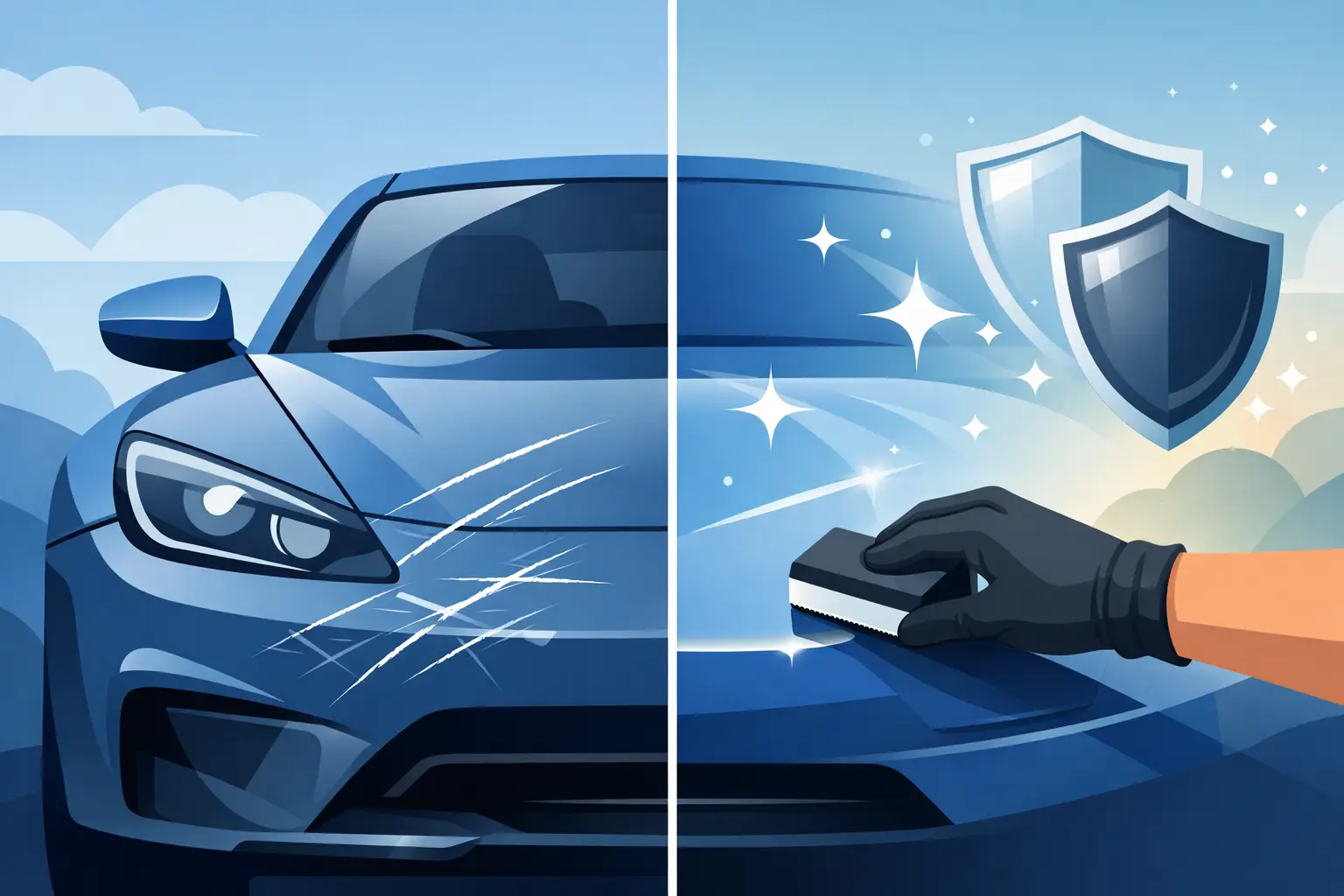
A fresh ceramic coating can make paint look dramatically glossier, feel slicker, and stay cleaner between washes. But can ceramic coating prevent scratches? Not completely. It is a strong layer of chemical protection, not an invisible force field around your vehicle. Knowing that difference helps you choose the right protection and avoid disappointment after the first encounter with a tight parking space, a dirty towel, or a shopping cart.
What Ceramic Coating Actually Protects Against
Ceramic coating is a liquid paint protection product that cures into a thin, durable layer bonded to your vehicle’s clear coat. Its main strength is its resistance to environmental contamination. It helps water bead and roll away, reduces how strongly dirt and grime stick to the surface, and makes routine washing easier.
That matters in Los Angeles, where sun exposure, road dust, bird droppings, tree sap, and hard-water spots can quickly take the shine out of an unprotected finish. A quality coating adds valuable resistance to UV damage, oxidation, chemical stains, and embedded grime. It also gives the paint a rich, reflective appearance that lasts much longer than a traditional wax.
The coating creates a smoother surface, so light dust and loose debris are less likely to drag across the paint during a careful wash. This can reduce the chance of the fine swirls that gradually make dark paint look hazy. That is a real benefit, especially for owners who care about keeping a newer or premium vehicle looking sharp.
Can Ceramic Coating Prevent Scratches From Daily Driving?
Ceramic coating can help reduce very light surface marring, but it cannot prevent every scratch. The clear coat underneath is still paint, and a thin coating cannot absorb the force of a key, a rock strike, a metal buckle, or a door swung open too close in a parking lot.
Most coatings are marketed with a hardness rating, often described as 9H. This number can be confusing. It does not mean the vehicle is nine times harder to scratch or that the coating is scratch-proof. It refers to a pencil-hardness testing scale used in controlled conditions. Real-world damage involves pressure, sharp edges, movement, heat, and contaminants that no pencil test can fully replicate.
A ceramic coating is most useful against the small, repeated wear that happens over time: faint wash marks, light towel marring, dust being wiped from a dry panel, and minor contact with soft materials. Even then, the result depends on the coating quality, the condition of the paint before application, and how the vehicle is maintained afterward.
Think of ceramic coating as a sacrificial protective layer that makes your paint easier to care for. It can take some of the abuse that would otherwise reach the clear coat, but it is not designed to stop deep physical damage.
What It Will Not Stop
A ceramic coating will not reliably protect against deep scratches, rock chips, paint transfer from a collision, vandalism, or damage from automatic car-wash brushes. It also cannot prevent swirls caused by improper washing. If dirt is rubbed across any painted surface with a rough mitt, dirty towel, or dry duster, scratches can still happen.
It will not fix existing defects, either. Swirl marks, oxidation, water spots, and scratches remain beneath the coating unless they are corrected first. Applying a coating over damaged paint may add gloss, but it also locks in the appearance of those flaws.
The Difference Between Ceramic Coating and Paint Protection Film
For drivers who want the best defense against physical damage, paint protection film is the stronger option. Often called PPF or clear bra, this is a thicker urethane film installed over painted panels. It is built to absorb impacts from road debris and resist deeper scratches better than a ceramic coating can.
PPF is especially worthwhile on high-impact areas such as the front bumper, hood, fenders, mirror caps, rocker panels, and door edges. Many owners choose PPF for those vulnerable panels, then apply ceramic coating over the entire vehicle for gloss, easier cleaning, and chemical resistance.
There is a trade-off. PPF costs more than ceramic coating and requires careful installation for a clean, nearly invisible result. Ceramic coating is often the better value for owners who primarily want long-lasting shine, easier maintenance, and defense against everyday environmental wear. The right choice depends on where you drive, where you park, the color and condition of your vehicle, and how much protection you expect.
Paint Preparation Determines the Result
Ceramic coating performs best when it is applied to properly prepared paint. Before coating, a professional detail should include thorough washing, chemical decontamination, and clay treatment when needed. These steps remove bonded contaminants that regular washing leaves behind.
For vehicles with visible swirl marks, dullness, or light scratches, paint correction should come before the coating. Paint correction carefully levels a small amount of the clear coat to reduce defects and restore clarity. Once the surface is polished and refined, the coating can lock in that glossy, corrected finish.
This is one reason a ceramic coating service is more than applying a bottle of product to a clean car. Surface preparation requires time, proper lighting, safe tools, and close attention to the paint. Skipping it may leave the vehicle protected, but it will not deliver the crisp, showroom-level reflection most owners expect.
How to Avoid Scratches After Ceramic Coating
A coating makes maintenance simpler, not unnecessary. The habits that protect coated paint are straightforward, but they matter. Never use a dry towel to wipe dusty panels. Dust can contain fine abrasive particles, and rubbing it across the surface can leave light scratches even on a coated vehicle.
Wash the vehicle regularly with a pH-neutral car shampoo, clean microfiber towels, and a clean wash mitt. Rinse loose dirt first so you are not grinding it into the paint. Use separate tools for the wheels and lower panels, since those areas collect heavier brake dust and road grime. Dry with soft, high-quality microfiber towels using light pressure rather than aggressive rubbing.
Automatic tunnel washes are a common source of swirl marks. Their brushes can hold dirt from previous vehicles, and even touchless washes may use strong chemicals that gradually affect coating performance. A careful hand wash is the safer choice for maintaining a polished finish.
Also address bird droppings, bug splatter, and tree sap as soon as possible. Ceramic coating provides extra time to remove contaminants, but it does not make the paint immune to acidic or sticky substances. The longer they sit, particularly under hot Southern California sun, the greater the chance of staining or etching.
When a Ceramic Coating Is Worth It
Ceramic coating is a smart investment when you want to preserve a vehicle that is already in good condition, restore the finish through paint correction first, or make ongoing care more manageable. It is especially practical for busy owners who want their car to look cleaner between appointments without relying on frequent wax applications.
It is not the right answer if the goal is complete impact protection. In that case, PPF or a combination of PPF and ceramic coating offers better coverage. Honest protection starts with matching the service to the risk, not promising that one product solves every paint problem.
For a vehicle that spends its days outdoors, navigates crowded lots, or simply deserves better than a quick brush wash, professional preparation and careful maintenance make the biggest difference. Drip N Shine can help assess your paint, correct what can be safely improved, and apply protection that fits how you actually use your vehicle.
The best time to protect your paint is before small marks become a dull, swirled finish that needs extensive correction. Treat your coating as part of a consistent care plan, and it will keep the shine working hard long after the detail is complete.