
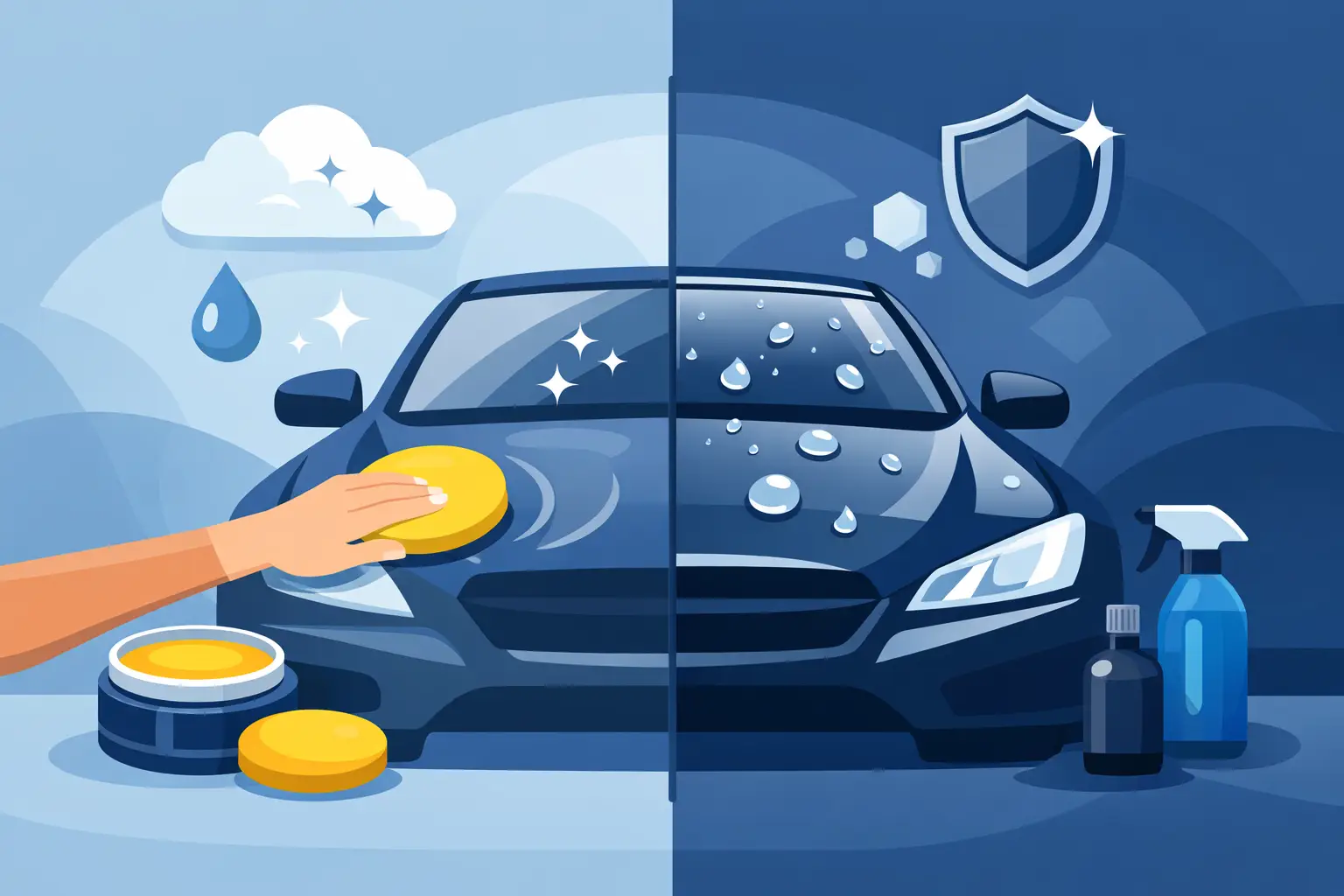
A freshly detailed vehicle can look incredible under Los Angeles sun, but that finish does not stay perfect on its own. The real question behind wax vs ceramic coating is not simply which product makes paint shine more. It is which level of protection fits how you drive, where you park, how much maintenance you want, and what you expect from your vehicle over time.
Wax is a proven choice for a rich, warm gloss and an affordable refresh. Ceramic coating is a longer-term protective treatment built for owners who want easier maintenance and stronger resistance to the elements. Both can improve the look of your paint. The right choice depends on your vehicle’s condition and your priorities.
Wax vs Ceramic Coating: The Core Difference
Car wax sits on top of the clear coat and creates a temporary protective layer. Traditional carnauba wax is known for a deep, glossy appearance, while modern synthetic waxes and sealants can offer somewhat longer protection. Wax improves water beading, helps reduce the impact of light contaminants, and gives paint a smooth finish that looks great after a detail.
Ceramic coating is a liquid polymer that chemically bonds with the vehicle’s clear coat after proper preparation. Once cured, it creates a durable protective layer that is more resistant to UV exposure, oxidation, road grime, bird droppings, tree sap, and chemical contaminants than wax. It does not make paint invincible, but it gives the surface a much stronger defense.
Think of wax as regular upkeep for a vehicle you enjoy keeping polished. Think of ceramic coating as a more serious investment in paint preservation and easier ownership.
Shine and Appearance
Many drivers choose wax because of its appearance. A quality wax can create a deep, warm glow, especially on darker colors like black, navy, burgundy, and gray. It is an excellent option before a special event, a weekend drive, or whenever your vehicle needs a fast visual boost.
Ceramic coating delivers a different kind of finish. Rather than a soft, warm glow, it tends to create a crisp, reflective gloss that makes paint look cleaner and more defined. On a properly corrected vehicle, the result can look remarkably close to a showroom finish. Because the coating lasts longer, that gloss is easier to maintain between professional details.
Neither treatment can hide serious paint defects. Swirl marks, oxidation, water spots, and scratches remain underneath the protection. If your paint has visible imperfections, paint correction should come before a ceramic coating and may also be worthwhile before waxing. Protecting damaged paint without correcting it first can lock in a finish you are not happy with.
Durability in Real-World Driving
This is where ceramic coating separates itself from wax. Depending on the product, application, storage conditions, and maintenance, wax may last a few weeks to a few months. Heat, frequent washing, harsh soaps, and regular exposure to the elements can shorten its life.
A professionally applied ceramic coating can provide years of protection when it is properly maintained. That matters for vehicles parked outside, daily drivers that face freeway grime, and cars exposed to intense sun. In coastal areas, salt air and airborne contaminants can also take a toll on unprotected paint.
Ceramic coating does not eliminate the need to wash your vehicle. Dust still lands, mud still sticks, and water spots can still form. What changes is the way contamination bonds to the surface. A coated vehicle is generally easier to clean because dirt and water have a harder time clinging to the paint.
Protection: What Each Option Can and Cannot Do
Wax provides a useful sacrificial barrier between your clear coat and everyday contamination. It can improve water behavior and help make washing safer, but it gradually wears away. It is best viewed as temporary protection that needs regular renewal.
Ceramic coating provides stronger chemical resistance and better UV protection. It helps slow down fading and oxidation, which is especially valuable for vehicles that spend long hours outdoors. Its hydrophobic properties also make rainwater bead and roll off more easily, reducing the amount of grime left behind after wet weather.
There is one misconception worth clearing up: ceramic coating is not scratch-proof, dent-proof, or maintenance-free. It will not stop rock chips, deep scratches, or damage from an automatic car wash with abrasive brushes. It can offer some resistance to very light marring, but it is not a replacement for paint protection film if chip protection is your main concern.
Cost and Long-Term Value
Wax is the more budget-friendly option upfront. It works well for drivers who detail their vehicles regularly, lease a car for a short period, or simply prefer a periodic refresh without a larger initial investment. A maintenance detail with wax can make a noticeable difference without requiring extensive preparation.
Ceramic coating costs more because the process is more involved. The vehicle needs a thorough wash, decontamination, and often paint correction before application. The coating must then be applied carefully and allowed to cure properly. The price reflects the labor, preparation, product quality, and long-term results.
For owners planning to keep a newer or premium vehicle for several years, ceramic coating can make financial sense. It can reduce the time and effort needed to keep the exterior looking its best, support stronger resale appeal, and help preserve the finish from constant environmental exposure. For a vehicle with severely neglected paint or one nearing the end of its ownership cycle, wax may be the smarter use of your detailing budget.
Maintenance After Wax or Ceramic Coating
Waxed vehicles benefit from gentle hand washing and periodic reapplication. Strong degreasers, aggressive wash chemicals, and neglected contamination can strip the protection faster. If you like the ritual of keeping your vehicle polished, this routine can be simple and satisfying.
Ceramic-coated vehicles also need proper care. Use pH-neutral wash products, clean bird droppings and tree sap promptly, and avoid automatic brush washes. Regular maintenance washes prevent buildup that can reduce water beading and dull the coating’s performance.
A coating performs best when it is maintained, not ignored. Professional maintenance details can remove bonded contamination safely, refresh the finish, and help ensure the coating continues to do its job. The benefit is not that you never wash the vehicle again. The benefit is that each wash is usually faster, safer, and more effective.
When Wax Is the Better Choice
Wax is a strong fit when your paint is already in decent condition and you want immediate shine at a lower cost. It also makes sense for a garage-kept weekend car, a short-term lease, or an owner who enjoys frequent detailing and does not mind reapplying protection throughout the year.
It is also a practical option when you are deciding whether to invest in paint correction later. A professional detail and wax can improve the appearance now while you plan for more extensive restoration or protection down the road.
When Ceramic Coating Is Worth It
Ceramic coating is best for drivers who want lasting protection and less day-to-day effort. It is particularly valuable for newer vehicles, recently corrected paint, luxury vehicles, dark-colored cars, and daily drivers exposed to sun, parking lots, freeway debris, and outdoor conditions.
It is also a good choice for busy professionals and families who want their vehicle to stay cleaner-looking between appointments. When your car is protected correctly, routine maintenance feels less like a major project and more like a manageable part of ownership.
The best ceramic coating results begin with careful prep work. At Drip N Shine, the condition of the paint is assessed before recommending correction, polishing, or protection, so the finished result matches the vehicle and the owner’s expectations.
The Right Protection Starts With an Honest Assessment
Choose wax when you want an affordable gloss boost and are comfortable maintaining it regularly. Choose ceramic coating when you want stronger, longer-lasting protection and are ready to protect your paint after proper preparation.
Before making the decision, look at your vehicle in direct sunlight. If you see swirls, dullness, or water spots, address those first. A professional assessment can help you spend on the protection that will make the biggest visible difference and keep your vehicle looking cared for long after the detail is complete.