
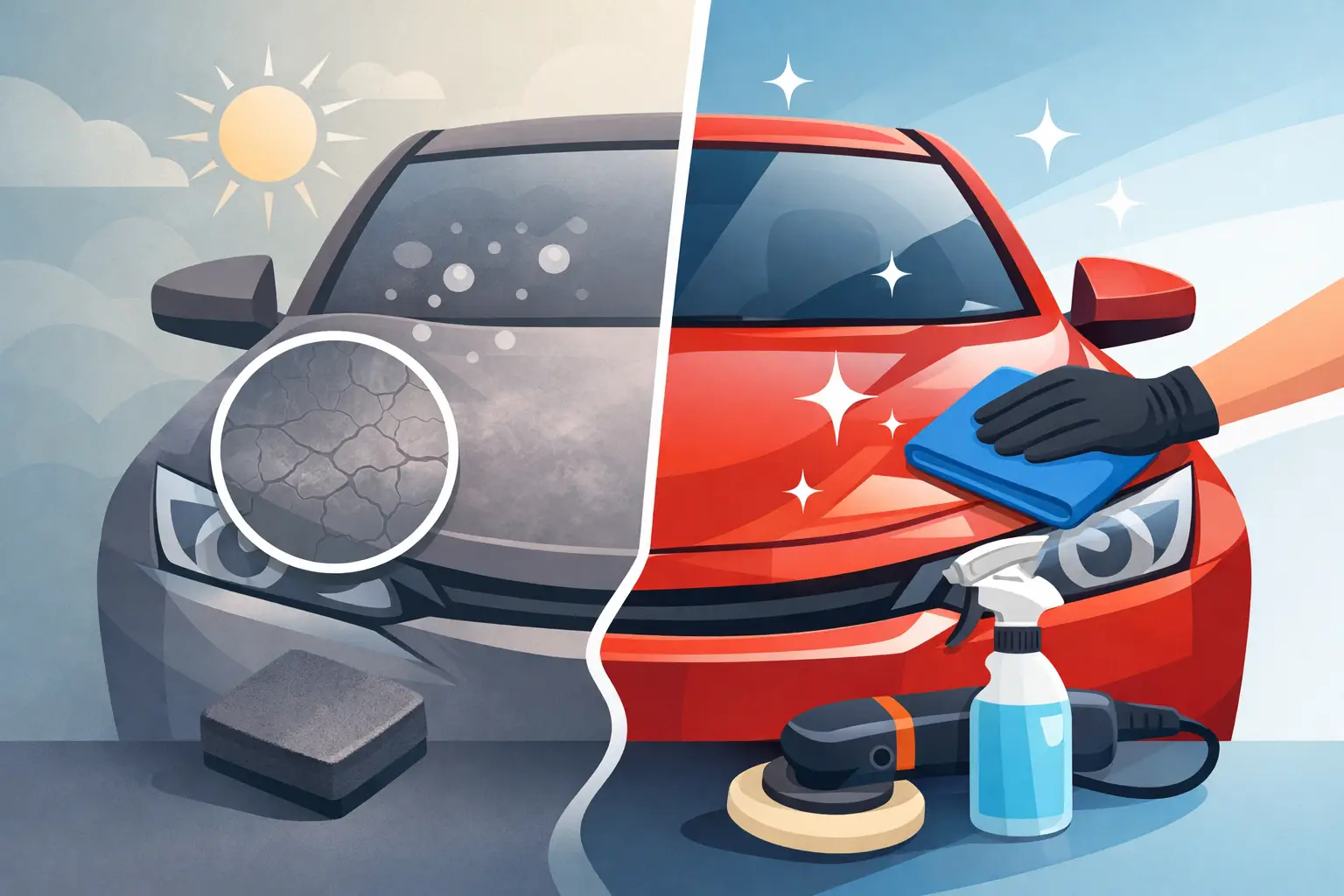
That chalky, faded look on your hood or roof is not always dirt, and another drive-through wash will not fix it. Clear coat oxidation removal is the process of restoring dull, weathered paint when the clear protective layer has lost its smoothness and gloss. Done correctly, it can bring back depth, reflection, and a noticeably newer appearance. Done aggressively on failing paint, it can make a costly problem worse.
For Los Angeles drivers, oxidation is especially common. Long hours of sun exposure, heat, dry air, bird droppings, hard-water spotting, and skipped protection gradually wear down the surface of the paint. Dark-colored vehicles often show the damage first, but white, silver, and lighter paint can oxidize too – it is just easier to miss until the finish feels rough or starts looking flat.
What Clear Coat Oxidation Looks Like
Healthy clear coat reflects light evenly. When it oxidizes, the top surface becomes microscopically rough and cloudy. Instead of a crisp reflection, you may see a dull haze, faded color, patchy shine, or a chalky texture that remains even after washing.
Oxidation can be mistaken for several other issues. Embedded contamination can make paint feel rough, while mineral deposits leave etched water spots. Swirl marks create circular scratches in direct sunlight. Each issue needs a different correction method, which is why applying a heavy compound before inspecting the paint is a bad bet.
A simple first check is to wash and dry the vehicle, then inspect it in direct sunlight or under a strong inspection light. If the finish looks cloudy but still feels intact and the color beneath it is even, the oxidation may be correctable. If you see peeling, flaking, cracking, or white-gray patches that look like the clear layer is separating from the paint, that is likely clear coat failure – not normal surface oxidation.
Clear Coat Oxidation Removal Starts With a Paint Assessment
The best result comes from removing the least amount of clear coat necessary. This matters because clear coat is not unlimited. Polishing removes an extremely thin layer to level defects and restore clarity, but repeated heavy correction can eventually reduce the protection remaining on the vehicle.
A professional assessment looks at the paint’s condition panel by panel. The hood, roof, trunk lid, and upper door surfaces often receive more UV exposure than lower panels. One area may need a mild finishing polish while another needs a more corrective approach. Previous bodywork, repainting, deep scratches, and thin factory paint also change the safe plan.
Paint thickness readings are useful when available, especially on older, premium, or heavily corrected vehicles. They help a detailer make an informed decision rather than treating every panel the same. The goal is not simply to create fast shine. It is to restore the finish while preserving as much paint as possible.
When Polishing Can Restore the Finish
If oxidation is limited to the uppermost clear coat, paint correction can usually improve it dramatically. After a proper hand wash and chemical decontamination, the surface may be clayed or otherwise mechanically decontaminated to remove bonded fallout that washing leaves behind.
The detailer then performs a test spot using a machine polisher, an appropriate pad, and a polish or compound matched to the paint. This small section shows how the vehicle responds before the entire car is corrected. Some paint clears up quickly with a one-step polish. More neglected finishes may need a compound to remove heavier oxidation followed by a finer polish to refine the gloss.
A strong correction should leave more than a temporary oily shine. Once polishing residue is removed, the paint should look clearer, feel smoother, and reflect light more evenly. The original color often appears richer because the hazy oxidized layer is no longer muting it.
When Clear Coat Oxidation Cannot Be Polished Away
There is a point where polishing is no longer the solution. Clear coat failure means the protective layer has broken down beyond the surface. It may peel in sheets, look cloudy beneath the surface, or feel uneven around the damaged edges. No wax, glaze, ceramic coating, or compound can permanently repair missing or delaminating clear coat.
In that case, refinishing the affected panel is the proper repair. A polish may temporarily improve the surrounding area, but it cannot bond a failed clear coat back to the paint. Being honest about that distinction protects both the vehicle and the owner’s budget.
Why DIY Oxidation Removal Can Go Wrong
There are good DIY products, but oxidation removal has a narrow margin for error on some vehicles. Hand-applied cleaner waxes can improve mild dullness, especially when the paint is otherwise healthy. They are a reasonable maintenance option for owners who want a modest improvement and understand that results may be limited.
The risks increase with aggressive compounds, drill attachments, and inexpensive polishing kits. Too much pressure, the wrong pad, excessive heat, or repeated passes in one area can create holograms, burn edges, or thin the clear coat unnecessarily. A product that works well on one vehicle can be too aggressive for another.
Avoid the common shortcut of using household cleaners, abrasive scouring products, or harsh solvents on automotive paint. They may strip protection and make dullness more obvious. Likewise, skip the idea that a ceramic coating will hide oxidation. Coatings amplify the appearance of the surface underneath them. If the paint is cloudy before installation, it will still look cloudy after installation.
For mild oxidation, a careful owner can wash with pH-balanced products, use a quality paint cleaner or finishing polish as directed, and apply a durable protectant afterward. For visible fading across multiple panels, uncertain paint condition, or any sign of peeling, professional inspection is the smarter move.
Protecting Paint After Oxidation Removal
Correcting oxidation is only half the job. Without protection, the restored finish is again exposed to UV rays, contamination, and water spotting from the moment it leaves the driveway.
A quality sealant or wax adds protection and can be a practical choice for vehicles that receive regular maintenance. It improves water behavior and boosts gloss, but it needs periodic reapplication. A ceramic coating is a longer-term option for owners who want stronger chemical resistance, easier washing, and extended protection against environmental exposure. It does not make paint indestructible, but it helps preserve the corrected finish when properly maintained.
Parking in shade when possible, rinsing bird droppings promptly, and avoiding abrasive tunnel washes also make a real difference. Automatic brushes can install swirls that reduce clarity over time, even on a recently polished vehicle. Gentle hand washing with clean towels and proper wash media helps protect the investment in correction.
Choosing the Right Service for Dull Paint
A basic exterior detail is excellent for removing grime and refreshing a maintained vehicle, but it is not always enough for oxidation. A polish service may suit mild dullness and light swirls. More serious oxidation often calls for paint correction, where the work is tailored to the paint’s actual condition rather than handled with a one-size-fits-all product.
At Drip N Shine, the focus is on assessing the finish first, correcting what can be safely corrected, and recommending protection that fits how the vehicle is used. Mobile service also means that busy owners can address faded paint at home or work without giving up a day at a shop.
The best time to address oxidation is before the damage turns into clear coat failure. If your paint has lost its reflection but has not started peeling, a careful inspection now can be the difference between restoring a finish and repainting a panel later.