
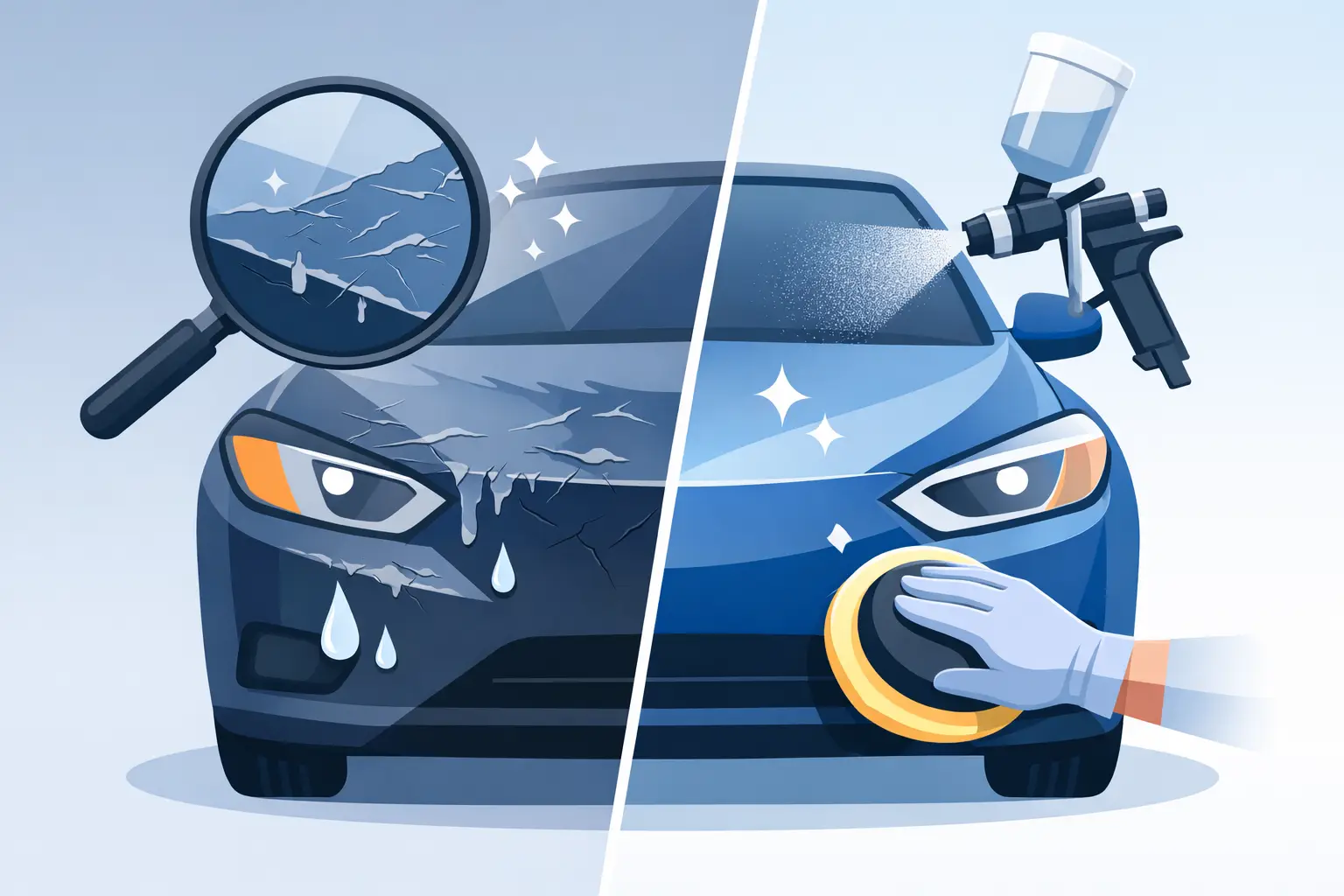
A vehicle can look clean and still have a paint problem hiding in plain sight. This guide to clear coat damage helps you spot the difference between surface haze, swirl marks, fading, and true clear coat failure, so you can choose the right fix before a small issue turns into a costly repaint.
Clear coat is the transparent protective layer over your vehicle’s color. It creates gloss, adds depth, and shields the paint from UV rays, moisture, road film, bird droppings, tree sap, and everyday wear. When it starts to break down, the color underneath becomes exposed and much harder to preserve.
What Clear Coat Damage Looks Like
Not every dull panel has failed clear coat. Los Angeles sun, neglected washing, and contamination can leave paint looking tired without permanently damaging it. The key is recognizing what can be corrected through detailing and what requires body-shop refinishing.
Light swirl marks are the fine, circular scratches most visible in direct sun or under bright parking-lot lights. They are commonly caused by automatic car washes, dirty towels, rough wash mitts, or wiping dust off a dry vehicle. These marks sit in the upper portion of the clear coat and can often be significantly reduced with professional polishing.
Oxidation and surface haze make paint look chalky, flat, or cloudy. On a newer vehicle, this may be embedded contamination, mineral deposits, old wax, or neglected clear coat that has lost clarity. A proper decontamination and polish can often restore a surprising amount of gloss.
True clear coat failure looks different. You may see peeling edges, flaking, white or gray patches, cracking, or a rough, uneven texture that does not improve after washing. On darker colors, failed clear coat can make the panel appear faded even when the paint color beneath is still intact. Once the clear layer is peeling or missing, it cannot be polished back into place.
Guide to Clear Coat Damage: Common Causes
Sun exposure is one of the biggest threats in Southern California. UV rays slowly degrade the resins in clear coat, especially when a vehicle sits outside day after day without protection. Hoods, roofs, trunks, and upper door surfaces usually show deterioration first because they receive the most direct exposure.
Heat makes the problem worse. A black or dark-colored vehicle parked outside can build up intense surface temperatures, which accelerates the breakdown of neglected paint protection. This does not mean dark paint is a bad choice, but it does require more consistent care.
Poor washing habits are another major cause of visible damage. Tunnel washes and brush systems can leave repeated scratches that gradually reduce clarity. Using household cleaners, dish soap, abrasive sponges, or a dirty towel can strip protection and scratch the surface in a single wash.
Chemical contamination also matters. Bird droppings, bug residue, tree sap, fuel spills, hard-water spots, and overspray can etch into clear coat if they sit too long. A fresh spot may be safely removed. A stain that has baked into the panel for weeks can require polishing, and deep etching may remain even after correction.
Previous paintwork can be a factor as well. An improperly applied or low-quality respray may lose adhesion sooner than factory paint. If clear coat is lifting around the edge of a repaired panel, polishing is not the answer. The panel needs to be evaluated for refinishing.
Can Clear Coat Damage Be Repaired?
It depends on how deep the damage goes. This is the part where an honest inspection saves time and money.
When the problem is light scratching, dullness, oxidation, water spotting, or shallow etching, paint correction can improve the finish. This process uses machine polishing, controlled abrasives, proper pads, and careful inspection lighting to level defects within the remaining clear coat. It can restore gloss and dramatically reduce swirls without compromising the paint when performed correctly.
When clear coat is cracked, peeling, bubbling, or missing, it cannot be repaired with wax, polish, ceramic coating, or touch-up paint. Those products may temporarily change the appearance, but they will not recreate a stable protective layer. The lasting solution is sanding, repainting, and applying new clear coat to the affected panel.
A professional detailer should also measure paint thickness and inspect the panel before aggressive correction. Clear coat is finite. Over-polishing can create bigger problems, particularly on older vehicles or panels that have already been corrected multiple times.
What You Can Do Before Booking a Repair
Start by washing the affected area gently with a pH-balanced automotive shampoo and a clean microfiber wash mitt. Do not scrub peeling areas or use a harsh compound in an attempt to force a shine back. If the surface is contaminated with sap or bird droppings, use a product intended for automotive paint and follow the directions carefully.
After washing, inspect the panel in shade and then in direct sunlight. Take clear photos from a few angles. Look for whether the issue disappears when the panel is wet. If it does, the defect may be primarily in the upper clear coat and could be correctable. If you can see peeling edges, chips expanding outward, or a chalky patch that remains unchanged when wet, refinishing is more likely.
Avoid DIY wet sanding unless you have experience with automotive paint. Wet sanding can be useful in skilled hands, but it removes material quickly and can burn through clear coat or leave an uneven finish. The cost of correcting a sanding mistake often exceeds the cost of having the panel inspected first.
Choosing Between Polish, Paint Correction, and Repainting
A polish is best for mild haze, light swirls, and minor loss of gloss. It is a refinement service, not a cure for failing paint. A full paint correction is better for vehicles with heavier swirl marks, oxidation, etched water spots, and visible defects across multiple panels. Results vary based on paint condition, thickness, color, and prior repair history.
Repainting is necessary when the clear coat has physically failed. While it costs more than detailing, repainting prevents the exposed base coat from deteriorating further. Once the panel has been refinished and properly cured, detailing and protection can help preserve the new finish.
Ceramic coating is often misunderstood in this decision. A quality coating adds durable protection, enhances gloss, and makes maintenance easier, but it is not paint correction and it is not a repair product. It should be applied after the paint is corrected or refinished, not used to cover peeling clear coat.
How to Prevent Clear Coat Problems
Consistent maintenance is less expensive than restoring neglected paint. Wash with clean tools, quality car-care products, and proper technique. Dry with soft microfiber towels instead of letting hard water bake onto the surface. Remove bird droppings, sap, and bug residue as soon as practical, especially during hot weather.
Parking in a garage, under covered parking, or in shade whenever possible reduces UV exposure. A vehicle cover can help when it is clean and properly fitted, but dragging a dusty cover across paint can create scratches. For daily drivers parked outdoors, a professional sealant, wax, or ceramic coating provides a sacrificial layer between the clear coat and the elements.
Regular professional inspections are especially useful for vehicles that live outside in Los Angeles, Santa Monica, Venice Beach, or other sun-heavy coastal areas. Salt air, sand, strong sun, and hard-water spotting can work together against a finish that is already unprotected.
If your paint is starting to look dull, do not wait for peeling to decide what to do. Drip N Shine can assess whether your vehicle needs a careful polish, paint correction, or a referral for refinishing, then help protect the finish that is still there. The best time to preserve clear coat is while it can still be preserved.