
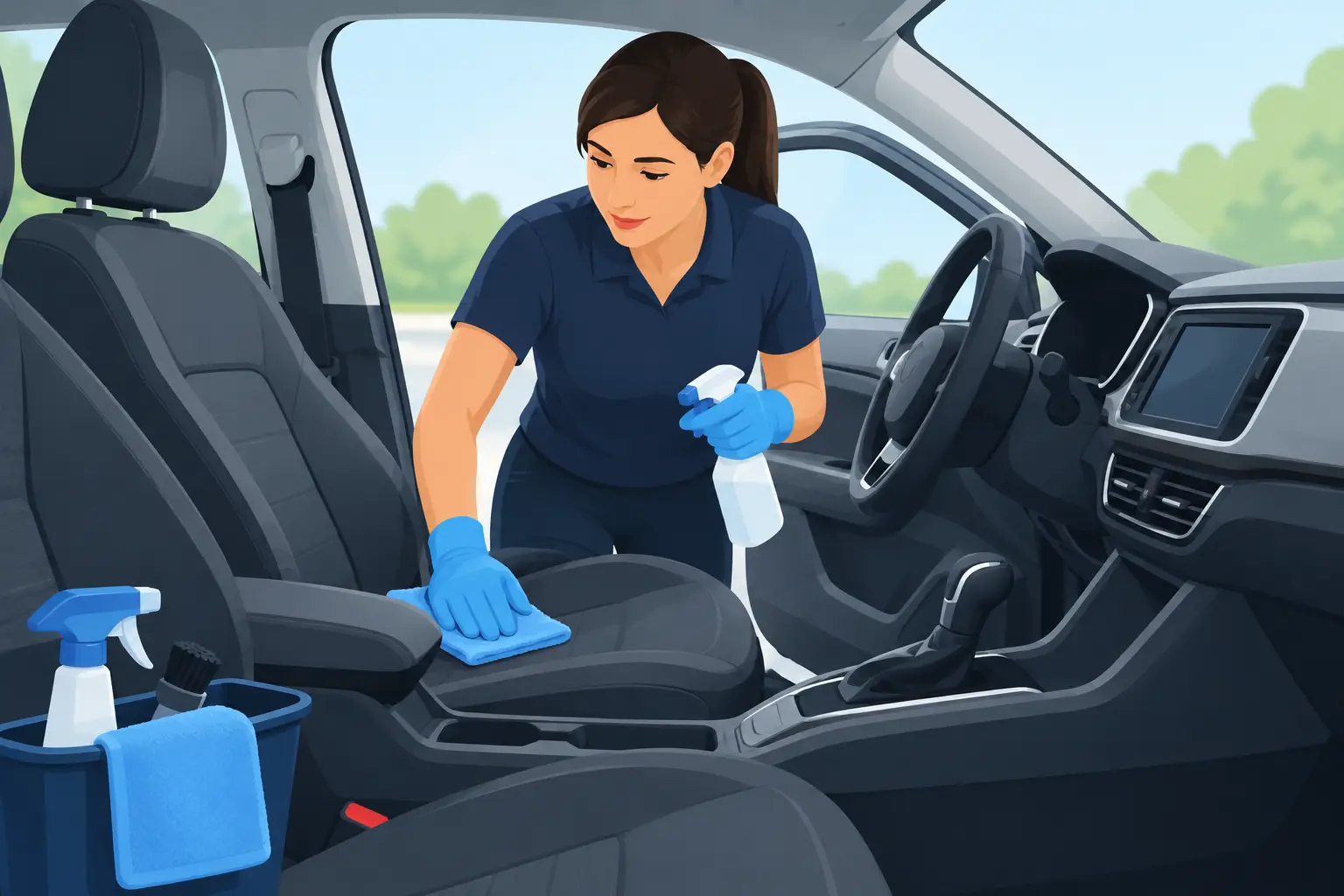
A coffee spill in the cup holder, fingerprints on the touchscreen, sand under the seats, and a lingering odor from yesterday’s drive-thru run can make a vehicle feel dirty fast. This guide to interior car sanitizing helps you clean the places people touch most, treat materials safely, and know when a deeper professional service is worth it.
Sanitizing is not the same as making a car look tidy. Vacuuming removes loose debris. Detailing lifts dirt, stains, oils, and buildup from surfaces. Sanitizing focuses on reducing germs on high-touch areas after those surfaces have been properly cleaned. Each step has a purpose, and skipping the cleaning stage can leave grime behind even if a disinfecting product is used.
Why Interior Car Sanitizing Needs a Careful Process
A car interior is a small, enclosed space shared by drivers, passengers, kids, pets, groceries, gym bags, and everything else that comes along for the ride. The steering wheel, door handles, seat belt buckle, shifter, window switches, and touchscreen receive constant contact. Meanwhile, crumbs and moisture can settle into carpets, seat seams, and cup holders where ordinary wipe-downs do not reach.
The right process protects both cleanliness and the materials inside your vehicle. Leather, soft-touch plastics, glossy trim, fabric, Alcantara-style upholstery, and electronic screens do not all respond well to the same chemical or tool. A harsh disinfectant may reduce germs but leave leather dry, discolor a delicate surface, or create streaks on a display.
That is why professional interior care is more than spraying a strong product throughout the cabin. It requires surface identification, controlled product use, proper dwell time, and careful drying. The goal is a cabin that feels genuinely clean without trading cleanliness for damage.
Start With Cleaning Before Sanitizing
Sanitizers and disinfectants work best on surfaces that are already free of visible dirt and oils. Start by removing trash, floor mats, personal items, and anything stored in the center console or door pockets. Vacuum seats, carpets, floor mats, seams, under-seat areas, and the trunk if it is part of the cleanup.
Next, use an interior-safe cleaner to wipe down hard surfaces. A clean microfiber towel is the right tool for dashboards, consoles, door panels, cup holders, and plastic trim. Work in sections and avoid soaking buttons, vents, switches, or electronics. For tight spaces, a soft detailing brush can loosen dust before you wipe it away.
Fabric seats and carpets need a different approach. Spot-treat stains first, then use an upholstery-safe cleaner with minimal moisture. Overwetting can push stains deeper, leave water marks, or create a damp smell if the interior does not dry completely. Heavily soiled fabric may require extraction rather than a quick spray-and-wipe treatment.
Do Not Forget the Areas Hiding in Plain Sight
Drivers often clean what they can see from the seat, but the dirtiest spots are frequently the ones that receive constant use. Pay close attention to the steering wheel, turn-signal stalk, gear selector, seat-adjustment controls, door pulls, seat belt buckles, window buttons, key fob, and start button.
Clean the touchscreen gently with a product approved for displays or a lightly dampened microfiber towel. Never spray liquid directly onto the screen. Avoid abrasive towels, paper towels, and aggressive cleaners that can damage anti-glare or protective coatings.
Cup holders deserve extra attention because sugar residue, condensation, and spilled drinks can build up quickly. Remove inserts when possible, clean the surrounding edges, and dry the area fully. The same applies to center-console compartments, where sticky residue often collects unnoticed.
Choose Products Based on the Surface
The strongest product is not automatically the best one. For everyday interior car sanitizing, use a product labeled for the surface you are treating and follow its directions exactly. Some disinfectants require the surface to remain wet for a specified amount of time to work properly. Wiping it dry immediately may reduce effectiveness.
For leather seats and leather-wrapped steering wheels, use a leather-safe cleaner first. If a disinfecting product is compatible with leather, apply it sparingly to a towel rather than directly to the seat or wheel. Follow with an appropriate conditioner when needed to maintain softness and reduce the risk of drying or cracking.
Vinyl and plastic are generally more forgiving, but they can still discolor or become shiny if the wrong product is used. Matte finishes, piano-black trim, and touchscreens require the lightest touch. Fabric and carpet should be treated with products made for textiles, especially when odors or organic stains are involved.
Avoid mixing chemicals. Combining household cleaners can create irritating fumes and may permanently damage interior surfaces. Strong bleach products are rarely a smart choice inside a vehicle because they can stain materials, leave harsh odors, and irritate passengers in an enclosed cabin.
A Practical Interior Car Sanitizing Routine
For most daily drivers, a light weekly reset and a more thorough monthly cleaning keep the cabin under control. The schedule changes based on how you use the vehicle. Families with young children, pet owners, rideshare drivers, commuters who eat in the car, and beachgoers in Los Angeles may need more frequent attention because sand, food residue, pet hair, and high passenger traffic add up quickly.
A practical routine includes these steps:
- Remove trash and personal items, then vacuum floors, seats, seams, and mats.
- Clean hard surfaces with an interior-safe cleaner and fresh microfiber towels.
- Sanitize high-touch points according to the product’s label instructions.
- Treat spills, stains, and odors before they have time to set.
- Dry every cleaned area fully before closing up the vehicle.
Use separate towels for dirty areas and delicate surfaces. A towel used on a grimy door jamb should not touch the touchscreen or leather seat. Small habits like this make a noticeable difference in the final result.
Odor Control Is Part of a Clean Cabin
An air freshener can cover a smell for a few days, but it does not solve the source. Lingering odors usually come from food spills, wet carpets, pet hair, smoke residue, mildew, or a dirty cabin air filter. Sanitizing hard surfaces may help with freshness, but odor removal often needs deeper cleaning.
If a spill reached the carpet padding or soaked into a fabric seat, surface cleaning may not be enough. Extraction can remove contamination from below the visible fibers, while targeted odor treatments address what remains. Mold or mildew concerns should be handled promptly, especially after a leak or water intrusion. A musty smell is a signal to inspect the carpet, trunk, floor mats, and air-conditioning system rather than simply adding fragrance.
When Professional Interior Detailing Makes Sense
A home routine is effective for maintenance, but some interiors need more than a quick cleanup. Set-in stains, embedded pet hair, sticky buildup, smoke odor, mold concerns, heavily soiled upholstery, and neglected carpets call for professional tools and experience. The same is true when you are preparing a vehicle for sale, returning a lease, or restoring a newer vehicle that deserves careful material-specific care.
Professional detailers can use steam selectively, extract fabric without over-saturating it, clean delicate trim safely, and reach areas that are difficult to handle at home. The difference is not just a better-looking cabin. It is a more comfortable space to drive, transport family, and enjoy every day.
For busy owners, mobile interior detailing also removes the inconvenience of spending a weekend in a shop waiting room. Drip N Shine brings meticulous interior care to homes, offices, and apartments throughout Los Angeles and nearby communities, so the vehicle can be cared for where it is already parked.
A sanitized interior should never smell like harsh chemicals or look overly dressed with greasy shine. It should feel clean when you grip the wheel, sit down, and take a breath. Keep up with the high-touch areas between details, address spills quickly, and give the cabin a deeper reset when everyday use starts to show.