
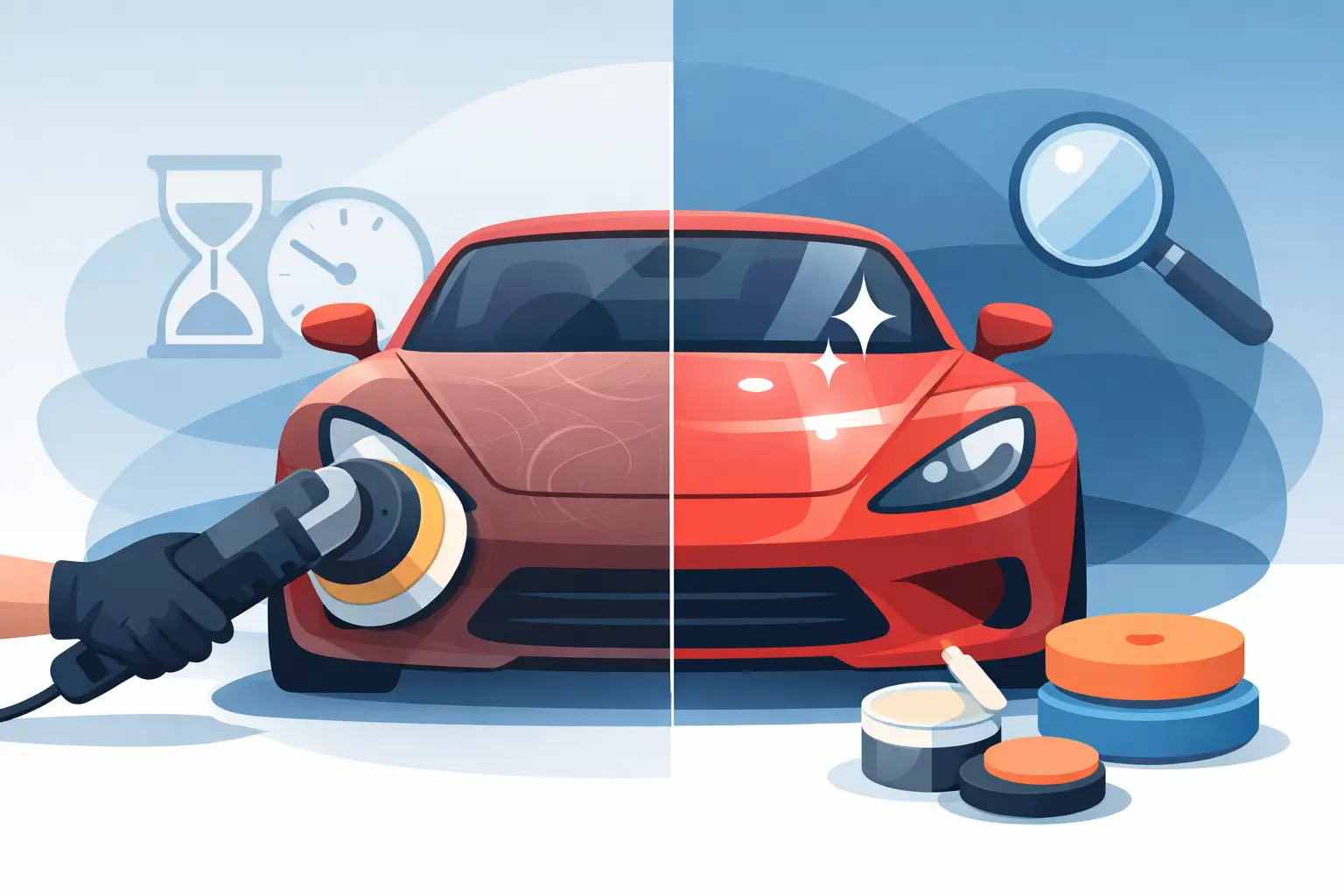
A vehicle can look clean in the shade and still show a web of swirl marks the moment it reaches direct sunlight. That is where single stage paint correction comes in. It is a professional machine-polishing service designed to reduce visible paint defects, restore gloss, and give your vehicle a noticeably clearer finish without the time and cost of a more aggressive multi-step correction.
For many daily drivers, newer vehicles, and well-maintained cars, it is the sweet spot. The goal is not to chase every mark at the expense of your clear coat. The goal is to make the paint look dramatically better, safely and efficiently.
What Single Stage Paint Correction Does
Single stage paint correction is often called a one-step polish. A detailer uses one polishing combination – typically a machine polisher, pad, and professional-grade polish – to improve the paint in a single correction step. Depending on the paint condition, that combination may lean more toward cutting away fine defects or refining the surface for maximum gloss.
The work begins well before the polisher touches the vehicle. Proper correction requires a thorough hand wash and decontamination to remove bonded grime, brake dust, road film, and other particles that can interfere with polishing. Paint is then inspected under strong lighting so the actual condition is visible, not hidden by waxes or dealership-style fillers.
Once the surface is prepared, the technician tests a small section to find the safest effective approach. Paint hardness varies by manufacturer, color, age, and previous detailing history. A soft black finish may respond quickly, while a harder clear coat may need a more corrective polish to achieve a meaningful improvement.
The result is usually a cleaner reflection, richer color, sharper gloss, and a major reduction in the fine swirls that make paint appear dull. On the right vehicle, the difference is immediate.
What It Can Fix – and What It Cannot
A single-step service is excellent for light to moderate paint defects. It can reduce wash-induced swirls, light haze, faint oxidation, water-spot etching that has not gone too deep, and minor scuffs from everyday use. It also improves the clarity of paint that looks flat or tired, even after a fresh wash.
It is not a promise to remove every imperfection. Deep scratches that catch a fingernail, rock chips, clear coat failure, severe oxidation, and heavy sanding marks may require additional correction steps, touch-up work, or repainting. In some cases, polishing a deep scratch aggressively enough to remove it would take away more clear coat than is wise.
That distinction matters. Professional paint correction is not about making unrealistic claims. It is about delivering the strongest visible improvement possible while preserving the long-term health of the finish. A great detailer knows when to improve a defect and when to leave a small trace rather than risk thinning the paint.
When a One-Step Polish Is the Right Choice
Single stage correction makes sense when your vehicle has lost its crisp shine but does not need a full restoration. It is especially popular for daily-driven vehicles that have accumulated swirls from automated washes, improper drying, dusty parking conditions, and routine use.
It is also a smart option before applying ceramic coating or a quality paint sealant. Protection looks better and performs more consistently on paint that has been properly cleaned and polished first. Coating over swirls does not hide them. In bright Los Angeles sun, it can make them even easier to see.
A one-step correction is often the right fit if you want a serious upgrade without keeping the vehicle off the road for an extended service. It offers an excellent balance of appearance, time, and investment. For a leased vehicle, a family SUV, or a commuter car you want to enjoy again, that balance can be more valuable than pursuing near-perfect paint.
Why Results Vary From Car to Car
No reputable detailer should promise the same correction percentage for every vehicle before inspecting it. Two cars with similar-looking swirls can produce very different results because the condition beneath the surface is different.
Paint color plays a role. Black, dark blue, and charcoal finishes show defects more easily than white, silver, or light gray paint. That does not mean light-colored vehicles do not benefit from correction. Their improvement often appears as greater gloss and reflection rather than a dramatic disappearance of visible swirls.
The paint itself also matters. Some clear coats are hard and resist correction, while others are softer and can be improved quickly but may also mar more easily. Previous bodywork, paint repairs, and unknown detailing history require extra caution. A professional inspection helps set the right expectation before any work begins.
The condition of the vehicle is another factor. A car that has been run through tunnel washes for years may need a multi-stage correction to address heavier defects. A newer vehicle with light wash marring may look exceptional after one carefully chosen polishing step.
Single Stage vs. Multi-Stage Paint Correction
The difference is not simply that one service is better. It is that each service has a different purpose.
A single stage correction uses one polishing step to deliver a strong visual improvement. It is efficient, paint-conscious, and ideal for light to moderate defects. Most owners see a major change in gloss and clarity without paying for perfection they may not need.
A multi-stage correction uses additional cutting and refining steps. The first step targets deeper swirls, scratches, and heavier oxidation. A following polish refines the finish and restores the highest possible gloss. This process can achieve a more extensive correction, but it takes more time, costs more, and removes more clear coat than a lighter approach.
For a garage-kept enthusiast vehicle, a dark luxury car, or paint with substantial defects, multi-stage correction may be worthwhile. For a well-used vehicle that needs to look polished, protected, and sharp again, a single stage service is frequently the smarter value.
The Process Matters as Much as the Polish
Paint correction can be done poorly with expensive products and done beautifully with the right technique. The quality of preparation, lighting, pad selection, machine control, and final inspection determines whether the finish is genuinely improved.
A rushed polish may leave behind holograms, missed sections, polish residue around trim, or temporary fillers that wash away after the first few cleanings. Professional work focuses on clean paint, controlled correction, and an even finish across panels. Sensitive areas such as edges, body lines, trim, and badges require particular care.
After polishing, the paint should be protected. A sealant, wax, or ceramic coating helps preserve the improved finish and makes future cleaning easier. The best option depends on how the vehicle is used, where it is parked, how often it is washed, and how long you want the protection to last.
How to Keep the Finish Looking Better
Correction improves existing paint condition, but future wash habits determine how long that clarity lasts. Avoid automatic brush washes whenever possible. Their bristles can drag dirt across the clear coat and quickly reintroduce swirls.
Use a pH-balanced shampoo, clean microfiber towels, and proper drying methods. If you wash at home, use separate tools for wheels and paint, and never wipe a dry, dusty vehicle with a towel. For busy owners, scheduled maintenance detailing is often the easiest way to protect the investment without adding another task to the week.
Parking under trees, near sprinklers, or along construction-heavy streets can also expose paint to sap, hard-water spots, and airborne contaminants. Addressing those issues early is easier than correcting them once they have bonded to the finish.
Is Single Stage Correction Worth It?
If the sight of swirls, dullness, and weak reflections makes your vehicle feel older than it is, single stage correction can be one of the most noticeable appearance upgrades available. Unlike a basic wash or wax, it improves the paint itself rather than simply covering its condition for a short time.
The best value comes from choosing the service that matches your vehicle, not the most aggressive package on a menu. At Drip N Shine, that means assessing the paint honestly, using surface-safe methods, and helping you choose a finish that looks better now and stays easier to maintain afterward.
A clear, glossy finish changes how you feel when you walk up to your car. Start with the correction your paint actually needs, then protect it with the same level of care.