
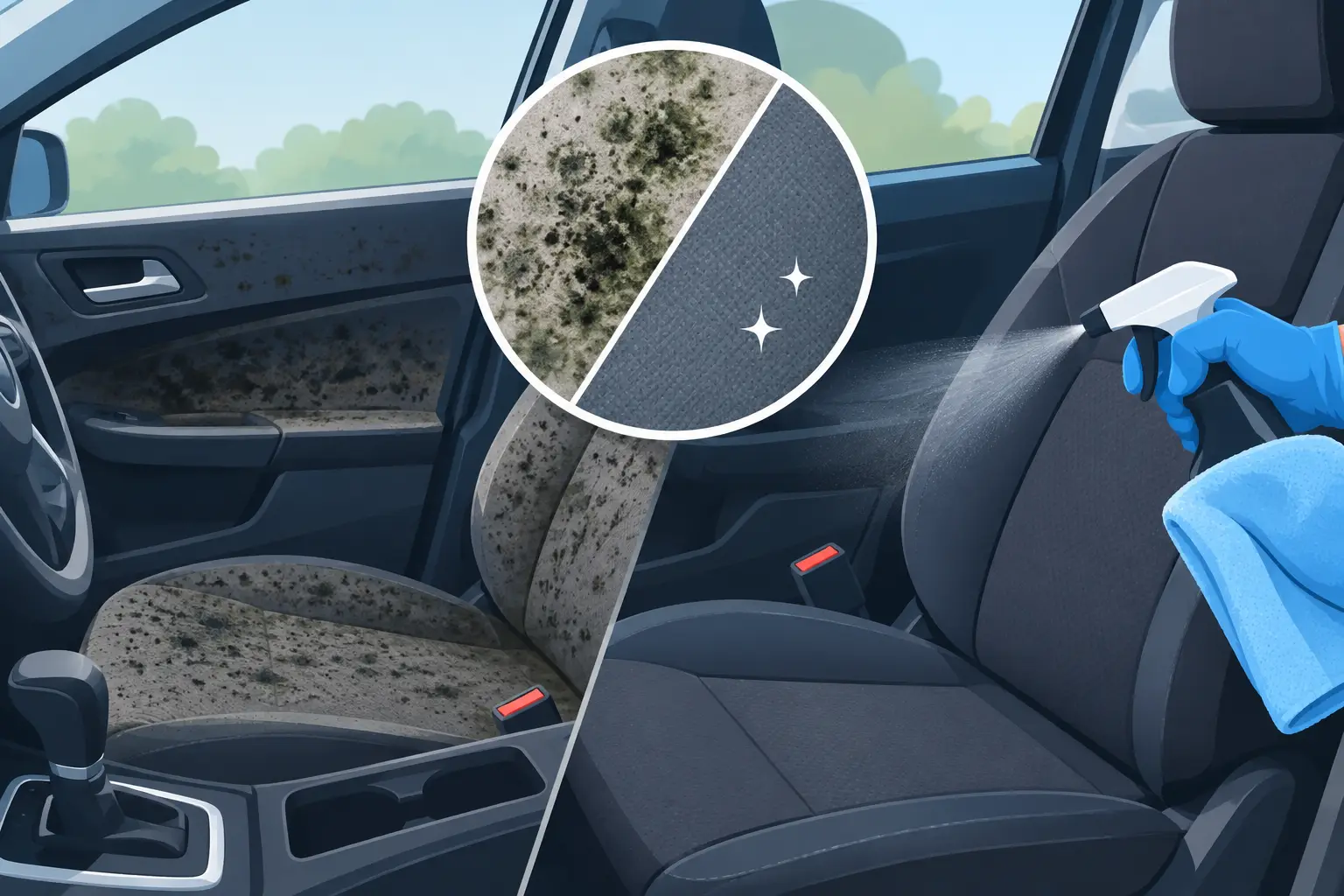
A musty smell after opening your car door is not something to cover up with an air freshener. If you can see fuzzy spots on the seats, carpet, seat belts, headliner, or trunk, you may be dealing with mold. So, can detailing remove mold from a vehicle? In some cases, yes. Professional detailing can safely clean light, surface-level mold and restore the affected materials. But when mold is widespread, returns after cleaning, or points to a moisture problem inside the vehicle, it may require more than a standard detail.
The right response depends on where the mold is growing, how far the moisture traveled, and whether the source of the water has been fixed. A clean-looking interior is the goal, but a lasting result requires more than wiping away what is visible.
Can Detailing Remove Mold Safely?
Detailing can remove visible mold from hard surfaces and lightly affected interior materials when the contamination is limited and the vehicle can be properly dried. A professional interior detailer can inspect the cabin, isolate affected areas, use appropriate interior-safe cleaning methods, extract contaminated residue from fabric, and deodorize the vehicle after treatment.
That said, mold removal is not always the same as mold remediation. Mold can grow below carpeting, inside seat foam, behind interior panels, in the trunk well, or around a leaking windshield or sunroof drain. If moisture reached those hidden areas, cleaning the surface alone may improve appearance without solving the underlying issue.
For vehicle owners, the practical answer is simple: detailing is often an effective solution for early or minor mold growth. Severe contamination, recurring mold, or mold connected to a water-damaged vehicle calls for a deeper inspection and, in some cases, a remediation specialist.
Why Mold Grows Inside Cars
Mold needs moisture, organic material, and time. Your car interior provides plenty of dust, fabric fibers, food particles, and upholstery padding for it to feed on. Add trapped water, humid air, or a leak, and spores can multiply surprisingly quickly.
Common causes include a window left open during rain, a leaking door seal, clogged sunroof drains, a damaged windshield seal, wet carpet after a spill, or water entering through the trunk. In Los Angeles, coastal moisture can also make an already damp vehicle slower to dry, especially if it is parked for days near Santa Monica, Venice, or Manhattan Beach.
A malfunctioning air-conditioning drain can also create moisture issues. If the cabin smells damp when the AC runs, or if carpet near the front passenger side feels wet, the system should be checked before scheduling cosmetic cleaning alone.
What Professional Detailing Can Do
A quality mold-focused interior detail begins with assessment, not aggressive scrubbing. Brushing dry mold or blasting it with air can spread spores through the cabin and into vents. The technician should first identify affected materials, look for obvious water intrusion, and determine whether the vehicle is suitable for detailing.
For manageable cases, the process may include careful removal of loose contamination, cleaning hard surfaces, treating upholstery and carpeting with material-appropriate products, and extracting moisture and residue from fabric. Crevices around seat tracks, seat belts, door jambs, console compartments, and under-floor storage areas deserve attention because mold often hides where routine cleaning misses.
Drying is just as important as cleaning. Carpet, floor mats, and upholstery need to be thoroughly dried before the vehicle is closed up. Otherwise, the conditions that caused the mold remain in place. Odor treatment can help neutralize lingering smells, but it should never be used as a substitute for removing contamination and moisture.
At Drip N Shine, the goal of interior detailing is not to make a problem disappear temporarily. It is to clean the vehicle carefully, protect the materials, and give the owner a clear recommendation if the condition goes beyond what detailing should handle.
When Detailing Is Not Enough
There are situations where the safest choice is to pause and seek specialized help. A vehicle may need professional remediation or mechanical repair when mold covers large areas, has spread across multiple surfaces, has returned after previous cleaning, or is connected to flooding or long-term water damage.
Be especially cautious if the carpeting is soaked underneath, seat foam remains damp, the headliner is affected over a broad area, or there is visible mold inside the HVAC vents. These conditions suggest hidden moisture or contamination that cannot be fully addressed through a normal interior detailing service.
The same applies if the vehicle has a strong, persistent mildew odor with no visible source. That smell can come from beneath the carpet, inside insulation, or from a clogged evaporator drain. Removing the odor without finding the moisture source can lead to disappointment when it comes back days or weeks later.
For heavily contaminated vehicles, some porous materials may need replacement. This can feel like an added expense, but replacing compromised padding, carpet, or insulation may be more effective than repeatedly cleaning material that cannot fully dry or be reliably restored.
Do Not Clean It the Wrong Way
Mold is one of the few interior issues where the wrong DIY approach can make the situation worse. Avoid dry brushing, vacuuming with ordinary household equipment, soaking the interior with water, or mixing cleaning chemicals. Bleach is not a universal answer for automotive interiors either. It can discolor fabric, damage leather and trim, leave behind strong fumes, and may not reach contamination below the surface.
Do not simply spray fragrance over a musty odor. Air fresheners can make the cabin smell sweeter for a day, but they do not remove mold, moisture, or the source of the problem.
If you need to move the vehicle before it is inspected, keep windows open when conditions allow and avoid running the fan at high speed if you suspect contamination in the vents. If you have respiratory sensitivities, allergies, or concerns about exposure, it is wise to limit time in the car until it has been assessed.
How to Prevent Mold From Returning
Once the vehicle is clean, prevention comes down to keeping the interior dry and addressing water intrusion quickly. Check floor mats and carpet after heavy rain. Empty water from door pockets and trunk compartments. Remove wet gym clothes, towels, umbrellas, and beach gear instead of leaving them in the car overnight.
If you notice fogged windows, damp carpet, or a recurring musty smell, treat it as an early warning. A small leak is easier and less expensive to repair than a moisture problem that reaches upholstery padding and insulation.
Regular interior detailing also helps because it removes the dust, debris, food residue, and trapped moisture that create an inviting environment for mold. For families, pet owners, beachgoers, and drivers who use their vehicle every day, maintaining the interior is not just about appearance. It helps preserve comfort, materials, and resale value.
What to Tell Your Detailer Before Booking
Be direct about what you have noticed. Mention visible mold, musty odors, recent leaks, water exposure, flooded floor mats, or any repair work done around the windshield, doors, roof, or AC system. Photos can help a detailer determine whether mobile service is appropriate and how much time the job may require.
A trustworthy professional should be clear about the scope of work. Light surface mold may be treatable with a targeted interior cleaning. More serious conditions should come with an honest recommendation to repair the leak first or consult a specialist. That clarity protects your vehicle and prevents you from paying for a temporary cosmetic fix.
If your car shows the first signs of mold, act before a small damp spot becomes a hidden interior problem. The sooner the moisture source is found and the cabin is properly cleaned and dried, the better the chance of restoring the space you drive in every day.