
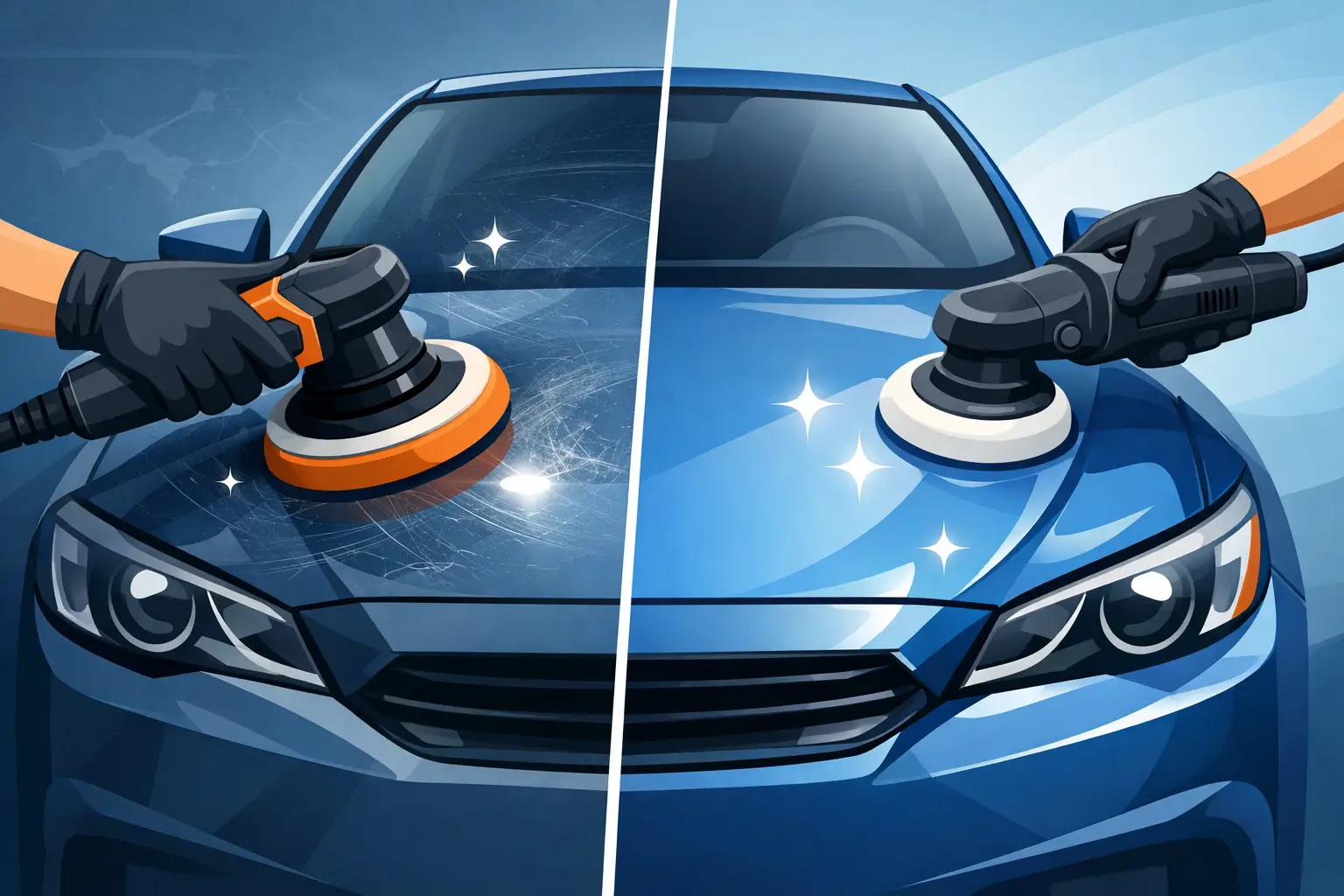
A freshly washed car can still look tired in direct Los Angeles sunlight. If you see spiderweb-like swirls, hazy reflections, water-spot etching, or dull areas that will not clean away, the question is not whether the vehicle needs another wash. It is paint correction vs polish – and choosing the right service makes a real difference in the finish you see and the paint you preserve.
Both services can improve gloss. The difference is in how deeply they address defects and how much material they remove from the clear coat. A professional detailer evaluates the paint before selecting a process, because the goal is never to polish aggressively just to create a temporary shine. The goal is a cleaner, clearer, more even finish that still has a healthy amount of protection left.
What Is a Polish?
A polish is a refining service designed to improve gloss and reduce light imperfections. It uses a mild abrasive formula and machine pad combination to smooth very fine defects in the clear coat. Think of it as bringing clarity back to paint that looks a little flat, lightly swirled, or less reflective than it used to.
Polishing is often a strong choice for newer vehicles, well-maintained vehicles, and cars that have minor wash marks but no major visible damage. It can enhance color depth, sharpen reflections, and give the vehicle the clean, polished appearance many owners want before adding a wax, sealant, or ceramic coating.
A polish does not usually remove deep scratches, severe oxidation, etched water spots, or heavy swirl marks. It may make some of those defects less noticeable, but it is not intended to level the paint enough to fully correct them. That is not a weakness. It is the right approach when the paint only needs refinement and preserving clear coat thickness is the priority.
Paint Correction vs Polish: The Main Difference
Paint correction is a more intensive process. Instead of simply refining the surface, it targets visible defects by carefully leveling a very small amount of clear coat around them. Depending on the condition of the vehicle, correction may involve a one-step process or multiple stages of compounding and polishing.
The word “correction” can create unrealistic expectations, so it helps to be clear about what professional work can and cannot do. Many defects are located in the clear coat and can be safely reduced or removed with the right approach. But scratches that have cut through the clear coat into the color layer, rock chips, peeling clear coat, or poor previous bodywork cannot be polished away. Those issues may need touch-up paint, wet sanding, or body shop repair.
A paint correction service is usually the better fit when you have obvious swirl marks visible in sunlight, dull or oxidized paint, moderate scratches, heavy wash marring, or stubborn mineral deposits. It requires more time, more inspection, and more care because every vehicle’s paint condition is different.
The practical difference is simple: polishing improves an already decent finish, while paint correction works to restore a finish that has noticeable defects. Both can leave a car looking dramatically better, but the best option depends on what is actually happening at the surface.
Why Swirl Marks Return After Some Car Washes
Many swirls are created by friction, not age. Automated wash brushes, dirty wash mitts, rough towels, and rushed drying can drag fine debris across the clear coat. The result is a pattern of light scratches that becomes especially visible under sun, streetlights, or a phone flashlight.
A polish can reduce light swirling. Paint correction can remove or significantly reduce more established swirling. But neither service will keep the finish looking great if the vehicle returns to abrasive wash habits afterward. Proper hand washing, clean microfiber towels, and quality paint protection help preserve the results.
How Professionals Decide Which Service You Need
The correct service starts with inspection, not assumptions. Paint can look nearly perfect in shade and reveal significant damage in direct light. A detailer checks the vehicle from multiple angles, assesses the depth and type of defects, and considers the paint’s age, prior work, and overall condition.
The decision usually comes down to four factors:
- Defect severity: Fine haze and light wash marks may only need polishing, while deeper swirls and oxidation may require correction.
- Paint condition: Older, thinner, repainted, or previously corrected panels require a more conservative approach.
- Your expectations: Some owners want a major improvement, while others want the highest possible defect removal before applying ceramic coating.
- How you use the vehicle: A daily driver parked outdoors may benefit from a practical one-step correction rather than chasing near-perfect paint that will face regular wear.
This is where a professional service delivers better value than a one-size-fits-all package. More aggressive is not automatically better. The right detailer removes only what is necessary to improve the finish safely.
One-Step and Multi-Step Paint Correction
Not every paint correction is the same. A one-step correction typically combines defect reduction and finishing polish in one process. It is a practical choice for vehicles with moderate swirling and is often ideal for daily-driven cars. You can expect a noticeable jump in gloss and a meaningful reduction in visible defects without the added time of a multi-stage service.
A multi-step correction begins with a stronger cutting stage to address more severe defects, followed by a finer polish to restore clarity and gloss. This approach is better suited for neglected paint, darker colors that show everything, or owners who want a more complete transformation before a ceramic coating.
More stages do not always mean a better choice. If your SUV is used for school drop-offs, beach trips, commuting, and weekend errands, a well-executed one-step service may provide the appearance improvement you want at a more practical investment. If you own a weekend car, a luxury vehicle, or a vehicle you plan to protect long term, multi-step correction may be worth considering.
When a Polish Is the Smarter Investment
A polish is often overlooked because it sounds less dramatic than correction. In reality, it can be exactly what a vehicle needs. If the paint is in solid condition but lacks the crisp reflection and rich color it had when new, a polish delivers visible results without unnecessary correction work.
It is also a smart preparation step before applying a ceramic coating. Ceramic coating adds protection and enhances gloss, but it does not remove scratches. Any swirl marks left behind can become more noticeable once the coating increases reflectivity. A polish helps create a cleaner foundation, especially on newer cars with light dealer-installed wash marks or mild marring.
For owners who maintain their car consistently, periodic polishing can keep the paint looking fresh while avoiding the need for major correction later. The timing depends on storage, mileage, wash habits, and exposure to sun, salt air, tree sap, and hard-water spots.
What Happens After the Paint Is Improved
Correction and polish should be followed by protection. Without it, the clear coat is again exposed to UV rays, contaminants, road grime, bird droppings, and the friction of future washes. Protection does not make paint invincible, but it makes maintenance easier and helps preserve the work.
A quality sealant or wax can offer a short-term gloss boost and water repellency. Ceramic coating is a longer-term option for owners who want stronger chemical resistance, easier cleaning, and a more durable finish. The right choice depends on your parking situation, maintenance routine, and how long you plan to keep the vehicle.
For mobile detailing clients in Los Angeles, this matters even more. Constant sun exposure, dusty roads, coastal air, and hard-water residue can take a visible toll on paint. Drip N Shine evaluates each vehicle’s finish and recommends the service that fits its condition, rather than treating every car like it needs the same level of correction.
Choose the Service Based on the Paint, Not the Label
A polish is not a shortcut when it is the right solution, and paint correction is not automatically necessary because a vehicle has a few marks. The best result comes from matching the process to the condition of the clear coat, then protecting that work with better maintenance.
Take a close look at your vehicle in direct sunlight before booking. If the problem is mostly dullness and fine wash marks, polishing may restore the shine you are missing. If reflections look scratched, cloudy, or heavily swirled, paint correction may be the investment that makes your vehicle look cared for again.