
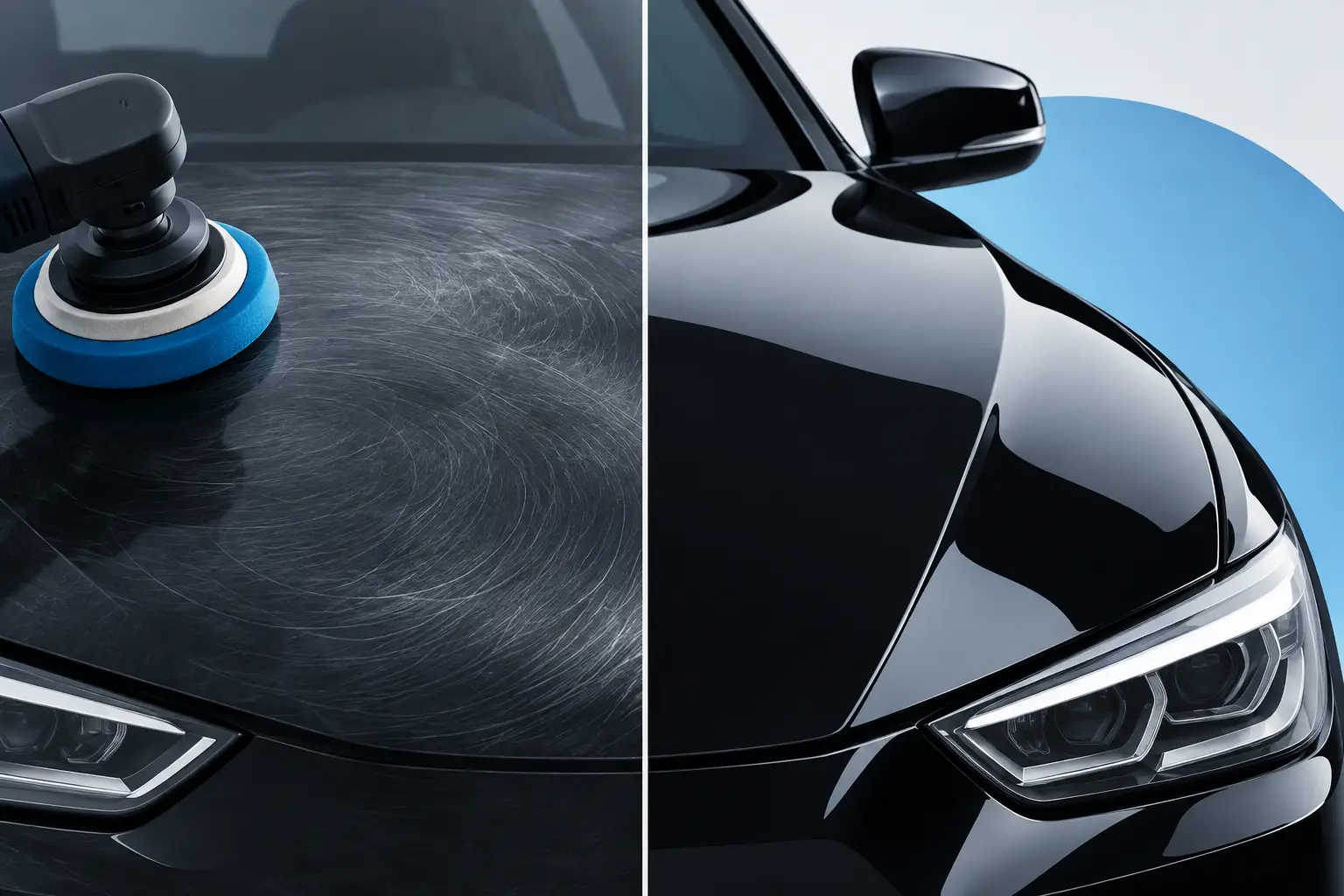
A black vehicle can look freshly painted after a proper correction, then reveal a web of fine scratches the moment it sits under direct sun. That contrast is exactly why black car swirl removal results are so satisfying – and why they need to be judged honestly. Professional paint correction can dramatically restore depth, clarity, and reflection, but the right result depends on the condition of the paint, the vehicle’s history, and how much clear coat can safely be removed.
For Los Angeles drivers, this is not a minor cosmetic issue. Bright sun makes every wash-induced mark visible, especially on a black hood, trunk, or door panel. A quality correction service is designed to improve the paint itself, not simply make the defects harder to see for a few days.
Why Swirls Look Worse on Black Paint
Swirl marks are very fine scratches in the clear coat. They are commonly caused by automatic car washes, dirty wash mitts, rough drying towels, dust being wiped off dry, and improper polishing. On lighter paint colors, these marks may blend into the finish. On black paint, they scatter light and interrupt the reflection, creating the familiar circular or spiderweb pattern.
The issue is most obvious in sunlight, under parking lot lights, and in a garage with bright overhead lighting. A black car may look clean from ten feet away but still appear dull and hazy up close. That haze takes away the sharp, liquid-like shine people expect from dark paint.
Not every mark is a swirl. Some defects sit deeper in the clear coat, including random isolated scratches, water-spot etching, bird-dropping damage, oxidation, and marks left by a previous repair. Identifying the difference matters because each defect has a different correction path and a different level of risk.
What Black Car Swirl Removal Results Should Look Like
The best result is not an artificially greasy shine. It is paint that looks clear, deep, and even in direct light. After a professional correction, reflections should appear sharper, the black color should look richer, and the foggy appearance caused by fine scratching should be greatly reduced or eliminated.
For paint with typical wash swirls, a one-step polish may remove a meaningful portion of the defects while adding noticeable gloss. This is often a smart choice for daily drivers where time, budget, and clear-coat preservation all matter. On a newer or well-maintained vehicle, the improvement can be substantial without chasing every tiny imperfection.
Heavier defects may call for a multi-step paint correction. This process generally begins with a more corrective polishing step to address deeper marring, followed by a refining polish that restores clarity and gloss. On suitable paint, a multi-step correction can deliver 80 to 95 percent improvement. That level of black car swirl removal results can make a vehicle look dramatically newer.
Still, a reputable detailer should not promise 100 percent defect removal before inspecting the car. Deep scratches may remain visible because removing them completely could require taking away too much clear coat. The safer and more valuable choice is often to reduce the scratch significantly while preserving the paint’s long-term health.
Correction Removes Defects, It Does Not Hide Them
Some products fill fine marks temporarily with oils, glazes, or waxes. The vehicle may look better immediately, but the swirls can reappear after a few washes or once the fillers wear away. True paint correction uses machine polishing and carefully selected pads and compounds to level the surrounding clear coat around a defect.
That does not mean aggressive polishing is always better. Every vehicle has a limited amount of clear coat. Experienced detailers use the least aggressive method capable of producing a strong improvement. This patient approach protects the finish while delivering a visible transformation.
The Process Behind a Clean, Glossy Finish
Great correction results begin well before the polisher touches the paint. The vehicle needs a detailed hand wash that safely removes loose dirt and road film. Chemical decontamination and clay treatment may also be needed to remove bonded contaminants that make paint feel rough and interfere with polishing.
Once the surface is clean, the paint is inspected under proper lighting. A test section is polished first to determine which combination of pad, polish, speed, and technique produces the right balance of correction and finish. This is particularly important on black paint, where a poor polishing process can create fresh haze or micro-marring.
Sensitive areas are protected, and panels are worked carefully rather than rushed. Edges, body lines, repainted panels, and thin or aging paint all require extra attention. A professional result comes from adapting the process to the specific vehicle, not applying one package or one product to every car.
The finish is then prepared for protection. This last step is where a paint sealant, wax, or ceramic coating can help preserve the corrected appearance. Protection adds gloss and makes routine washing easier, but it does not replace correction. A coating placed over swirls will protect swirls that are still there.
What Can Limit the Final Result
Vehicle age alone does not determine whether a black car can be corrected. A newer car that has been through frequent tunnel washes may have more visible swirls than an older car that has been carefully hand-washed. The bigger question is how deep the damage is and how much healthy clear coat remains.
Previous bodywork can also change the plan. Repainted panels may react differently to polishing, and some panels can be thinner or softer than factory paint. Severe water spotting, etched bird droppings, rock chips, and scratches that catch a fingernail may require more than polishing. In some cases, touch-up or repainting is the only way to make a deeper defect disappear completely.
Outdoor working conditions matter as well. Mobile detailing offers the convenience of having your vehicle serviced at home or work, but paint correction needs controlled conditions. Shade, clean panel temperatures, and reliable lighting support better results. A qualified mobile team will assess the available space and plan around heat, weather, and access rather than compromise the finish.
Keeping the Swirl-Free Look Longer
The correction appointment creates the transformation. Your washing routine determines how long that transformation remains easy to see. Black paint will collect dust and show it quickly, but frequent washing does not have to mean frequent scratching.
Avoid tunnel washes with spinning brushes, even when they are marketed as soft-touch. Use clean microfiber towels, a quality wash mitt, and a safe hand-wash process that keeps dirt from being rubbed back across the paint. Never use an old bath towel, household rag, or dry duster on a dusty black vehicle.
A ceramic coating can be a strong option for owners who want easier maintenance and added resistance to environmental grime. It can help water and dirt release more easily during washing, but it is not scratch-proof. Coated black paint still needs careful washing, and it still benefits from periodic professional maintenance.
Parking choices also make a difference in Southern California. When possible, reduce prolonged exposure to intense sun, tree sap, bird droppings, and sprinkler water. Remove fresh contaminants promptly instead of letting them bake into the clear coat.
Is Paint Correction Worth It for a Black Car?
For an owner who notices the paint every time sunlight hits the car, the answer is usually yes. Black paint rewards careful correction more than almost any other color because the visual change is immediate. A dull surface becomes reflective again, body lines look cleaner, and the vehicle carries the polished appearance that a basic wash cannot deliver.
The right level of correction depends on your goals. A commuter vehicle may benefit most from a practical one-step polish and durable protection. A newer luxury vehicle, weekend car, or enthusiast-owned vehicle may justify a more intensive correction before ceramic coating. Drip N Shine evaluates the paint condition and recommends a service that fits the vehicle instead of treating every black finish the same.
A black car does not need to be perfect to look exceptional. When the paint is corrected safely, protected properly, and maintained with care, the finish can keep its deep, crisp reflection long after the appointment is over.