
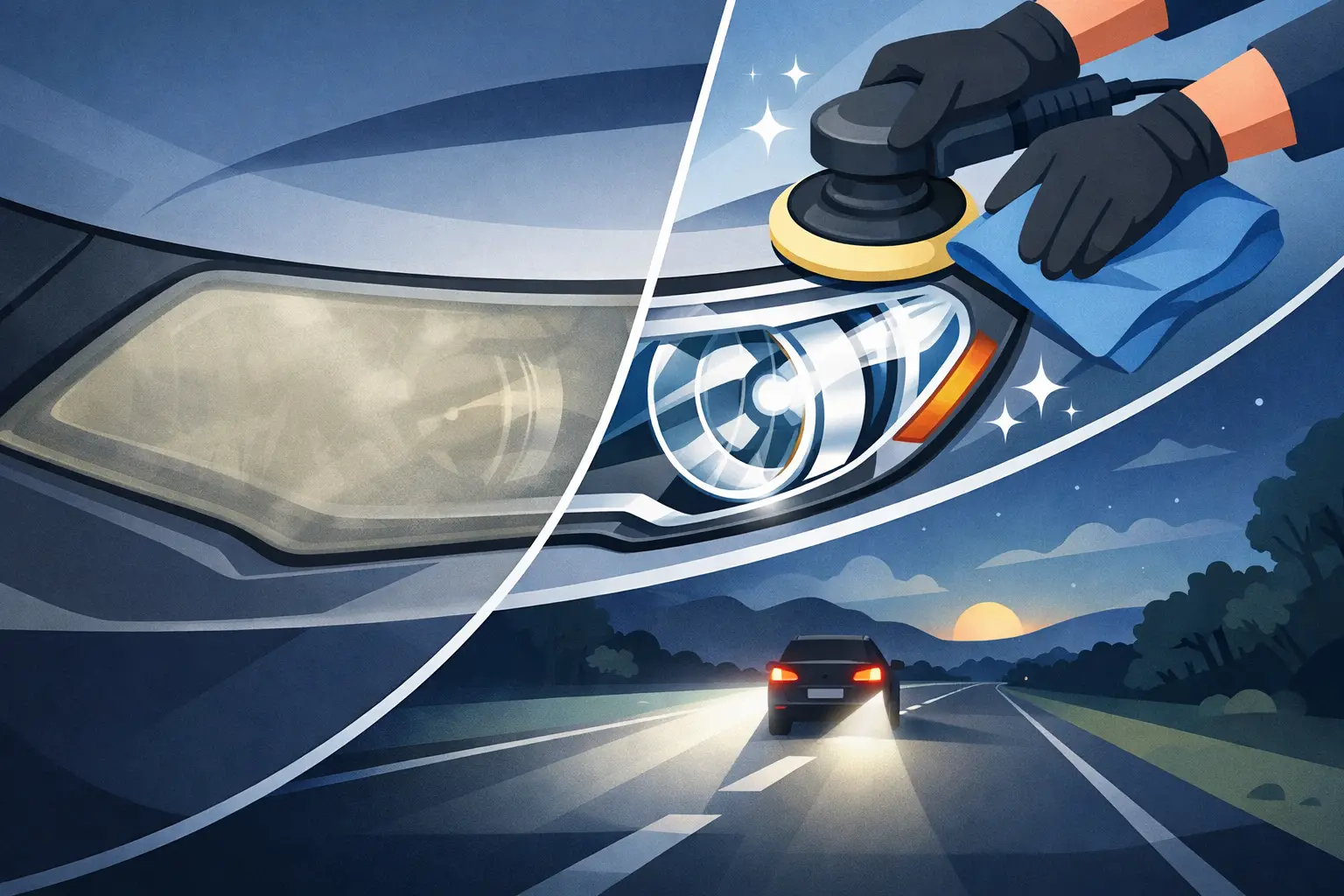
A cloudy headlight lens can make an otherwise clean vehicle look years older. More importantly, it can limit the amount of usable light reaching the road at night. Professional headlight restoration removes the dull, yellowed look caused by sun exposure and road wear, helping your vehicle look sharper and perform better after dark.
For Los Angeles drivers, headlights take a beating. Constant UV exposure, heat, freeway debris, and routine outdoor parking slowly break down the protective coating on plastic lenses. What starts as a slight haze can turn into yellowing, rough texture, and noticeably weaker-looking headlights. A quick wash may make them look better for a day, but it cannot correct oxidation embedded in the lens surface.
What Causes Cloudy Headlights?
Most modern vehicles use polycarbonate plastic headlight lenses. This material is durable and impact-resistant, but it is not immune to the elements. A factory-applied UV coating protects the lens at first. Over time, that coating wears down, allowing oxidation to develop on the outer surface.
The result is usually a combination of yellow discoloration, cloudy patches, fine cracking, and a chalky feel. On darker vehicles, the contrast can be especially noticeable. On newer or well-maintained cars, hazy headlights can be one of the few details keeping the exterior from looking fully polished.
Headlight haze is not always equal on both sides. One lens may receive more direct sun based on where the vehicle is parked, or one side may take more damage from road debris. That is why both headlights should be evaluated individually, even when they are restored as a pair.
Why Headlight Restoration Is More Than a Cosmetic Service
Clear headlights improve the appearance of your vehicle, but the real value goes beyond looks. When oxidation blocks and scatters light, the beam can appear dimmer and less focused. That matters when driving on poorly lit streets, during rain, or on late-night freeway trips.
Restoration can also be a practical alternative to replacing an entire headlight assembly. Replacement housings can be expensive, especially on vehicles with LED components, adaptive lighting, or premium trim packages. If the housing and internal components are in good condition, restoring the lens often delivers a major visual improvement without the cost of a full replacement.
There is a limit, though. Restoration addresses damage on the outside of the lens. If moisture has entered the housing, the lens is cracked, mounting tabs are broken, or the reflector inside has failed, replacement may be the better solution. A professional inspection helps separate a restorable lens from a headlight that has deeper issues.
How Professional Headlight Restoration Works
A quality result comes from correcting the damaged material, not simply polishing over it. The exact process depends on the severity of oxidation, but it generally starts with a careful cleaning and masking of the paint and trim around the headlights.
The technician then levels the damaged outer layer through controlled sanding. This step removes yellowing, roughness, and old failing coatings. The lens may look temporarily frosted during this stage, which is normal. The clarity returns during the refinement and polishing process.
After sanding, the lens is polished to restore transparency and a smooth finish. The most important final step is protection. Without a durable UV protectant, a freshly restored headlight can begin oxidizing again much sooner than it should. A professional-grade sealant or coating helps shield the lens from sun exposure and keeps it looking clear longer.
The difference is often immediate: headlights appear brighter, the front end looks cleaner, and the vehicle regains a more cared-for appearance. For owners preparing to sell, renew a lease, or simply bring an older daily driver back into shape, it is one of the most visible improvements available.
Why a Quick Polish Usually Does Not Last
Store-bought restoration kits and quick polishing services can improve mild haze, but results vary widely. Many DIY kits rely on a light abrasive and a basic wipe-on protectant. They may reduce the yellow appearance without fully removing the compromised surface layer.
That approach can be reasonable for a lightly dull lens and a driver who is comfortable investing the time. The trade-off is durability. Uneven sanding, skipped prep work, or weak UV protection can leave the headlights looking cloudy again within months. In some cases, aggressive work without proper technique can create scratches or uneven spots that are harder to correct later.
Professional restoration is designed to provide a more consistent finish, protect nearby paint and trim, and apply longer-lasting protection. It is especially worthwhile when the oxidation is heavy, the vehicle has premium lighting, or you want the finish to match the quality of a full exterior detail.
When Should You Restore Your Headlights?
The best time is before the haze becomes severe. Early restoration is typically faster and preserves more of the lens material. If you notice a yellow tint, dullness that remains after washing, visible surface texture, or headlights that look dim despite working bulbs, it is time to have them assessed.
You should also consider restoration before a road trip, vehicle sale, safety inspection, or a detail appointment focused on improving overall exterior appearance. Clean paint and glossy tires do not have the same impact when heavily oxidized headlights sit at the front of the vehicle.
For vehicles parked outside in Southern California, a yearly visual check is smart. The need for service may be less frequent when quality UV protection is maintained, but sun exposure is persistent. Addressing haze early is usually more cost-effective than waiting until the lens becomes deeply yellowed or starts showing cracks.
Keeping Restored Headlights Clear Longer
After headlight restoration, simple maintenance helps preserve the result. Wash the lenses with the same care used for painted surfaces. Avoid harsh household cleaners, dry wiping dusty headlights, and abrasive pads that can scratch the protective layer.
Parking in a garage or shaded area when possible reduces UV exposure. A quality exterior protectant applied during routine detailing can also support the lens protection already in place. Ceramic coating on surrounding painted surfaces will not repair headlights by itself, but a properly selected lens-safe protectant can be part of an overall vehicle preservation plan.
Do not assume brighter bulbs will solve a cloudy lens problem. Upgrading bulbs can help in certain vehicles, but the light still has to pass through the lens. Restoring a hazy surface first gives the existing lighting system a fair chance to perform as designed.
Headlight Restoration Questions
Will restoration make headlights look new?
In many cases, the improvement is dramatic. Severe external oxidation can often be removed, leaving lenses much clearer and brighter-looking. Results depend on the condition of the plastic and whether damage is limited to the outside surface. Internal haze, cracks, and water intrusion cannot be corrected through exterior restoration.
How long does headlight restoration last?
Durability depends on the amount of sun exposure, how the vehicle is stored, washing habits, and the type of UV protection applied. A properly restored and protected lens should last far longer than a quick polish, but all plastic headlights eventually need maintenance in a high-UV environment.
Is it better to restore or replace headlights?
Restore when the lens has surface oxidation and the housing is otherwise intact. Replace when there is significant cracking, internal damage, failed seals, or electrical and lighting-component problems. Restoration is often the smart value when the issue is cosmetic surface wear.
A clear set of headlights changes how a vehicle looks from the curb, but it also supports better visibility where it counts. If your lenses are yellow, dull, or rough to the touch, addressing them now can protect your driving experience and bring the front of your vehicle back in line with the rest of its finish.