
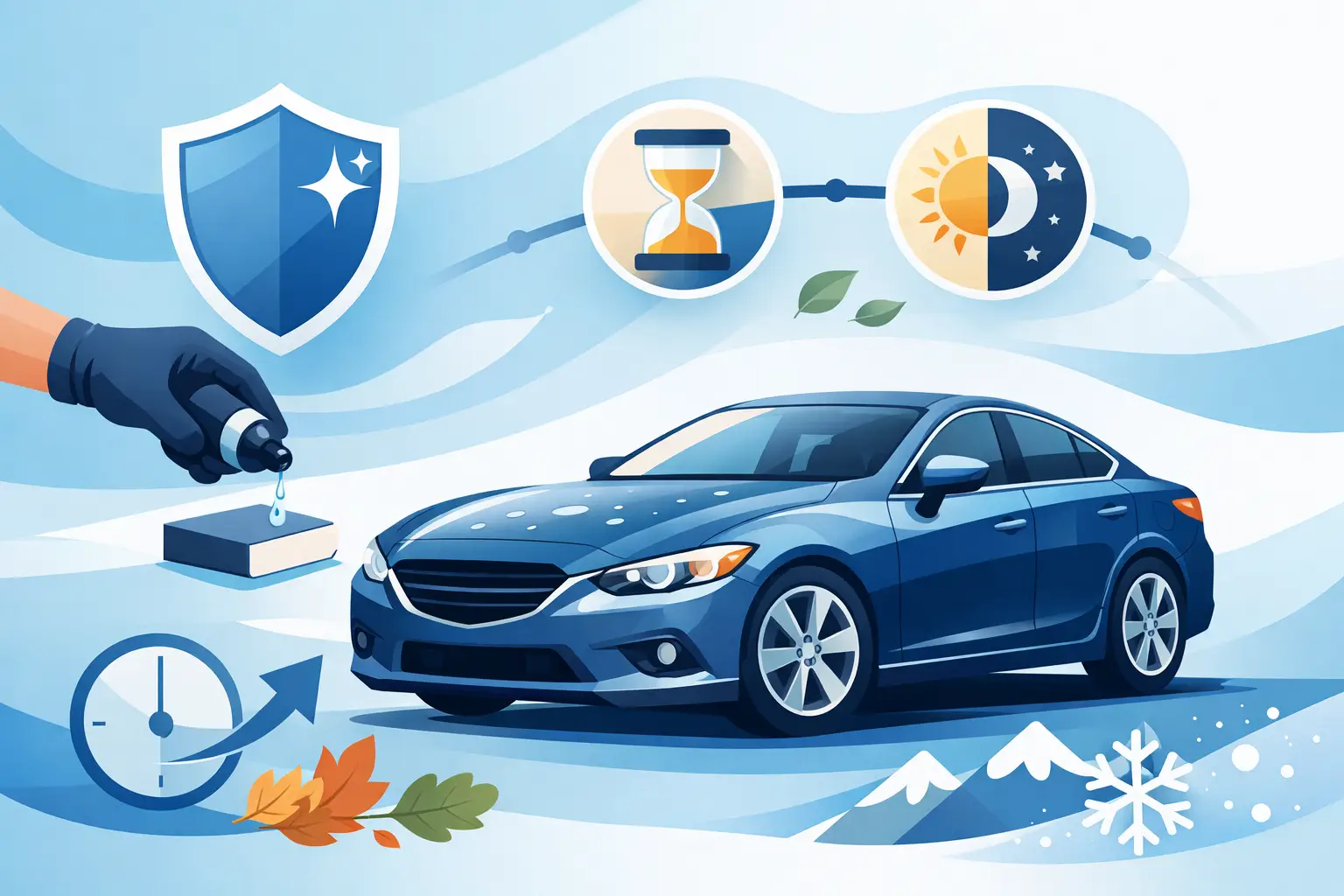
A ceramic-coated vehicle can still get dirty, collect water spots, and pick up road grime. The difference is that the paint has a durable protective layer that makes cleaning easier and helps preserve the gloss underneath. So, how long does ceramic coating last? For most professionally applied coatings, a realistic expectation is two to five years. Premium multi-year coatings can last longer, but only when the paint is properly prepared and the vehicle receives consistent care.
The label on a coating bottle is not the whole story. Lifespan depends on the coating itself, the condition of the paint before application, where the car is parked, how it is washed, and how often it is driven. A vehicle that lives outside in Los Angeles sun and sees freeway traffic every day will need more attention than one that stays garaged and is washed carefully.
How Long Does Ceramic Coating Last in Real Conditions?
Ceramic coating is a liquid polymer that cures onto the vehicle’s clear coat. Once cured, it creates a slick, chemically resistant surface that adds gloss, improves water behavior, and reduces the chance that dirt and contaminants bond directly to the paint. It is not a force field, and it is not a replacement for safe washing.
A professional-grade ceramic coating commonly lasts between two and five years. Some coatings are designed and marketed for five, seven, or more years, but those timelines should be treated as potential service life, not a guarantee that the vehicle will look freshly coated without maintenance. The coating may remain present while its water-beading performance, gloss, or contamination resistance gradually decreases.
Consumer spray ceramics and ceramic-infused sealants are different products. They can add noticeable shine and water repellency, but they generally last a few months to about a year. They are a good option for regular protection, but they do not offer the same durability as a properly applied professional coating.
The Biggest Factors That Affect Ceramic Coating Lifespan
The application process has a major effect on how long protection lasts. Ceramic coating needs a clean, decontaminated, and properly prepared surface. If the paint has bonded fallout, old wax, embedded grime, or oxidation, the coating cannot form its best bond with the clear coat.
Paint correction also matters. Coating over swirl marks, scratches, and dull paint does not remove those defects. It can make gloss look deeper, but it also locks the existing paint condition beneath the coating. When the goal is a true showroom-level finish, polishing and paint correction should happen before coating application.
Daily exposure is the next variable. Southern California vehicles deal with strong UV exposure, heat, dust, tree sap, bird droppings, coastal salt air, and traffic fallout. Any of these can reduce the coating’s performance when left on the surface for too long. Parking under a tree every day or leaving bird droppings on the hood for a week will challenge even a high-quality coating.
Wash habits can either extend or shorten its life. Automatic tunnel washes often use aggressive brushes and chemicals that can mar the paint and clog the coating with residue. A careful hand wash with pH-balanced products is far safer. Even a durable coating performs better when it is not constantly covered in mineral deposits, road film, or harsh detergent residue.
A Coating’s Warranty Is Not Its Maintenance Plan
Many customers see a multi-year warranty and assume they will never need paint care again. A warranty may cover a product under specific conditions, but it does not prevent improper washing, physical damage, neglect, or environmental contamination. Always read what the warranty covers and whether periodic inspections or maintenance are required.
More importantly, ceramic coating does not make paint scratch-proof. It can provide some resistance to light marring from normal use, but it will not stop rock chips, deep scratches, bumper scuffs, or damage from a careless wash brush. For impact protection on high-risk areas, paint protection film is the better option. Ceramic coating and paint protection film can also work together, with coating applied over protected film and exposed paint for easier cleaning and added gloss.
Signs Your Ceramic Coating Needs Attention
Water beading is useful, but it is not the only sign of a healthy coating. Sometimes water stops beading because the surface is coated in mineral deposits or traffic film, not because the ceramic coating has failed. Professional decontamination can often restore the coating’s behavior without needing a full reapplication.
Still, there are clear signs that it is time for an inspection. The vehicle may stay dirty soon after a wash, water may cling to the paint instead of sheeting away, or the surface may feel rough even when clean. You may also notice that washing takes more effort than it used to. These changes can point to contamination, worn protection, or a combination of both.
A trained detailer can assess whether the coating needs a maintenance service, a topper, or removal and replacement. That distinction matters because adding another product over a contaminated surface may hide the problem briefly instead of solving it.
How to Make Ceramic Coating Last Longer
The best maintenance routine is simple and consistent. Wash the vehicle before heavy dirt and grime build up, especially after road trips, rain, or exposure to bird droppings and tree sap. The longer contaminants sit on warm paint, the greater the risk of etching and staining.
Use a gentle hand-wash process, clean microfiber towels, and products made for coated vehicles. Avoid dish soap, abrasive polishes, and harsh degreasers unless a professional has confirmed they are appropriate for the job. Drying the vehicle matters, too. In areas with hard water, letting wash water air-dry can leave mineral spots that reduce gloss and mask the coating’s hydrophobic properties.
Do not judge the coating only by rain behavior. A coated vehicle still benefits from regular exterior detailing, especially when it is parked outside. Periodic maintenance removes bonded contaminants, refreshes the finish, and gives a professional a chance to catch issues before they become more difficult to correct.
For busy owners, that maintenance is often the value of working with a mobile detailing team. The coating protects your paint between appointments, while professional care keeps the surface clean enough for that protection to keep doing its job.
Is Ceramic Coating Worth It?
Ceramic coating is worth considering when you want to preserve a corrected, glossy finish and reduce the work required to keep your vehicle looking clean. It is particularly valuable for newer cars, premium vehicles, and any owner who wants better long-term protection than a standard wax can provide.
It may not be the right first step for every vehicle. If the paint is heavily scratched, faded, or covered in swirl marks, paint correction can create a much bigger visual improvement before protection is applied. If you are looking for rock-chip defense on a daily freeway driver, paint protection film may deserve priority in the most vulnerable areas.
At Drip N Shine, the goal is not to sell a coating based on the longest number on a label. It is to prepare the paint correctly, apply protection with care, and help you maintain the finish so your vehicle keeps its clean, polished look where you live and drive. Treat ceramic coating as a long-term paint-care decision, and the right service will continue paying off every time you walk back to a vehicle that still looks like it has been cared for.